
Mamita (Allagopappus)
Allagopappus dichotomus Cass. · Family: Asteraceae
A drought-loving species of rocky slopes, cliffs and lava fields from sea level to 600 m.
Where it grows on Tenerife
Grows in: South coast · North coast · South, 300–1000 m
Zones are derived approximately from the Cabildo belts.
Photos
Description
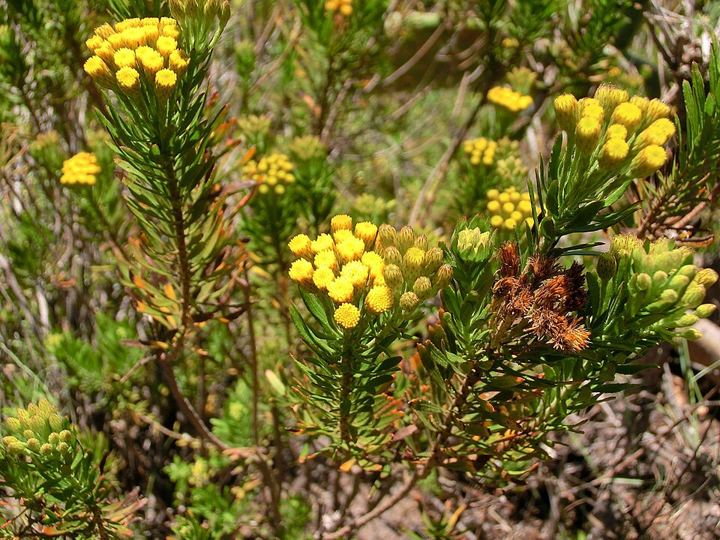
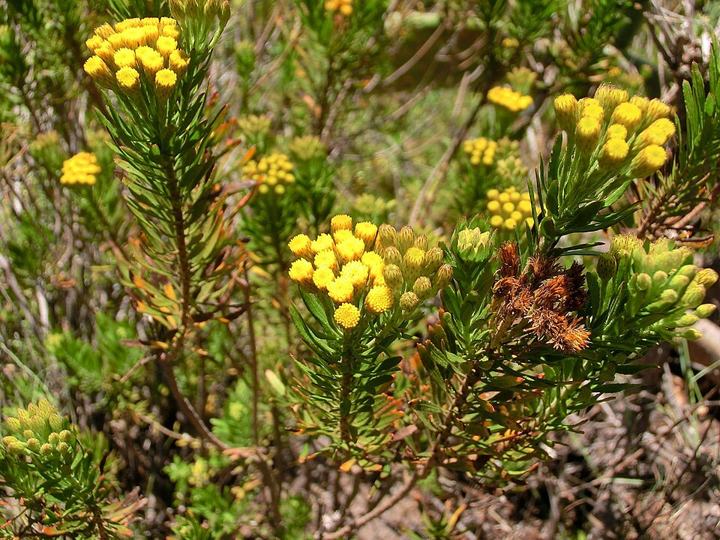
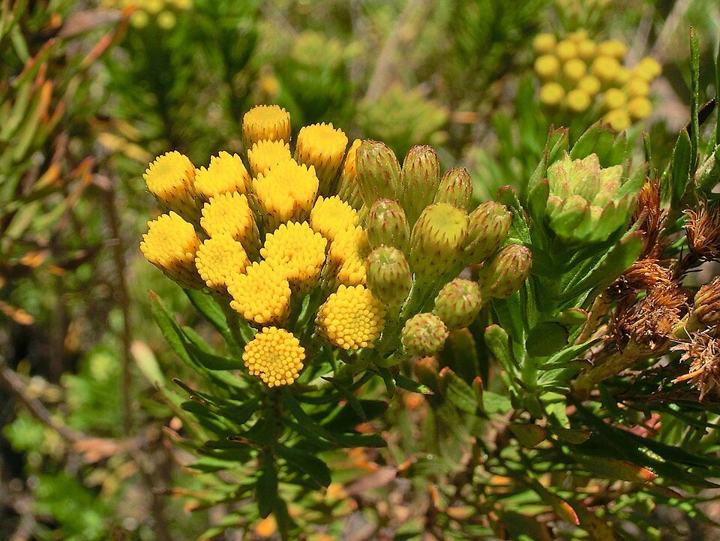
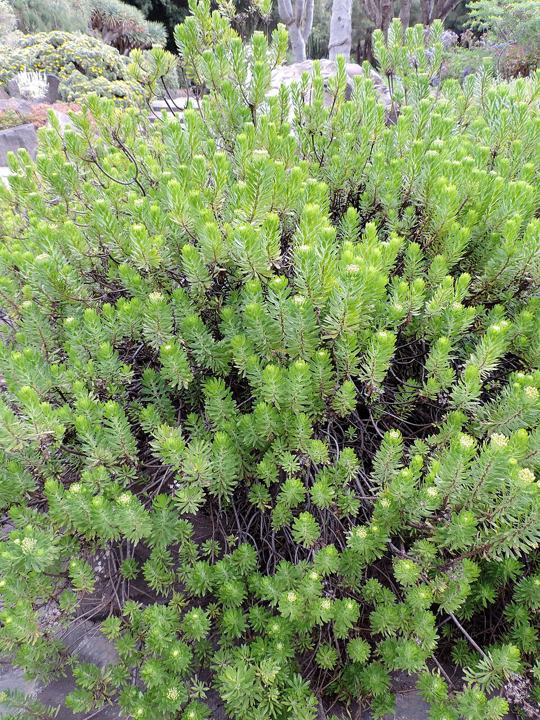
Shrub up to 1.25 m tall, densely branched, with yellowish-brown stems. Leaves 2–3 cm long, narrowly lanceolate to oblong, with a toothed margin, dark green, glossy and sticky. Yellow flowers in small heads arranged in dense corymbs. Flowers in spring and summer.
Propagation and growing
The fruits of the mamita are small cypselae that can be collected in summer; mixed with soil and sown in seed trays, they germinate normally. The plants can easily be grown in small containers, are undemanding as to soil, need full sun and are very drought-resistant. It is not usually available in native-plant nurseries and must be ordered a year in advance.
Garden use
This small shrub, which rarely reaches a metre in height and is usually only about 30 cm, flowers abundantly and showily in the spring and summer months. It is of special scientific interest as one of the two species described in this genus endemic to the Canaries. It is an interesting species for ornamental use on sloping or steep, rocky sites, with a wide altitudinal range (200–1000 m above sea level), and is particularly abundant in the south and west of Tenerife. It needs no special maintenance or watering.
Notes
Found on the islands of Gran Canaria, El Hierro, La Gomera and Tenerife.
Protection status
Not listed.
Potential vegetation
Periploco laevigatae-Euphorbietum canariensis; Ceropegio fuscae-Euphorbietum balsamiferae; Junipero canariensis-Oleetum cerasiformis.
Source: Cabildo de Tenerife, “Guía de especies vegetales”, CC BY. Translated from Spanish by us.
Bioclimatic belts
Warm coastal belt
- Inframediterranean, hyperarid
- Inframediterranean, arid
- Inframediterranean, semi-arid (lower level)
- Inframediterranean, semi-arid (upper level)
- Inframediterranean, dry, without trade-wind fog
Warm mid-slope belt
- Thermomediterranean, semi-arid (lower level)
- Thermomediterranean, semi-arid (upper level), without trade-wind fog
Districts
Anaga · Metropolitan area (Santa Cruz and La Laguna) · Acentejo · La Orotava Valley · Daute · Teno · South-west · Abona · South-east · Güímar Valley