
Candelabra aloe
Aloe arborescens Mill. · Family: Xanthorrhoeaceae
A South African species introduced to Tenerife, La Palma and Gran Canaria.
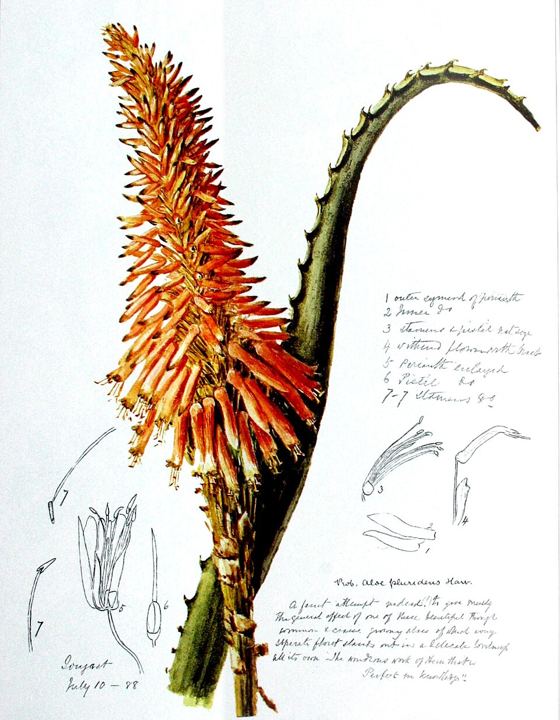
Photos
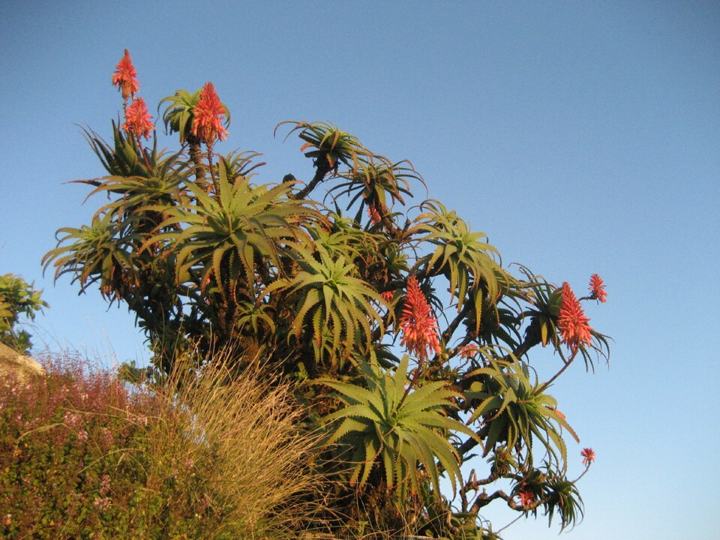
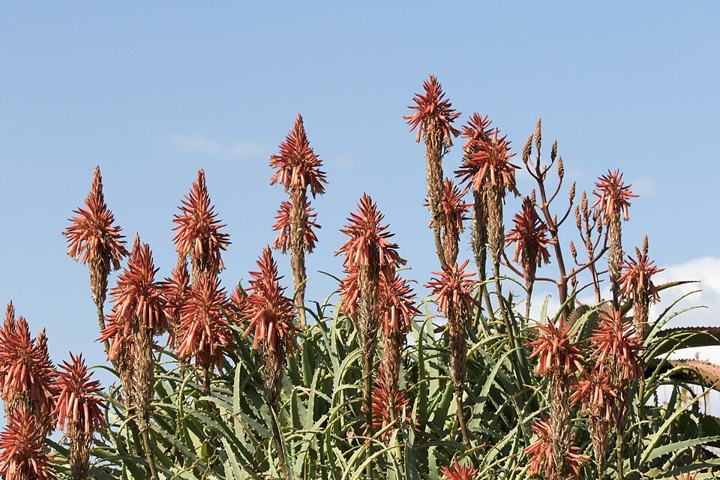
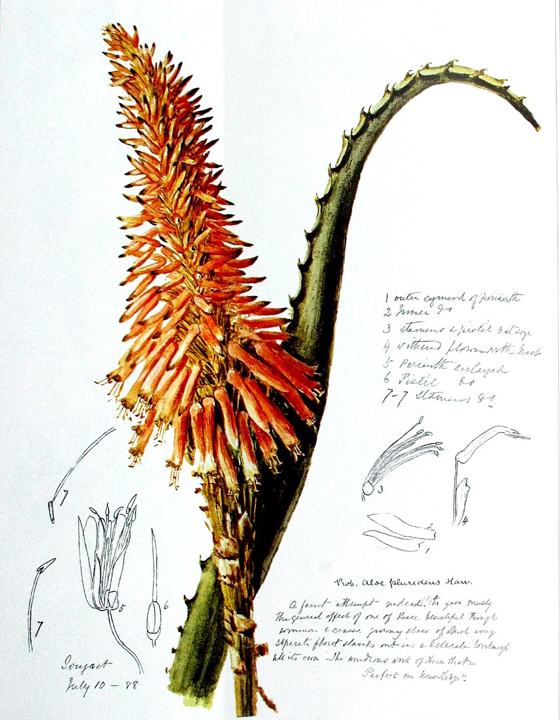
From Wikipedia
Aloe arborescens, commonly known as krantz aloe or the candelabra aloe, is a species of flowering succulent perennial plant that belongs to the genus Aloe, which it shares with the well known and studied Aloe vera. The specific epithet arborescens means "tree-like". Aloe arborescens is valued by gardeners for its succulent green leaves, large vibrantly-colored flowers, winter blooming, and attraction for birds, bees, and butterflies.
Text from Wikipedia, CC BY-SA 4.0: Aloe arborescens
Description
An evergreen, much-branched shrub with a woody base and succulent leaves. Specimens with a single dominant stem reach 1 to 4 m in height. The leaves are in rosettes, glaucous green, lanceolate, fleshy and toothed along the margins. The flowers are scarlet-orange, in a simple inflorescence about 60 cm long bearing a raceme of 20–30 cm in which the flowers are held; they stay erect before opening and later droop downwards. The fruit, a capsule with flimsy walls, contains many seeds.
Propagation and growing
A popular garden plant thanks to the beauty of its large succulent leaves and the vibrant colour of its flowers, which appear in winter when few plants are in bloom. This species is easily propagated by cuttings, tolerates drought and adapts to both full sun and partial shade. It prefers light soils; good drainage is essential. It also withstands several degrees below zero (light frosts). It needs hardly any feeding, just a little fertiliser during the growing season (towards spring). The seeds need a germination temperature above 20 °C.
Garden use
The flowers, from which a component for dye is extracted, are often used in cosmetics. The sweet nectar it produces also attracts birds, butterflies and bees. This species shares medicinal properties with Aloe vera and is commonly used to treat sunburn and other minor burns. It also has proven healing effects against dermatitis, eczema and other skin diseases. It is also used in cancer therapies and reduces the side effects of chemotherapy. In addition, it is used against arthritic rheumatism and as a regulator of liver function.
Notes
A South African species introduced to the islands, where it is normally used in gardening. However, naturalised specimens have also been recorded.
Source: Cabildo de Tenerife, “Guía de especies vegetales”, CC BY. Translated from Spanish by us.