
Barbusano (Apollonias)
Apollonias barbujana (Cav.) Bornm. · Family: Lauraceae
A laurel-forest species that grows both in humid shade under the mists and outside the forest, descending ravine slopes into warmer sites.
Where it grows on Tenerife
Grows in: North coast · North, 300–1000 m · Above 1000 m
Zones are derived approximately from the Cabildo belts.
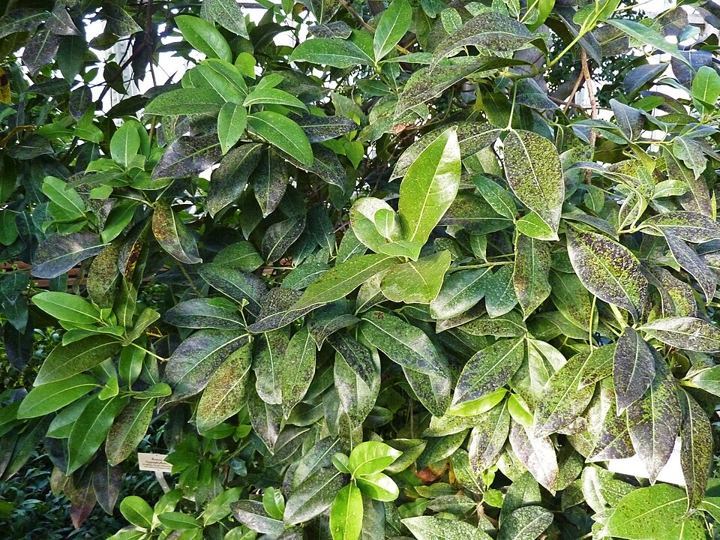
Photos
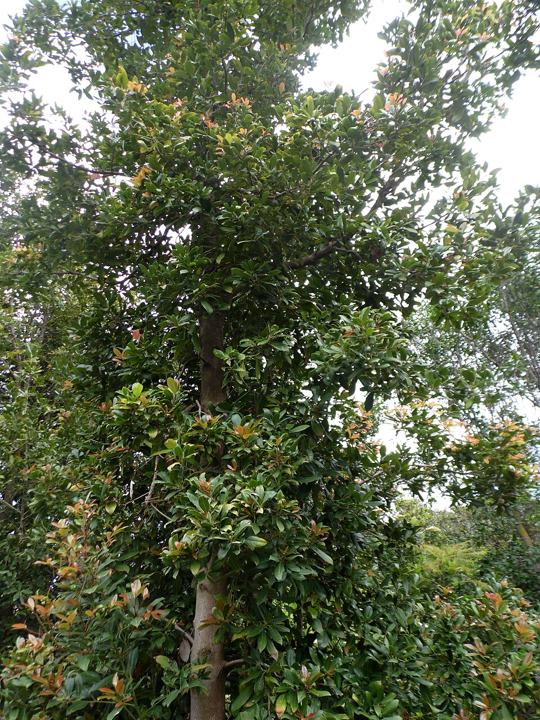
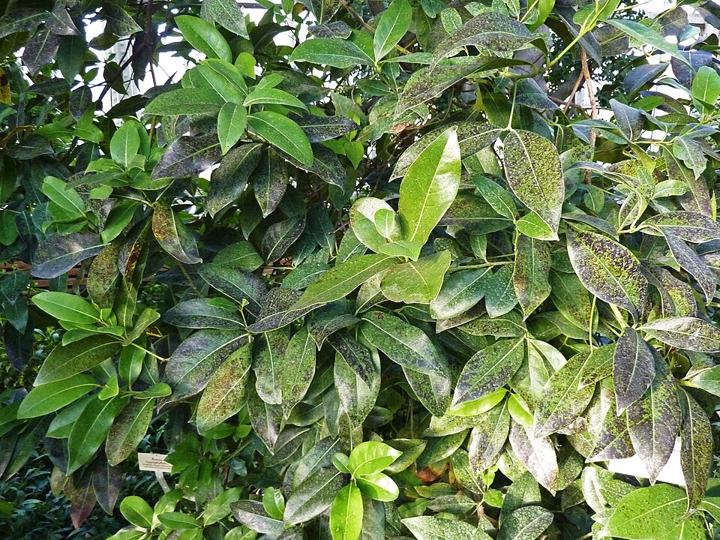
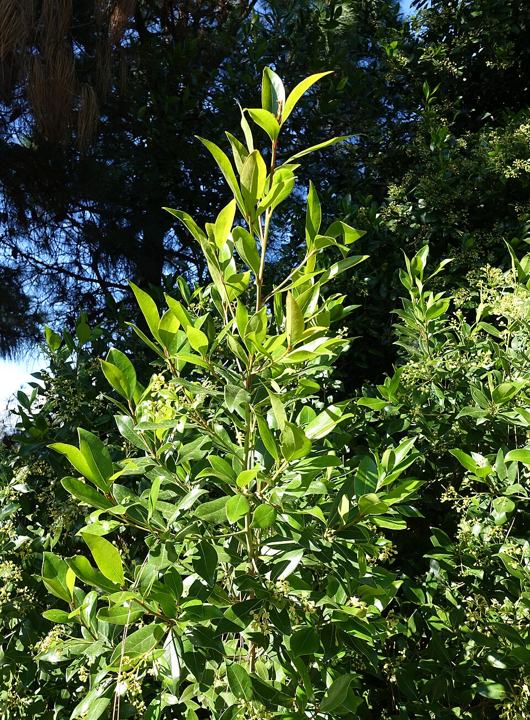
From Wikipedia
Persea barbujana, the Canary laurel or barbusano, is a species of tree in the laurel family, Lauraceae. It is endemic to the Macaronesian islands of Madeira (incl. Porto Santo) and the Canary Islands. It is often placed as the sole species in genus Apollonias. Molecular phylogenic analyses found that the species is nested within the genus Persea, which also includes the Macaronesian endemic Persea indica.
The La Gomera subspecies is distinct and endangered.
Text from Wikipedia, CC BY-SA 4.0: Persea barbujana
Description
A tree that can exceed 25 m in height, with dark reddish, rough bark and greenish-red twigs. Leaves 6–8 cm long, leathery, ovate-lanceolate, with somewhat rolled margins, the young ones reddish and the mature ones glossy dark green; frequently attacked by an insect that causes deforming galls. Flowers small, softly scented, whitish, and fruits likewise small, ovoid, blackish-brown, with a short cupule at the base. Flowers in winter and spring, although flowering can continue into summer.
Propagation and growing
Its fruits have the shape and size of an olive and contain a seed (of good flavour) that germinates easily. The seedling, vigorous and fast-growing, requires a temperate climate, normal conditions, clay-loam soils and neutral-to-acid pH (J.C. Delgado, 1986), but shows a great capacity to adapt to different soil types. It is the most sun-loving species of the laurel family (Lauraceae) in the Canaries and tolerates relatively dry conditions very well (Bañares & Barquín, 1982). It is usually available in native-flora nurseries, where after a year in cultivation it can reach more than half a metre in height.
Garden use
The wood of this species, reddish at first, darkens with time, which is why it has been called “Canary ebony” and valued for its hardness and resistance to decay. Its straight trunk, used to make masts, supports a broad, dense crown of intense green with reddish tones, owing to the “claret” colour of the young shoots; its beautiful, majestic habit gives it great value as an ornamental tree for squares and gardens. This species has been subjected to intensive felling, so its cultivation is of great conservation and ecological interest in landscape restoration. It needs moderate watering in the dry season, at least during the first year after planting. It is fast-growing and accepts moderate pruning. Its abundant flowering makes it suitable for green areas and parks; it is also ideal for reforestation.
Notes
On La Gomera there is the subspecies Apollonias barbujana ssp. ceballosii (white barbuzano). Also present in Madeira.
Protection status
Annex II of the Order of 20 February 1991 on the protection of wild flora of the Canary Islands.
Potential vegetation
Visneo mocanerae-Arbutetum canariensis y Lauro-Perseetum indicae.
Source: Cabildo de Tenerife, “Guía de especies vegetales”, CC BY. Translated from Spanish by us.
Bioclimatic belts
Warm coastal belt
- Inframediterranean, dry, with trade-wind fog
Warm mid-slope belt
- Thermomediterranean, semi-arid (upper level), with trade-wind fog
- Thermomediterranean, dry, with trade-wind fog
- Thermomediterranean, subhumid, with trade-wind fog
- Thermomediterranean, humid, with trade-wind fog
Temperate belt of laurel and pine forest
- Mesomediterranean, lower, dry, with trade-wind fog
- Mesomediterranean, lower, subhumid, with trade-wind fog
- Mesomediterranean, lower, humid, with trade-wind fog
Districts
Anaga · Metropolitan area (Santa Cruz and La Laguna) · Acentejo · La Orotava Valley · Daute · Güímar Valley