
Canary wormwood (incienso)
Artemisia thuscula Cav. · Family: Asteraceae
Common and typical in dry scrub of the low and middle zones.
Where it grows on Tenerife
Grows in: South coast · North coast · South, 300–1000 m
Zones are derived approximately from the Cabildo belts.
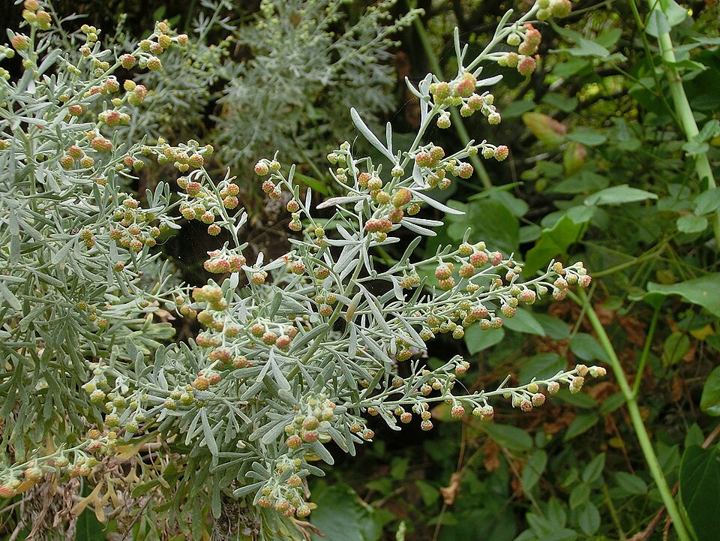
Photos
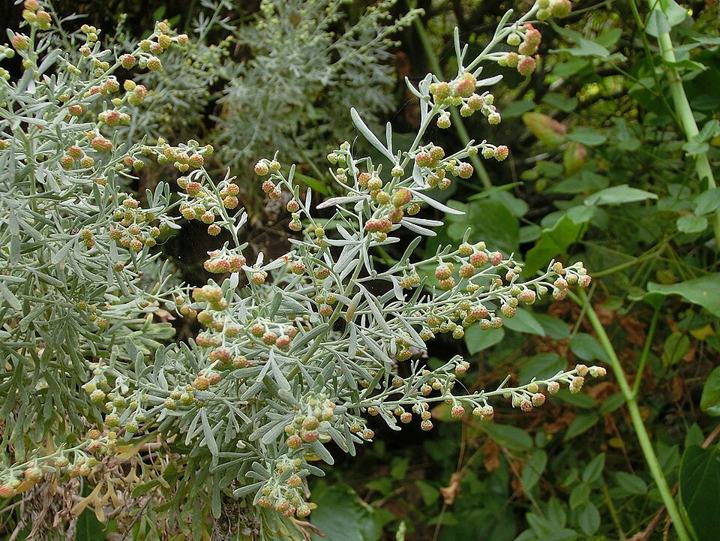
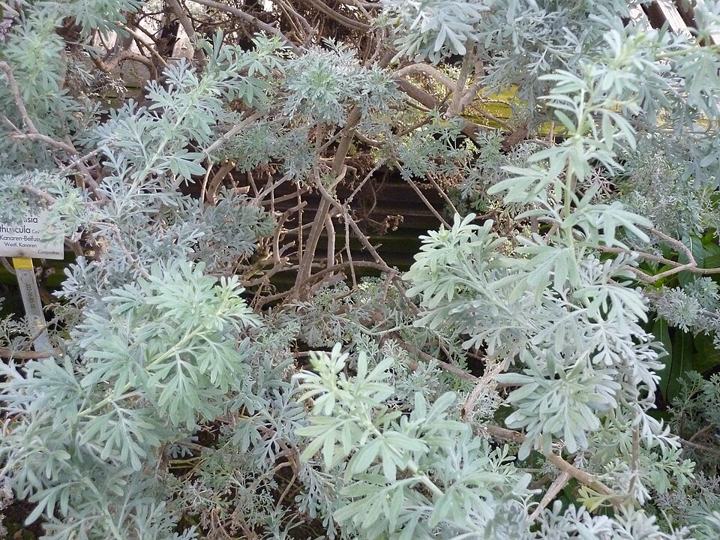
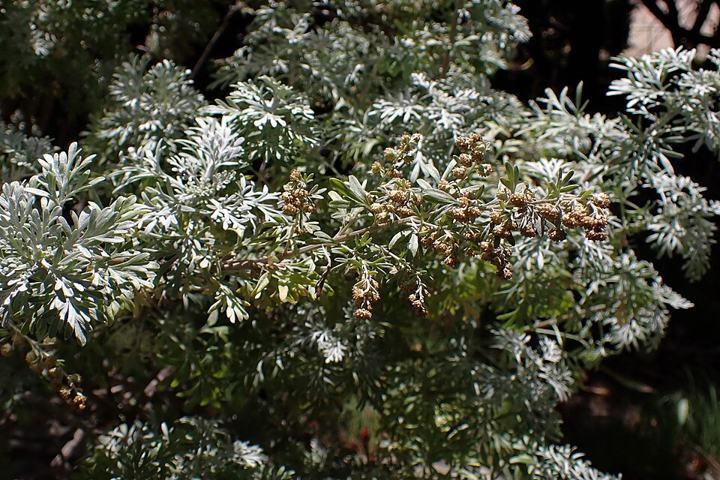
From Wikipedia
Artemisia thuscula (Incienso) is a species endemic to the Canary Islands. It is frequent in dry areas at lower elevations (50–700 m). Its capitula are globose and leaf lobes flat.
Text from Wikipedia, CC BY-SA 4.0: Artemisia thuscula
Description
Much-branched, aromatic, greyish shrub up to 1 m tall. Leaves variable, about 3–7 cm long, bipinnatisect, with flat linear to obtuse lobes. Yellow flowers in very small heads gathered in dense, elongated clusters. Flowers in spring.
Propagation and growing
The fruits of the incienso are tiny achenes which, mixed with soil and sown in seed trays, germinate easily. Container-grown plants are vigorous and drought-resistant, undemanding as to soil and need full sun. It is not usually available in native-plant nurseries, but it can be ordered only 3 or 4 months in advance.
Garden use
This shrub flowers in winter and spring, but plants in flower can be found almost all year round. Its dense greyish foliage gives off a very strong, harsh and unpleasant smell, which some noses may find pleasant. It self-seeds easily and spreads quickly, almost always becoming a "weed" wherever it thrives. It is often found growing spontaneously on sites that are to be landscaped, and in such cases it is advisable to keep a few plants. It has uses in some landscaping between 100 and 700 m altitude, slope stabilisation, etc., but in general its spontaneous spread more often has to be controlled so that it does not become a pest. It tolerates pruning to form hedges. It needs no maintenance apart from thinning and appropriate pruning, and needs no watering.
Notes
Together with the vinagrera (Rumex lunaria), this species forms part of the degraded scrub of the island's lower and middle zones. Its easy propagation and fast growth make it an ideal species for environmental restoration work on areas…
Protection status
Not listed.
Potential vegetation
Ceropegio fuscae-Euphorbietum balsamiferae; Periploco laevigatae-Euphorbietum canariensis.
Source: Cabildo de Tenerife, “Guía de especies vegetales”, CC BY. Translated from Spanish by us.
Bioclimatic belts
Warm coastal belt
- Inframediterranean, hyperarid
- Inframediterranean, arid
- Inframediterranean, semi-arid (lower level)
- Inframediterranean, semi-arid (upper level)
- Inframediterranean, dry, without trade-wind fog
Warm mid-slope belt
- Thermomediterranean, semi-arid (lower level)
- Thermomediterranean, semi-arid (upper level), without trade-wind fog
Districts
Anaga · Metropolitan area (Santa Cruz and La Laguna) · Acentejo · La Orotava Valley · Daute · Teno · South-west · Abona · South-east · Güímar Valley