
Orchid tree
Bauhinia variegata L. · Family: Caesalpiniaceae
A tropical-climate species. Full sun, tolerates light shade. Ordinary, well-drained soil.
Where it grows on Tenerife
Grows in: South coast · North coast · South, 300–1000 m · North, 300–1000 m
Zones are derived approximately from the Cabildo belts.
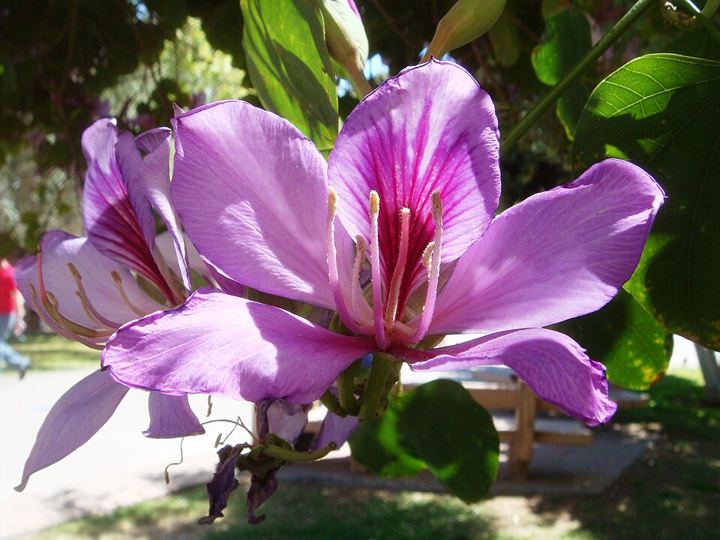
Photos
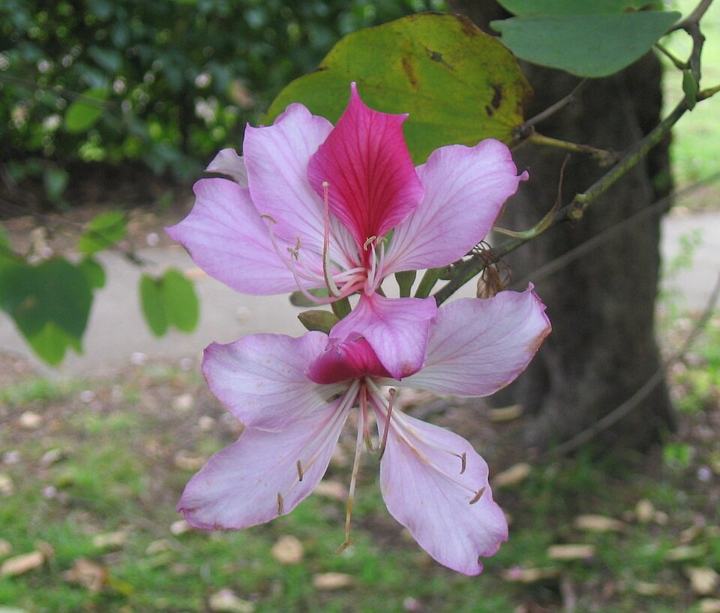
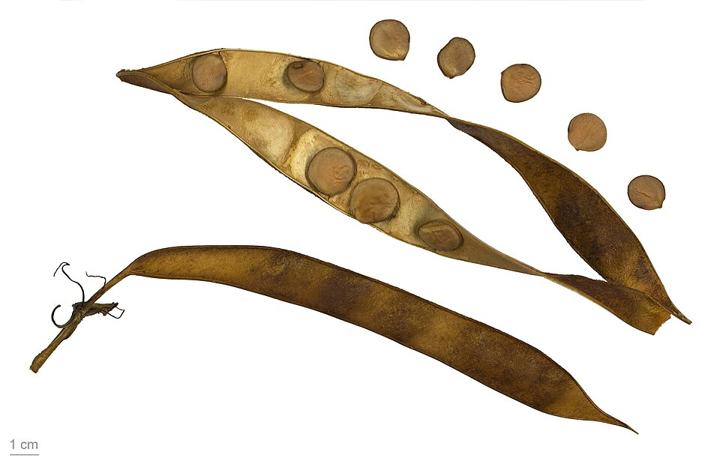
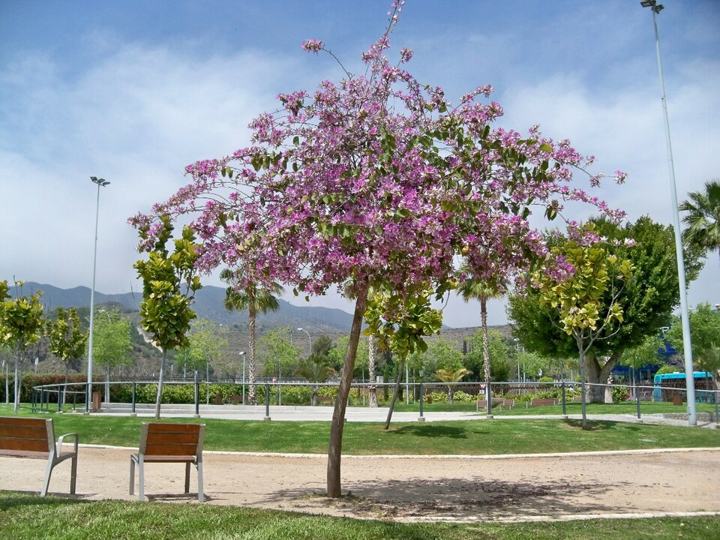
From Wikipedia
Bauhinia variegata is a species of flowering plant in the legume family, Fabaceae. It is native to an area from China through Southeast Asia to the Indian subcontinent. Common names include orchid tree (though not belonging to the family Orchidaceae) and mountain ebony.
Text from Wikipedia, CC BY-SA 4.0: Bauhinia variegata
Description
This belongs to the group of species whose outer cypselae are winged and whose fruits have a crown-like pappus; it is characterised by deeply lobed, bifid or trifid leaves with 2-6 primary lobes that are thread-like, linear-lanceolate or lanceolate. Stems slender. Its inflorescences are corymbose.
Propagation and growing
Its seeds, held in pods 20 to 30 cm long, are relatively easy to collect; it reproduces without problems in a substrate that stays somewhat moist. It tolerates rising temperatures and withstands periods of drought. Growing conditions in the Canaries are ideal for it. It needs climates that are not too cold, and is best placed in spots sheltered from icy winds. Fast-growing and easy to cultivate, as it has no special requirements. Propagation by seed.
Garden use
It needs watering once a week in summer and no watering in winter; avoid overwatering.
Notes
The outline of the leaf recalls a cow’s hoof, hence one of its common names. The cultivar “candida” has white flowers with green veins.
Source: Cabildo de Tenerife, “Guía de especies vegetales”, CC BY. Translated from Spanish by us.
Bioclimatic belts
Warm coastal belt
- Inframediterranean, hyperarid
- Inframediterranean, arid
- Inframediterranean, semi-arid (lower level)
- Inframediterranean, semi-arid (upper level)
- Inframediterranean, dry, without trade-wind fog
- Inframediterranean, dry, with trade-wind fog
Warm mid-slope belt
- Thermomediterranean, semi-arid (lower level)
- Thermomediterranean, semi-arid (upper level), without trade-wind fog
- Thermomediterranean, semi-arid (upper level), with trade-wind fog
- Thermomediterranean, dry, with trade-wind fog
- Thermomediterranean, dry (lower level), without trade-wind fog
- Thermomediterranean, subhumid, with trade-wind fog