
Bosea (hediondo)
Bosea yervamora L. · Family: Amaranthaceae
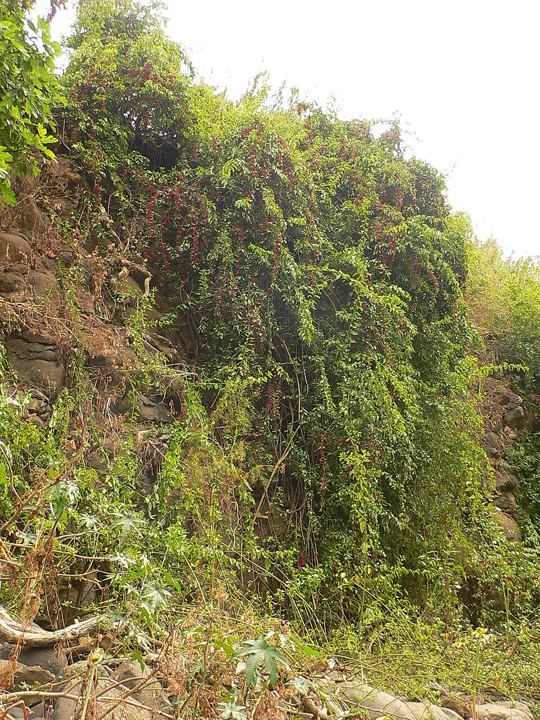
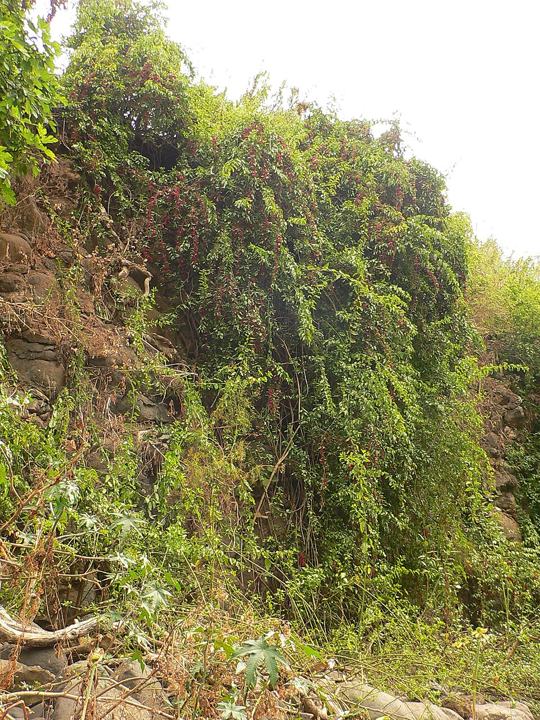
A Canary endemic that likes warmth. Found at 50–1,000 m, mostly 300–500 m, on cliffs, ravine walls, slopes and old terraces. On sunny damp cliffs its branches hang 4 m or more; in shade it grows more like a small tree.
Photos
From Wikipedia
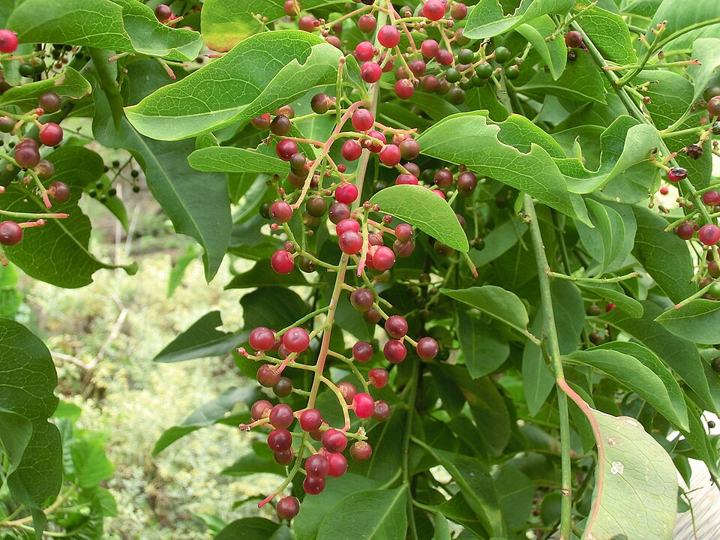
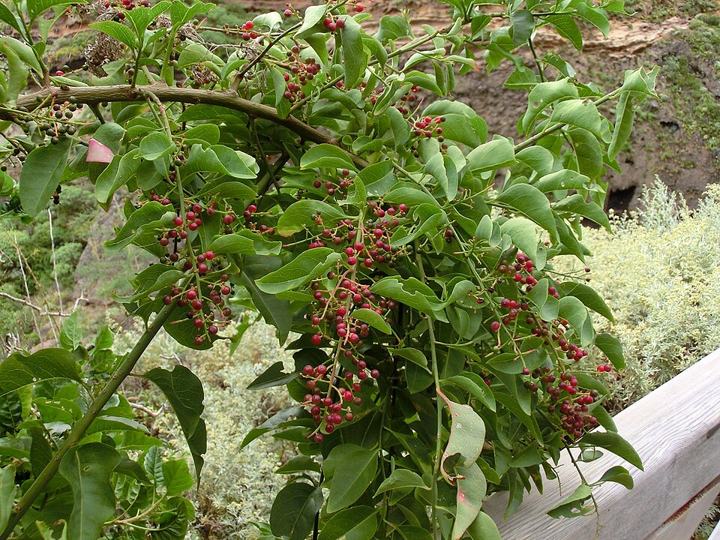
Bosea yervamora is a shrub native to the Canary Islands, up to 3 m tall with greenish slender branches. Leaves up to 7 cm long, ovate, lanceolate, alternate, short stalked, without hair. Flowers short terminal, arising from the axil of the leaf, indefinite inflorescences, greenish with two membranous, dry modified leaves at the base of the stem. Fruits greenish black turning pink when ripe, about the size of a small pea.
Text from Wikipedia, CC BY-SA 4.0: Bosea yervamora
Description
A very woody, branched shrub up to 3 m tall, with slender, greenish, drooping branches that sometimes spread over a considerable area, leaning on other nearby plants. The leaves are ovate-lanceolate, herbaceous in texture, light green, alternate, up to 8 cm long. The inflorescences form a fairly dense raceme of greenish-yellow flowers. The fruits are rounded, fleshy and reddish-purple or blackish-green depending on how ripe they are.
Propagation and growing
Collection takes place from May to July. The fruits are harvested when their colour is changing from pinkish-violet to reddish, by stripping them directly from the shrub. There are approximately 44,500 seeds per kilo, and processing involves three stages: drying, until the optimum degree of ripeness is reached; depulping, by prior soaking followed by beating in a dough mixer; and sieving, to separate out impurities. Stored at room temperature, the seed keeps its viability for at least 2 or 3 years. Pre-germination treatment consists of disinfection with fungicides or hydrogen peroxide. Bosea yervamora is grown in a seedbed or in polyethylene trays under controlled conditions between October and December. Ideal conditions are 70-80 % humidity, a temperature of 20-25 ºC and soft light. Watering needs are low: keep the soil moist while avoiding waterlogging. Damping-off is prevented and controlled by alternating fungicides. Germination occurs 10-15 days after sowing, at a rate of about 80%. The growing-on stage takes place under shade netting or outdoors, under the same conditions as above.
Garden use
A shrubby species of great interest for environmental restoration work, to cover embankments. It has ornamental value as a clipped hedge. Its fruits are food for birds, which help to disperse it. It has abortifacient (in veterinary use) and dyeing properties. Used for whitening laundry. It has been used in veterinary practice to help cows expel the placenta after calving. Its abortifacient properties are taken from the youngest part of the plant. It also has dyeing properties similar to carmine. In addition, it is oxytocic (it speeds up birth). It has a medium water requirement and needs many hours of light. It grows best at temperatures above 16 ºC and adapts well to various soil types. Its root growth is small, so there is no need to fear underground damage from its roots. It flowers in February and June.
Notes
They stain heavily, hence one of the vernacular names given to the species, “hediondo” (“stinker”). It plays an important role in the natural regeneration of vegetation.
Protection status
Not listed.
Potential vegetation
Bosque termófilo. Matorrales de medianías.
Source: Cabildo de Tenerife, “Guía de especies vegetales”, CC BY. Translated from Spanish by us.
Districts
Anaga · Metropolitan area (Santa Cruz and La Laguna) · Acentejo · La Orotava Valley · Daute · Teno · South-west · Abona · South-east · Güímar Valley