
Camellia
Camellia japonica L. · Family: Theaceae
- Light
- partial shade
- Watering
- medium
- Hardy to
- -10 °C
- Soil
- acid
Where it grows on Tenerife
Grows in: North, 300–1000 m
With watering: North coast
Indicative conditions, reviewed by Marianna.
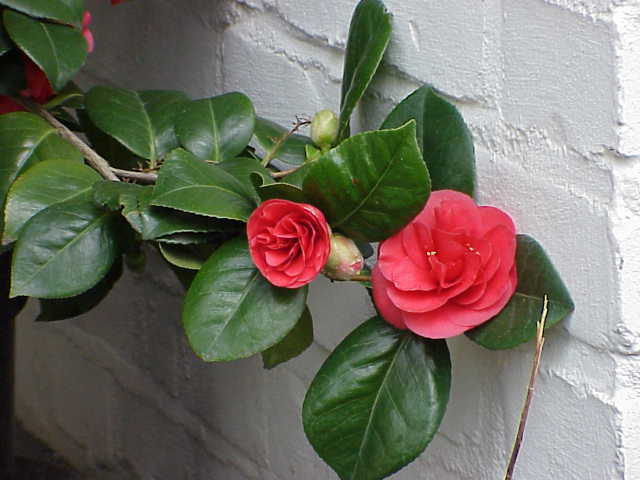
Photos
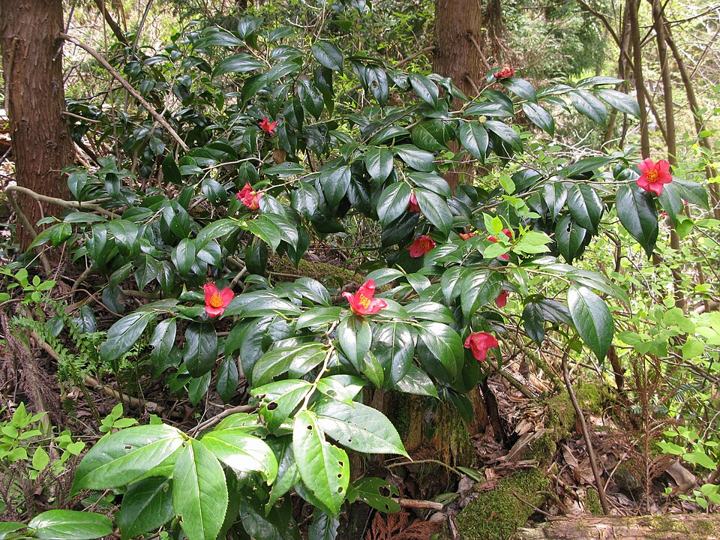
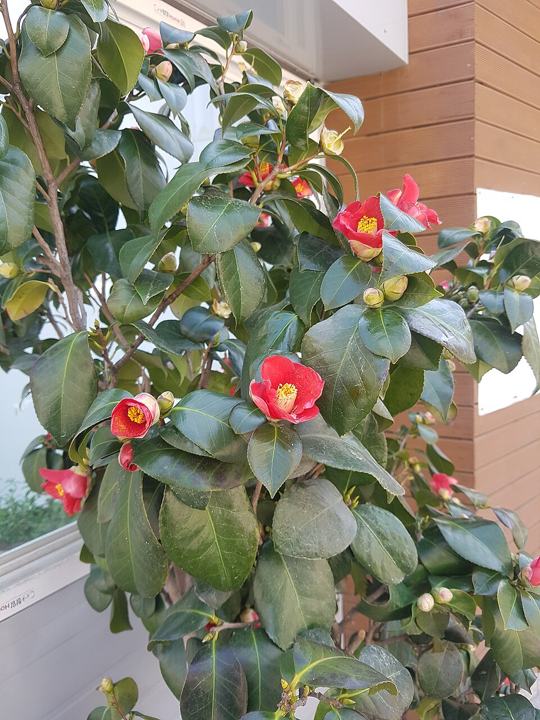
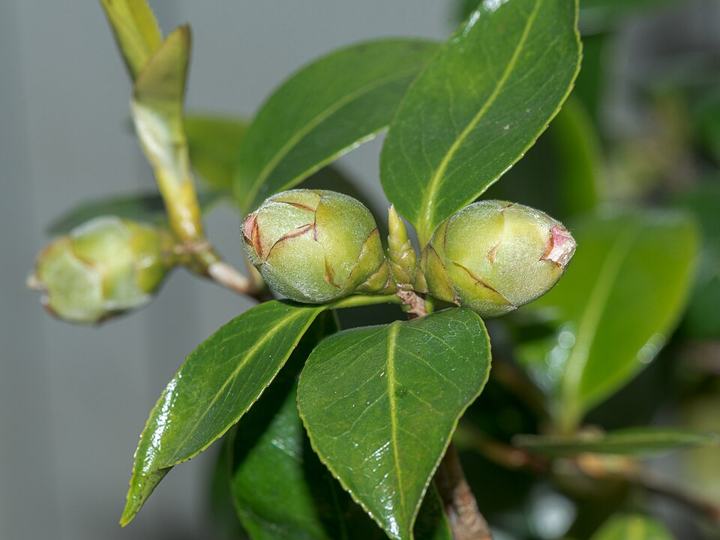
Origin and history
Native to Japan, China and Korea. Linnaeus named the genus after the botanist Georg Kamel. Grown in Europe since the 18th century.
Written for this site, pending Marianna's review.
From Wikipedia
Camellia japonica, known as common camellia, or Japanese camellia, is a species of flowering plant from the genus Camellia in the tea family Theaceae. It is native to China and Japan, and grows naturally in forests at altitudes of around 300–1,100 metres (980–3,600 ft).
There are thousands of cultivars of C. japonica, with many colors and forms of flowers, mainly as garden ornamental plants. The floriculture of Camellia japonica started in China. Its widespread cultivation can be traced back to the Song Dynasty, when 15 varieties of Camellia japonica were recorded in literature.
Text from Wikipedia, CC BY-SA 4.0: Camellia japonica
Description
Evergreen shrubs or small trees, native to Japan and Korea, up to 15 m tall, much branched. Leaves alternate, ovate to elliptic, dark green, glossy, with a slightly acuminate tip and crenulate margin. Flowers large, five-parted, single, semi-double or double, solitary or in pairs, pink, red and white, sessile at the ends of the shoots. Flowering occurs between spring and summer. More than 2,000 cultivars are known.
Propagation and growing
An evergreen shrub that needs moderate watering and non-sunny positions, preferring places that are not too exposed. It flowers in February and fruits in April. In optimum conditions it can reach a considerable size. Slow-growing. It can be propagated by seed, cuttings or grafting.
Garden use
Thanks to its bushy habit and beautiful flowers it has become a species of undoubted ornamental value, widely used in gardens, parks and squares. It tolerates formative pruning and needs regular watering, although it can withstand short periods of drought. Frequently grown for the ornamental value of its flowers, it can be found all over the world in parks, gardens and avenues, and also in pots as a houseplant. Do not let the substrate dry out completely. It needs feeding and a lot of care. It is a species with medicinal properties.
Notes
In the Canaries the most usual method of propagation is by cuttings, which need a fair amount of care.
Source: Cabildo de Tenerife, “Guía de especies vegetales”, CC BY. Translated from Spanish by us.