
Indian shot (canna)
Canna indica L. · Family: Cannaceae
Prefers soil rich in organic matter and well watered. Sun or partial shade, warm and sheltered. Frost tender.
Where it grows on Tenerife
Grows in: South coast · North coast · South, 300–1000 m · North, 300–1000 m
Zones are derived approximately from the Cabildo belts.
Photos
From Wikipedia
Canna indica, commonly known as Indian shot, African arrowroot, edible canna, purple arrowroot, Sierra Leone arrowroot, is a plant species in the family Cannaceae. It is native to the Americas and naturalized elsewhere. The edible rhizomes are a source of starch.
Text from Wikipedia, CC BY-SA 4.0: Canna indica
Description
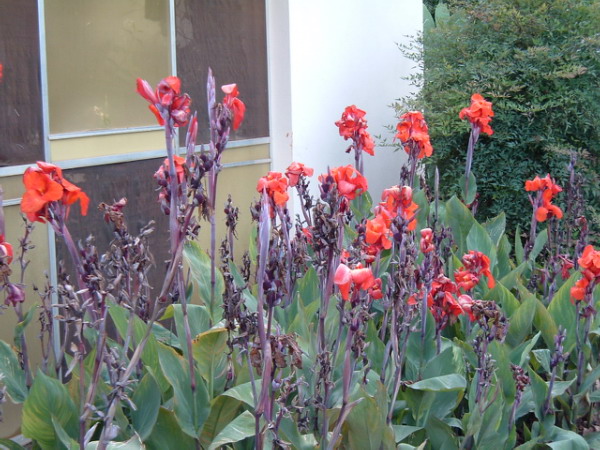
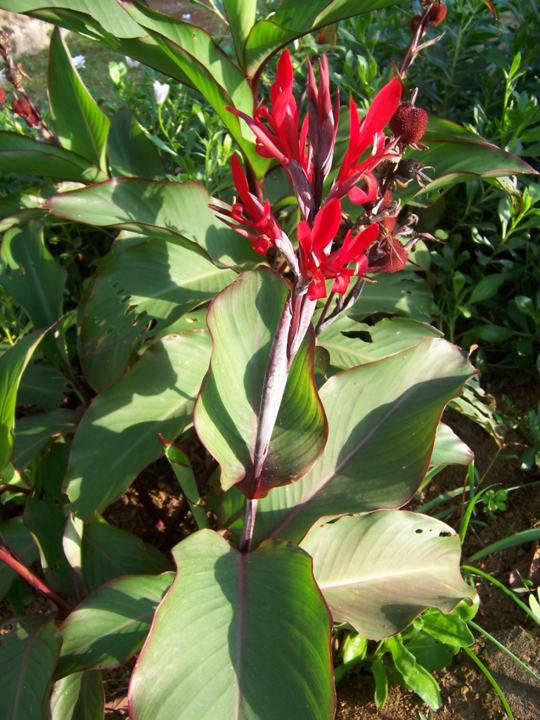
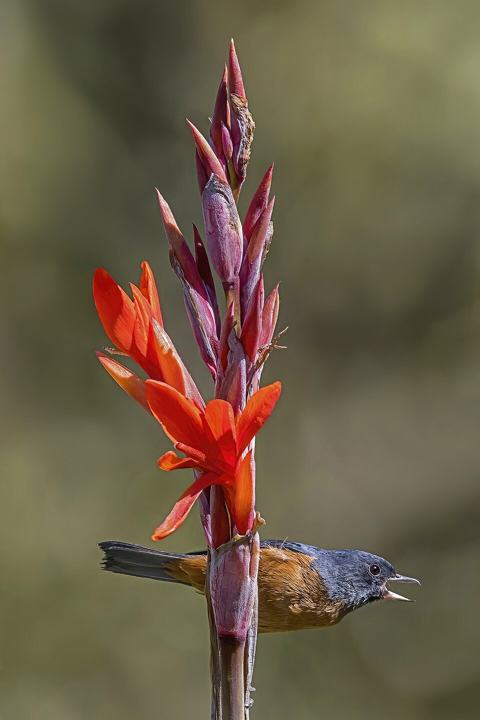
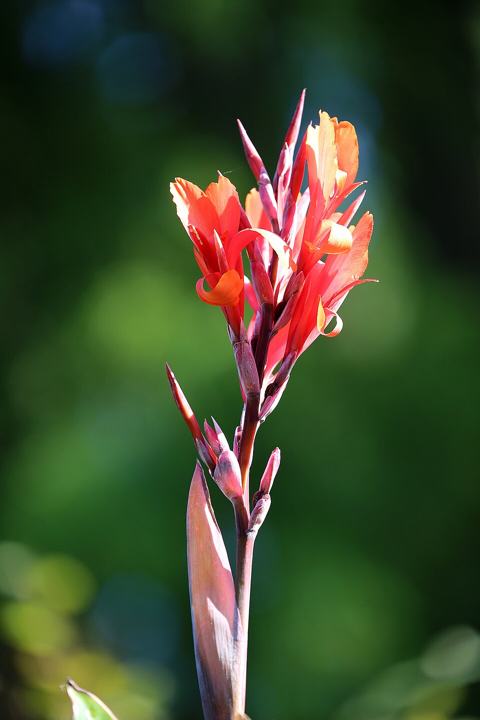
A rhizomatous herbaceous perennial native to tropical America, reaching 1–5 m in height, with green stems. Leaves large, ovate-oblong to lanceolate, acuminate, deep green, clasping the shoot. Flowers small, short-stalked, red or yellow. It flowers from spring into summer. There is a purple-leaved cultivar.
Propagation and growing
It is usually propagated by seed or by dividing its roots; it is very slender and can reach up to 1 metre in height. It needs a sunny position and moderate watering. It flowers in May and fruits in August. It tolerates high temperatures and lack of water well. It does not tolerate very low temperatures. Very fast-growing. Propagation is by division of rhizomes, and also by seed.
Garden use
Its unusual foliage and showy flowers make it a much sought-after ornamental. It is planted in groups or rows, usually around larger plants. It is also seen in planters and flower beds in squares, gardens and promenades. It is very resistant to adverse weather and pollution. In gardening it is used as a feature plant in massed beds. Because of its height, it should be placed in the background.
Notes
It is widely used in the Canaries. It is a species of low invasive capacity. It has been recorded as naturalised.
Source: Cabildo de Tenerife, “Guía de especies vegetales”, CC BY. Translated from Spanish by us.
Bioclimatic belts
Warm coastal belt
- Inframediterranean, hyperarid
- Inframediterranean, arid
- Inframediterranean, semi-arid (lower level)
- Inframediterranean, semi-arid (upper level)
- Inframediterranean, dry, without trade-wind fog
- Inframediterranean, dry, with trade-wind fog
Warm mid-slope belt
- Thermomediterranean, semi-arid (lower level)
- Thermomediterranean, semi-arid (upper level), without trade-wind fog
- Thermomediterranean, semi-arid (upper level), with trade-wind fog
- Thermomediterranean, dry, with trade-wind fog
- Thermomediterranean, dry (lower level), without trade-wind fog
- Thermomediterranean, subhumid, with trade-wind fog