
Canary balm (Cedronella)
Cedronella canariensis (L.) Webb & Berthel. · Family: Lamiaceae
Grows wild in the laurel forest, in damp places on the higher islands.
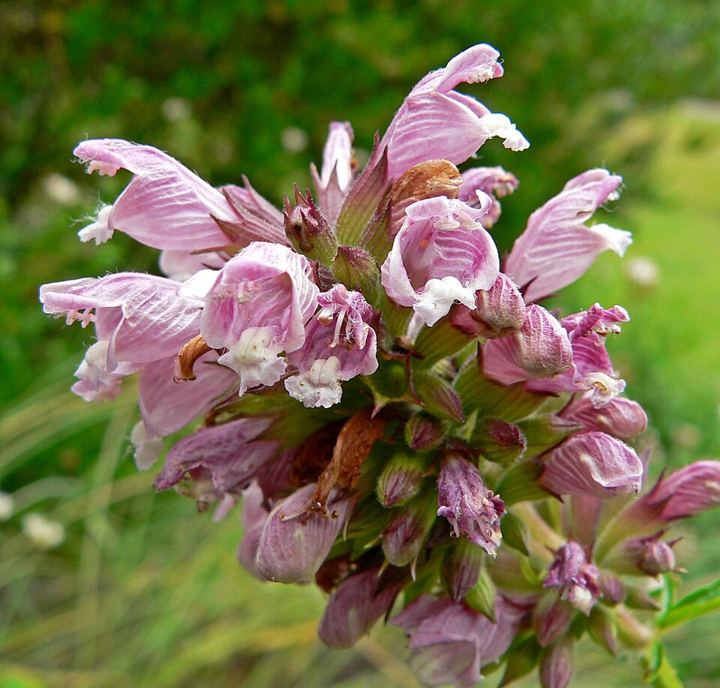
Photos
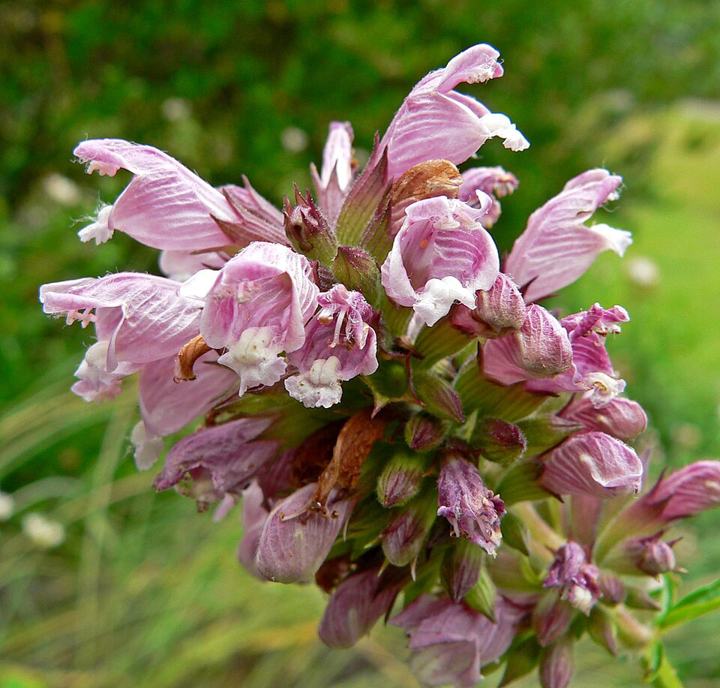
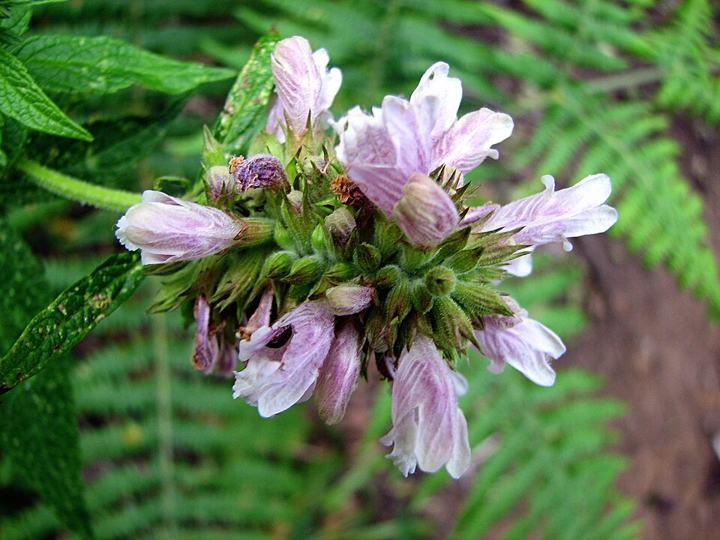
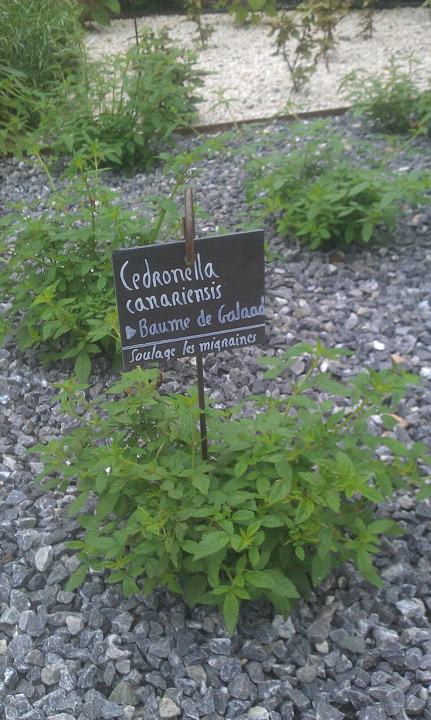
From Wikipedia
Cedronella is a genus of flowering plants in the tribe Mentheae of the family Lamiaceae, comprising a single species, Cedronella canariensis, native to the Canary Islands, the Azores, and Madeira. It is also naturalized in various places (South Africa, St. Helena, New Zealand, California). Common names include Canary Islands-balm, Canary balm, and Balm-of-Gilead.
It is a perennial herbaceous plant growing to 1–1.5 m tall. The distinctive feature of these plants is the compound leaves consisting of 3 leaflets, unusual in the Lamiaceae, which usually have simple leaves. The leafy stems terminate in dense, short spikes of flowers with tubular 2-lipped white or pink flowers.
The genus name is a diminutive of Cedrus, though the only connection between this herb and the large conifers of Cedrus is a vaguely similar resinous scent of the foliage.
Text from Wikipedia, CC BY-SA 4.0: Cedronella
Description
Herbaceous plant reaching over 1 metre in height, with square stems somewhat woody at the base; leaves trifoliate, with elongated leaflets that are serrated at the edge and pointed at the tip; mauve flowers in dense terminal spikes. The plant gives off a fragrant lemon and camphor scent.
Propagation and growing
This species is propagated from seed. It is best grown as a half-hardy annual, sowing the seeds in a warm place in spring and then growing the plant on in partial shade. Germinate in standard substrate with some humus-rich soil. Give supplementary watering if there is no rain. Flowers in spring. A species for the northern medianías (mid-altitude zone), for margins and for the potential area of monteverde (laurel forest).
Garden use
In Canarian folk medicine it is well known as a preventive for colds and flu and as an expectorant, and externally as a nasal decongestant and to stimulate hair growth. On the basis of its active compounds, other authors such as Pérez de Paz and Hernández Padrón (1999) and David Bramwell (2004) also attribute other interesting therapeutic properties to it: anti-inflammatory, analgesic, antifungal, antimicrobial, diuretic and hypotensive, hypoglycaemic, relaxant and antidepressant, digestive and carminative. Cedronella canariensis grows best in soils with acid, neutral or alkaline pH. Its underground part will grow vigorously in sandy, loamy or clay substrates, which can generally be kept moist. It is very important to water bearing the above in mind, but also factors such as sun exposure, temperature, soil texture, time of year, etc. All of this is to achieve a more or less constant level of moisture in the substrate. An interesting point is that it does not tolerate waterlogging, so the planting area must be very well drained. As for its light requirements, it is moderately demanding and can be placed either in partial shade or in direct sun.
Notes
The whole plant gives off a pleasant aniseed scent, especially if you rub or simply touch its leaves.
Protection status
Not listed.
Potential vegetation
Monteverde.
Source: Cabildo de Tenerife, “Guía de especies vegetales”, CC BY. Translated from Spanish by us.
Districts
Metropolitan area (Santa Cruz and La Laguna) · Acentejo · La Orotava Valley · Daute