
Tagasaste (tree lucerne)
Chamaecytisus proliferus (L.f.) Link · Family: Fabaceae
Found at 400–1,800 m on slopes and ravine beds, on fairly recent volcanic soil in the Canary pine belt. Tolerates the acid soil under pine needles.
Photos
From Wikipedia
Chamaecytisus proliferus, synonym Cytisus proliferus, is a small spreading evergreen shrub or tree in the pea family Fabaceae endemic to the Canary Islands. One of its subspecies, Chamaecytisus proliferus subsp. palmensis, synonyms including Chamaecytisus palmensis and Cytisus palmensis, known as tagasaste or tree lucerne, is a well known tropical forage crop. It is native to the dry volcanic slopes of the Canary Islands, but it is now grown in Australia, New Zealand and many other parts of the world.
Text from Wikipedia, CC BY-SA 4.0: Chamaecytisus proliferus
Description
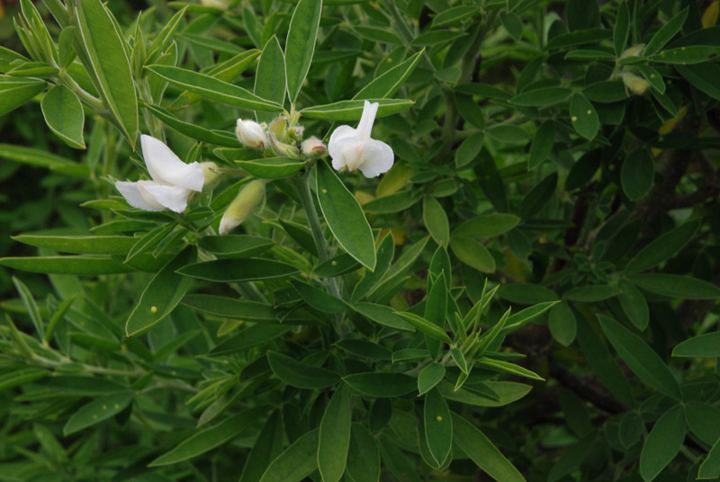
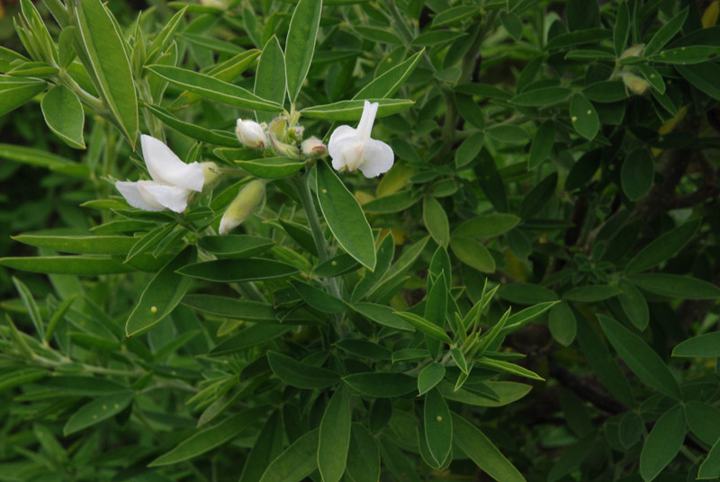
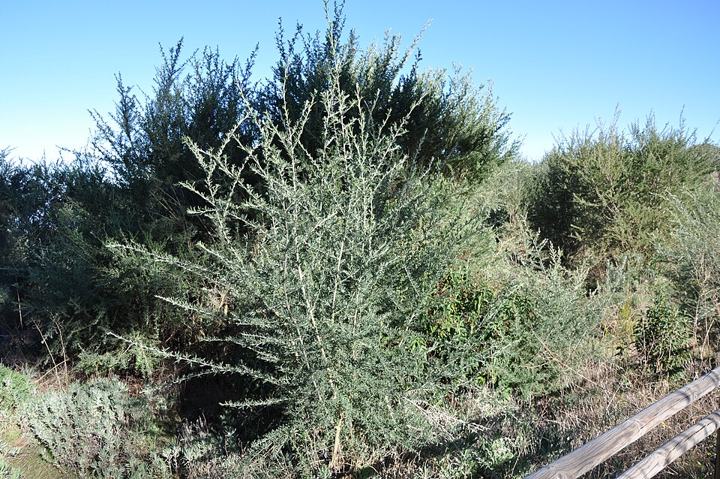
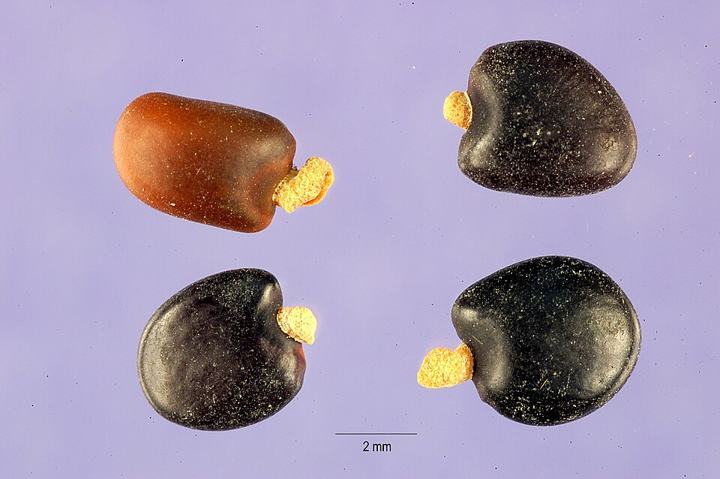
An upright, evergreen shrub with an open habit, between 2 and 7 metres tall, with pale bark and abundant branching. In favourable conditions it can reach 6 metres in height and also in diameter, forming an overall broad crown. It differs from other Fabaceae in that its leaves are divided into three leaflets (trifoliate), with entire margins, greyish-green, about 3 cm long, finely hairy, oblanceolate and apiculate. In spring it is covered in abundant white flowers in axillary clusters which, after a few weeks, turn into elongated pods 4 to 7 cm long, dark greyish and slightly hairy, containing 8 to 9 black seeds.
Propagation and growing
Collection takes place from July to September. The fruits are harvested when the pods, which gradually change from green to brownish, are about to open, by stripping them directly from the tree. There are approximately 60,240 seeds per kilo, and processing involves three stages: drying, in which the pods are put in the sun until they reach the optimum degree of ripeness (opening of the pods); rubbing, by hand, to separate the seeds; and sieving, to remove impurities. Stored at room temperature, the seed keeps its viability for at least 2 or 3 years. Pre-germination treatment consists of placing the seeds in boiling water for 5 seconds. Chamaecytisus proliferus is grown in a seedbed or in polyethylene trays under controlled conditions at the beginning of spring or at the end of summer. Ideal conditions are 70-80 % humidity, a temperature of 20-25 ºC and soft light. Watering needs are low: keep the soil moist while avoiding waterlogging. Damping-off is prevented and controlled by alternating fungicides. Germination occurs 7-10 days after sowing, at a rate of about 70%. The growing-on stage takes place under shade netting or outdoors, under the same conditions as above.
Garden use
A species of great interest as fodder and for environmental and landscape restoration work, with high ornamental value. The hard wood of its trunk has been used to make farm implements (ploughs, hoe handles...). It has a low-medium water requirement and needs a medium number of hours of light. It grows best at mild and cool temperatures (23-17 ºC) and adapts well to various soil types, clay as well as loam and somewhat stony soils; it is not demanding as to soil acidity, but as it grows naturally in pine forest it tends to favour slightly acid soils. Its root growth is moderate, so there is no need to fear underground damage from its roots. It flowers between March and April.
Notes
In the past, escobón was of great importance as a fodder species. It is considered not only suitable for feeding livestock but also very nutritious, especially because of its high protein content. For this reason, it is now grown in vari…
Protection status
Annex III of the Order of 20 February 1991 on the protection of wild flora of the Canary Islands.
Potential vegetation
Matorrales asociados al pinar. Matorrales de medianías.
Source: Cabildo de Tenerife, “Guía de especies vegetales”, CC BY. Translated from Spanish by us.
Districts
Anaga · Metropolitan area (Santa Cruz and La Laguna) · Acentejo · La Orotava Valley · Daute · Teno · South-west · Abona · South-east · Güímar Valley