
Teno knapweed (Cheirolophus)
Cheirolophus canariensis (Brouss. ex Willd.) Holub · Family: Asteraceae
Endemic to the Teno massif: basalt cliffs and hard-to-reach ledges with some shade.
Where it grows on Tenerife
Grows in: South coast · North coast
Zones are derived approximately from the Cabildo belts.
Photos
Description
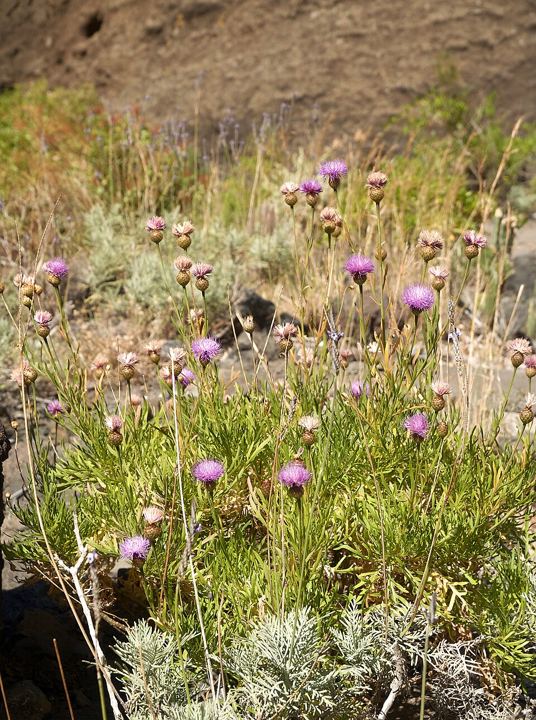
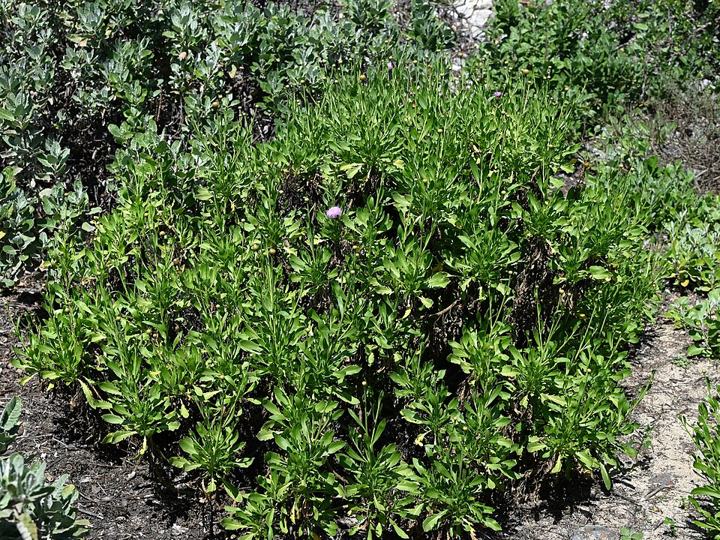
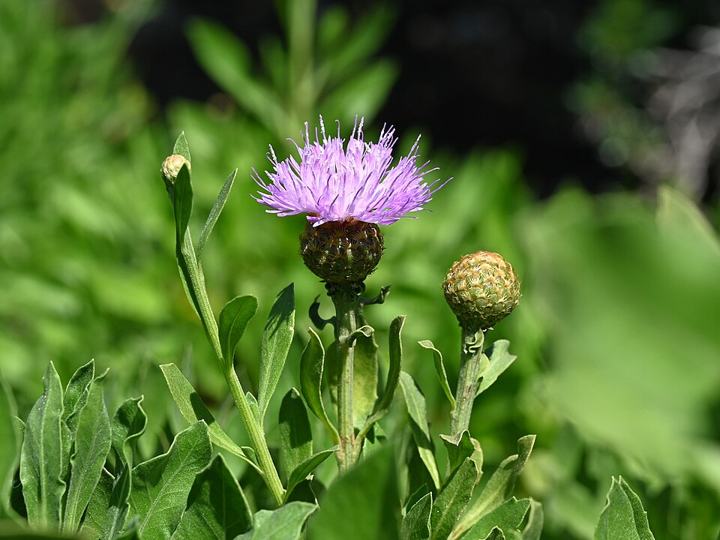
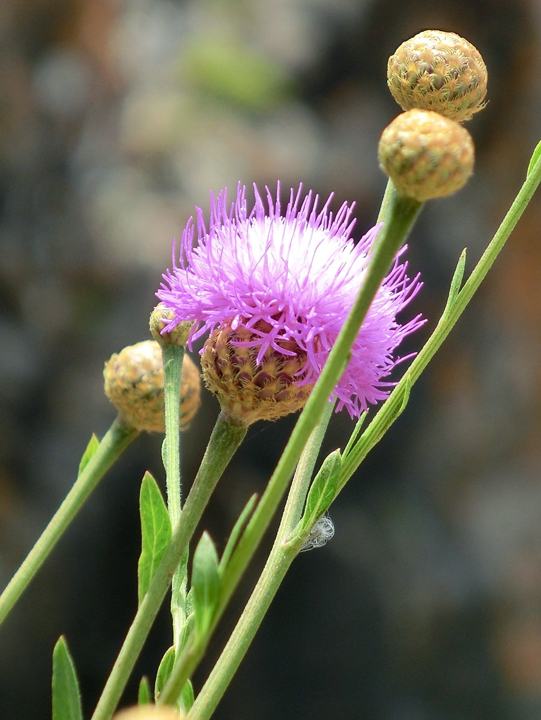
Shrub up to 1.5 m tall. Leaves usually divided, with 4–5 pairs of linear-lanceolate lobes; var. "subexpinnatus" (Burch.) A. Hans. & Sund. has more or less entire, finely serrated leaves. Mauve flowers in showy ovoid heads. Flowers in spring and summer.
Propagation and growing
The fruits of this cabezón are cypselae the size of a grain of wheat, which germinate easily as long as the seed head has not been attacked by insects. The plants are vigorous, easy to grow in containers and fast-growing. They are undemanding as to soil, although they prefer sandy or loose soils, and need moderate watering. This genus tends to hybridise and is highly variable at species and subspecies level, so the species and subspecies to be grown should be chosen carefully, and particular care taken when collecting the fruits to guarantee genetic purity. It is not usually available in native-plant nurseries and must be ordered a year in advance.
Garden use
This shrub, up to 1.5 m tall, with mauve-purple heads, flowers and fruits showily from spring to early summer. It is of undoubted scientific interest because of its rarity and very small range. Although its discoverer recorded it around La Laguna (a doubtful record), the typical variety is currently known only from the Masca valley in the west of the island, between 400 and 700 m altitude. Var. "subexpinnatus" (Burch. y A. Hans. & Sund.) grows between 20 and 150 m near Buenavista, on the other side of the Teno massif, and in Teno Bajo (W. Wildpret de la Torre and A. García Gallo, 1996). The plant also has great ornamental value for all kinds of landscaping, but always within the natural range of the species and subspecies, taking the precautions required by its local endemism and tendency to hybridise.
Notes
Its use outside the Teno massif is not recommended.
Protection status
Not listed.
Potential vegetation
Periploco laevigatae-Euphorbietum canariensis; Junipero canariensis-Oleetum cerasiformis.
Source: Cabildo de Tenerife, “Guía de especies vegetales”, CC BY. Translated from Spanish by us.
Bioclimatic belts
Warm coastal belt
- Inframediterranean, semi-arid (lower level)
- Inframediterranean, semi-arid (upper level)
Districts
Teno