
Canary rock rose (amagante)
Cistus symphytifolius Lam. · Family: Cistaceae
Very common in pine and other forests of the islands at 800–1,800 m.
Where it grows on Tenerife
Grows in: South, 300–1000 m · Above 1000 m · North, 300–1000 m
Zones are derived approximately from the Cabildo belts.
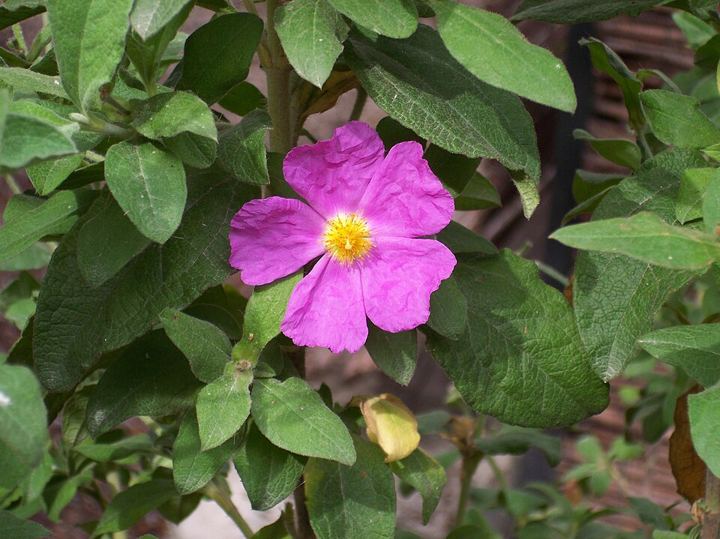
Photos
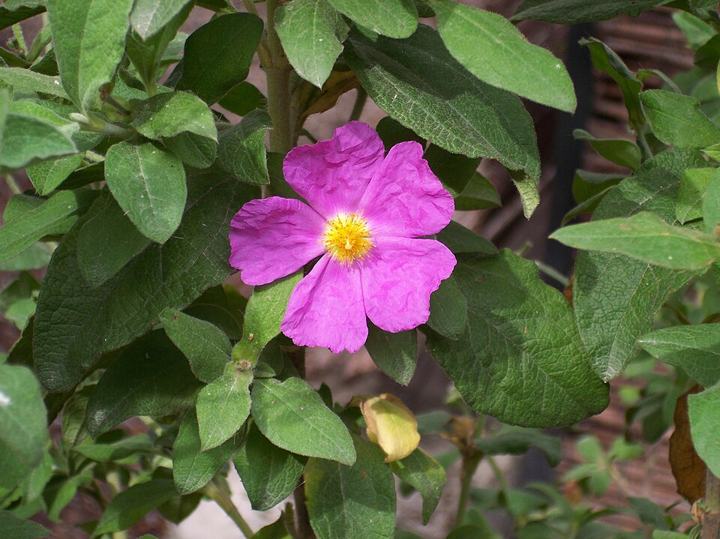
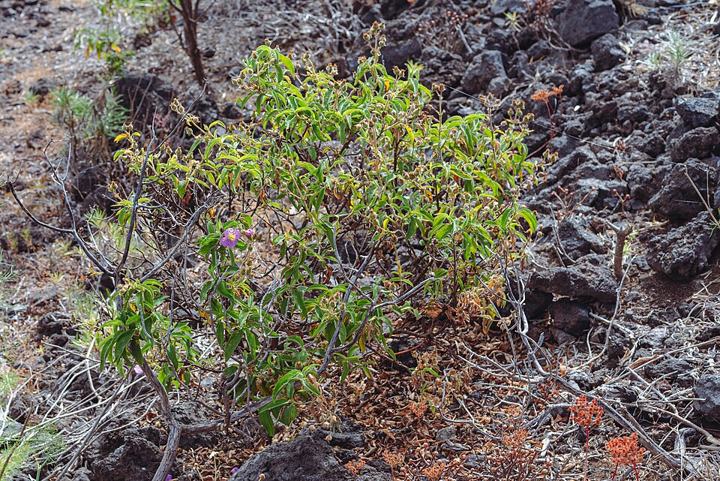
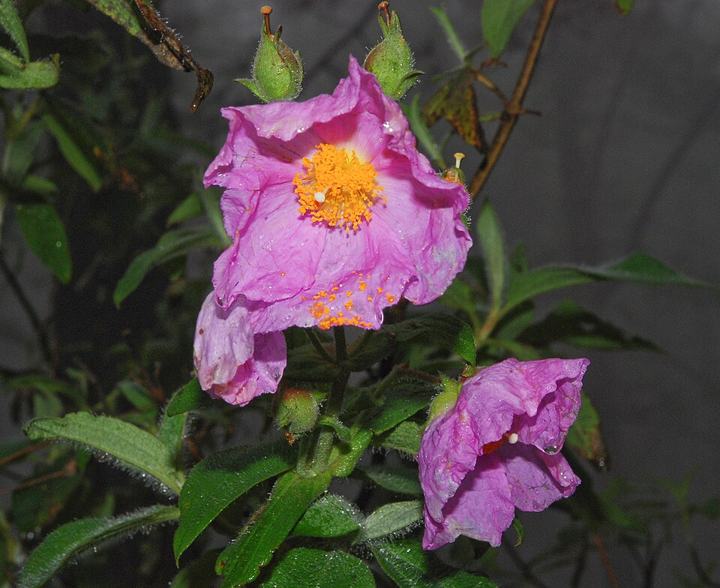
From Wikipedia
Cistus symphytifolius is a shrubby species of flowering plant in the family Cistaceae. It is endemic to the Canary Islands".
Text from Wikipedia, CC BY-SA 4.0: Cistus symphytifolius
Description
A shrub up to 1 m tall, much-branched and hairy, with ovate-lanceolate leaves and large pink flowers. The fruits are brown, globose capsules. Flowers in spring and summer.
Propagation and growing
The capsules of the "jarón", easy to collect in summer, contain numerous small black seeds that germinate with some difficulty; soaking them for 24 hours in a 0.2% potassium nitrate solution may make them germinate more easily. Seedlings tend to be attacked by fungi in the seed tray if there is too much moisture. The plants are tough and undemanding as to soil; they tolerate and adapt well to clay and limestone soils, although they prefer siliceous ones. Watering should be moderate to sparse, as the plant is highly resistant to drought and dry climates. It is fairly cold-hardy and needs full sun for optimal growth. It is not usually available in nurseries, and growing it to order must be arranged at least a year in advance.
Garden use
In spring and summer this more or less rounded, profusely branched shrub produces its brief flowering. Its large, showy, deep pink flowers give it excellent aesthetic quality. An added attraction is discovering, at the base of its trunk, the most curious and lovely yellow flowers with purple bracts of Cytinus ruber ssp. canariensis, a species parasitic (symbiotic?) on its roots. These aesthetic qualities, together with its resistance to drought and other adverse climatic conditions across the very wide altitude range it tolerates (500–1,900 m above sea level), make it an interesting species for ornamental use in all kinds of planting schemes. It tolerates different soil types and needs no special maintenance, except perhaps a light winter prune to remove ripe, dry fruits; it does not tolerate hard pruning, as it does not resprout from the base.
Notes
Exceptionally, it descends to low altitudes alongside the pines in the La Guancha–Icod area.
Protection status
Not listed.
Potential vegetation
Pinares (Sideritido solutae-Pinetum canariensis). Además, constituye jarales de sustitución (Cistetum symphytifolio-monspeliensis) en sabinares y monte verde, con suelos decapitados.
Source: Cabildo de Tenerife, “Guía de especies vegetales”, CC BY. Translated from Spanish by us.
Bioclimatic belts
Warm mid-slope belt
- Thermomediterranean, dry (upper level), without trade-wind fog
Temperate belt of laurel and pine forest
- Mesomediterranean, lower, semi-arid (upper level), without trade-wind fog
- Mesomediterranean, lower, dry, with trade-wind fog
- Mesomediterranean, lower, dry, without trade-wind fog
- Mesomediterranean, lower, subhumid, without trade-wind fog
- Mesomediterranean, upper, dry, without trade-wind fog
- Mesomediterranean, upper, subhumid, without trade-wind fog
- Mesomediterranean, upper, humid, without trade-wind fog
Districts
Anaga · Metropolitan area (Santa Cruz and La Laguna) · Acentejo · La Orotava Valley · Daute · South-west · Abona · South-east · Güímar Valley