
Sea grape (Coccoloba)
Coccoloba uvifera L. · Family: Polygonaceae
A species of sandy and rocky beaches in tropical and subtropical climates. Tolerates salt but can also grow on higher, cooler ground.
Where it grows on Tenerife
Grows in: South coast · North coast
Zones are derived approximately from the Cabildo belts.
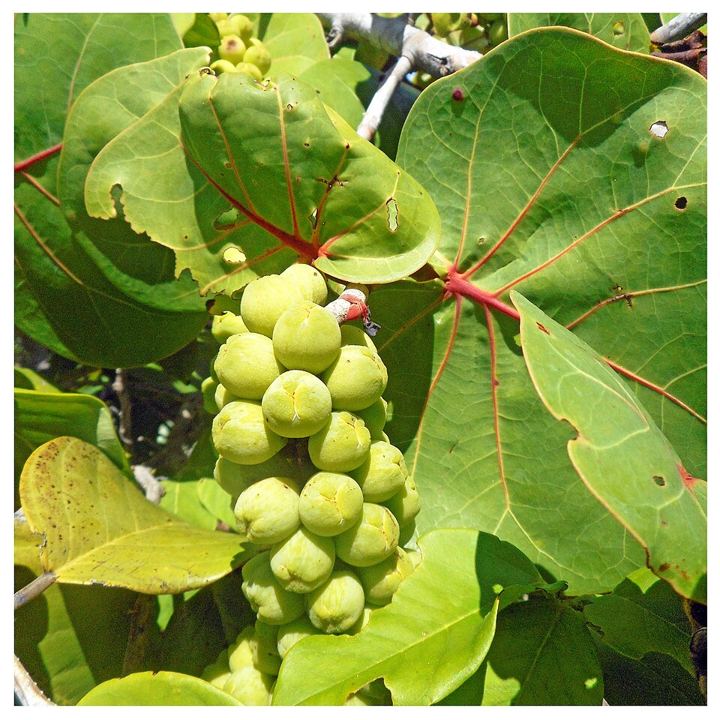
Photos
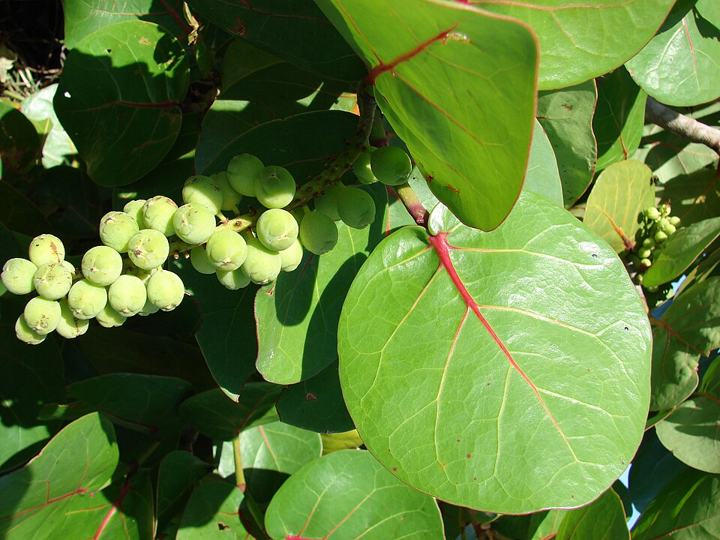
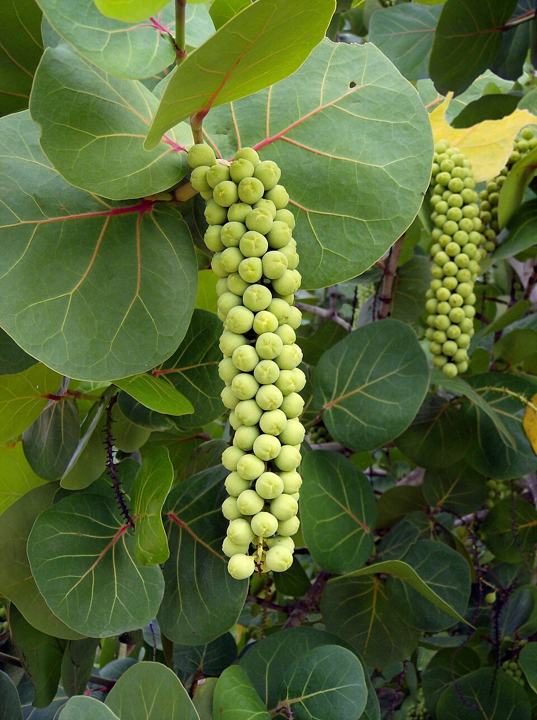
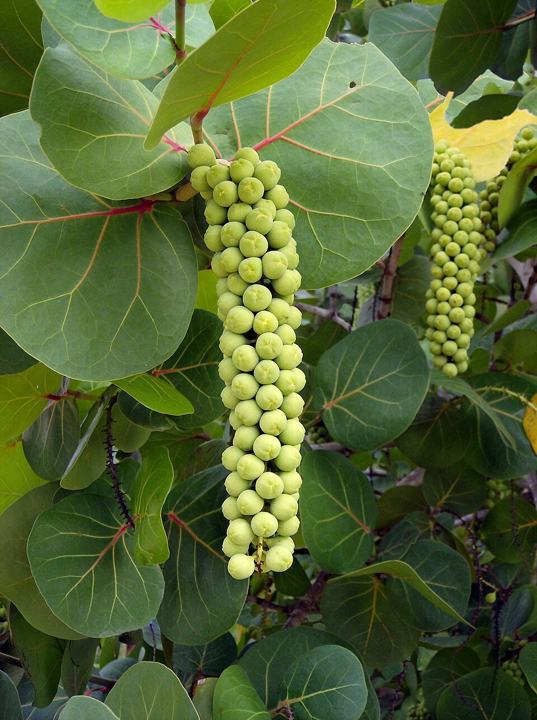
From Wikipedia
Coccoloba uvifera is a species of tree and flowering plant in the buckwheat family, Polygonaceae. Its common names include seagrape and baygrape. It is native to coastal beaches throughout tropical America and the Caribbean. It has edible fruit, among other uses.
Text from Wikipedia, CC BY-SA 4.0: Coccoloba uvifera
Description
A shrub or small tree from tropical America, generally with a twisted trunk, which can reach up to 9 m in height, with a shallow, very resilient root system and greyish, smooth bark that peels off in small flakes. Leaves large, up to 20 cm across, rounded, leathery, wavy, shiny green, with prominent veins that are greenish-yellow to reddish on the underside. Flowers very small, greenish-white, fragrant, arranged in dense, long racemes. Fruits spherical, fleshy, greenish, turning purple when ripe, arranged in hanging clusters that resemble bunches of grapes. Flowers from spring to summer.
Propagation and growing
They require temperate climates and prefer sandy soils. They do well in full sun, where soils are moist and well drained. Propagation generally by cuttings; also by seed. It is grown from seed easily. In a suitable soil it develops well and fast. Drought-resistant, it makes do with little watering and adapts well to adverse conditions; it accepts sunny positions.
Garden use
It is used as an ornamental in coastal places, being very salt-tolerant. They make good hedges. Suitable for rows along seafront promenades and sandy beaches. It is a small evergreen tree, which is why it has become a sought-after species from an ornamental point of view. Its roots and bark are used in folk medicine; they stop diarrhoea and dysentery. The fruit is borne in clusters and can be eaten raw or as jam; when fermented it produces a wine-like drink. It can be planted near the sea, as it withstands the influence of salt spray (“maresía”) very well. It is planted along paths, promenades, squares and gardens in general. It copes very well with bad weather and the effect of urban pollution, trapping soot without losing vitality. Maintenance is minimal.
Notes
It is said to have been the first plant that Christopher Columbus found when he first set foot on American soil, and that the reddish ink from its sap was used for writing by the first colonists and pirates. Its fruits make quite a mess. It is a species…
Source: Cabildo de Tenerife, “Guía de especies vegetales”, CC BY. Translated from Spanish by us.
Bioclimatic belts
Warm coastal belt
- Inframediterranean, hyperarid
- Inframediterranean, arid
- Inframediterranean, semi-arid (lower level)
- Inframediterranean, semi-arid (upper level)