
Campanilla (Convolvulus fruticulosus)
Convolvulus fruticulosus Desr. · Family: Convolvulaceae
Cool, damp coastal cliffs, crags and stony slopes, usually in spurge and juniper scrub.
Photos
Description
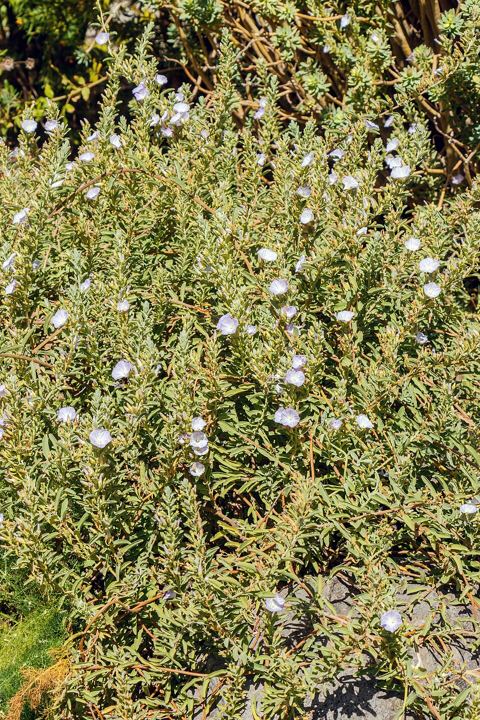
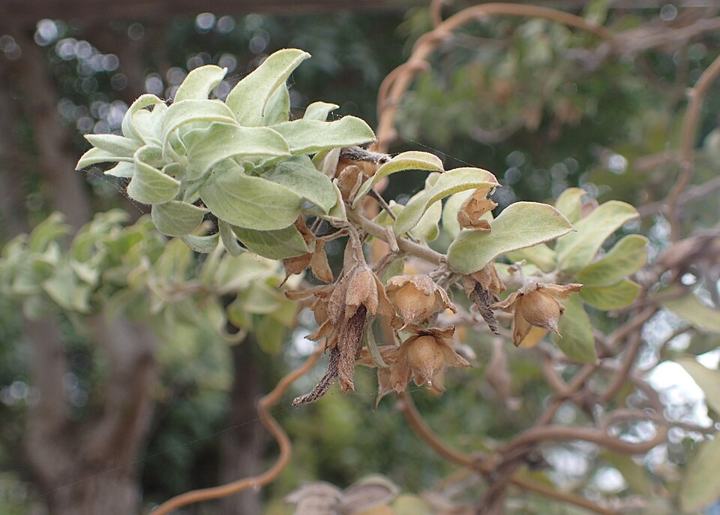
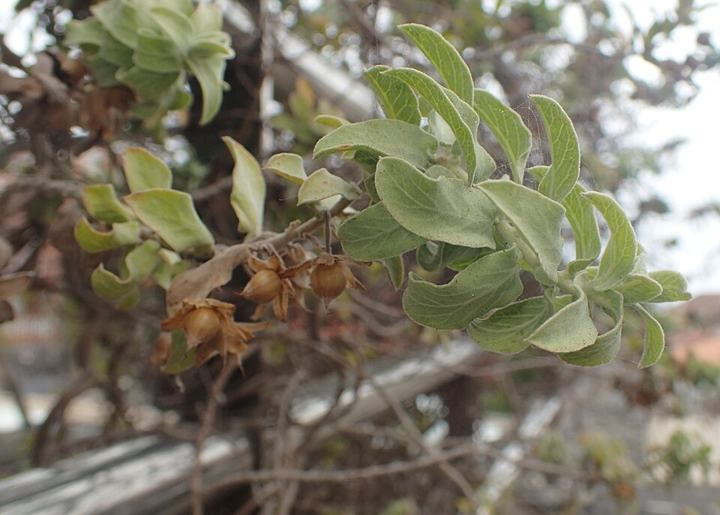
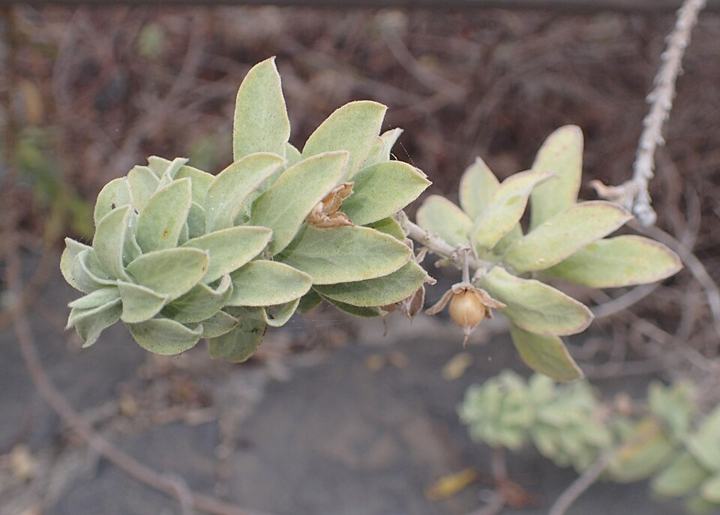
A liana-like plant with stems woody at the base, climbing, cylindrical, twining, up to 1.20 m long. Leaves linear-lanceolate, entire, with a cordate base, 1–2 cm long and up to 0.4 cm wide; petioles short; indumentum short, fine, of curly tomentum; veins prominent on the underside. Flowering branches densely leafy. Inflorescences axillary, of 1 to 3 flowers. Peduncles longer than the petioles, as long as the flowers, bearing two unequal subulate bracts nearer the stem than the calyx. Calyx glabrous, with oblong or elliptic-lanceolate sepals 5 to 7 mm long. Corolla pale mauve, pubescent, up to 2 cm long, with five shallow lobes and five purplish rays. Sometimes the rays are whitish; bracteoles filiform, 4 mm long, slightly pubescent. The fruit is a two-celled capsule with a few wrinkled seeds.
Propagation and growing
Grown on hedges, walls and rocky slopes. It flowers in August–September. Propagation by cuttings in spring; it grows in any type of soil.
Garden use
Water once a week, except in summer when watering should be more frequent. Keep in sun and shade all year round.
Protection status
Annex II of the Order of 20 February 1991 on the protection of wild flora of the Canary Islands.
Potential vegetation
Matorrales asociados a la parte superior del cardonal-tabaibla. Característica de Kleinio-Euphorbietea.
Source: Cabildo de Tenerife, “Guía de especies vegetales”, CC BY. Translated from Spanish by us.
Districts
Anaga · Metropolitan area (Santa Cruz and La Laguna) · Acentejo · La Orotava Valley · Daute · Teno · South-west · Abona · South-east · Güímar Valley