
Flame tree
Delonix regia (Bojer) Raf. · Family: Caesalpiniaceae
- Light
- sun
- Watering
- low
- Hardy to
- 3 °C
- Soil
- well drained
Where it grows on Tenerife
Grows in: South coast · North coast
Indicative conditions, reviewed by Marianna.
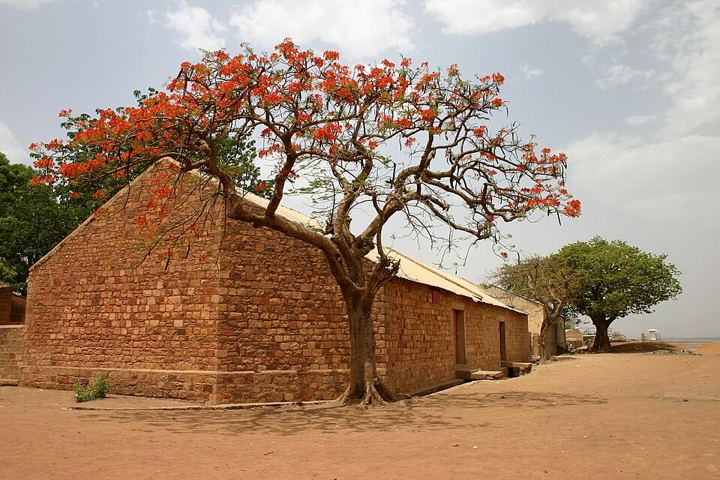
Photos
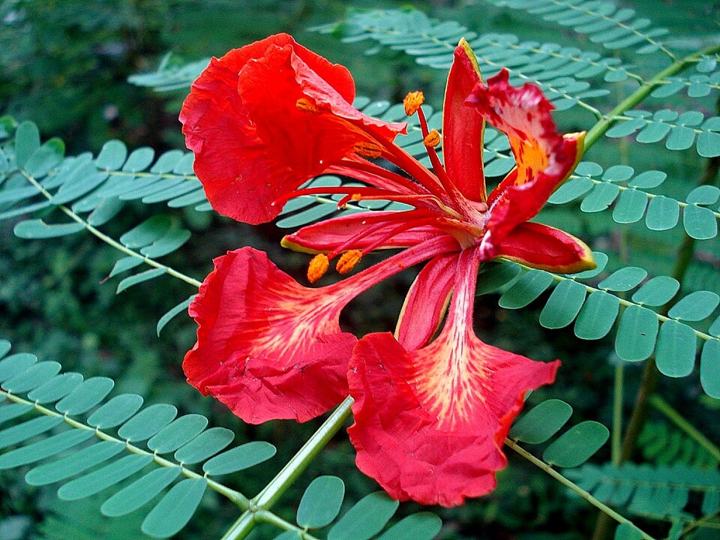
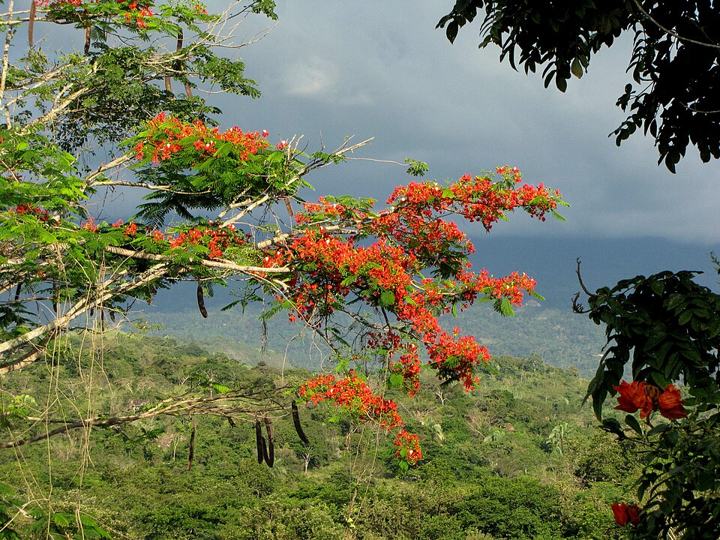
Origin and history
Native to Madagascar, where it has become rare in the wild. It needs coastal warmth and sun.
Written for this site, pending Marianna's review.
From Wikipedia
Delonix regia is a species of flowering plant in the bean family Fabaceae, subfamily Caesalpinioideae native to Madagascar. It is noted for its fern-like leaves and flamboyant display of orange-red flowers over summer. In many tropical parts of the world it is grown as an ornamental tree. It is a non-nodulating legume.
Although its country of origin was unknown, it had been in widespread cultivation for centuries. Finally, in 1932, a natural colony was discovered on the west coast of Madagascar by J. Leandri.
Text from Wikipedia, CC BY-SA 4.0: Delonix regia
Description
A deciduous tree native to Madagascar, 10–12 m tall, with a somewhat twisted trunk, grey bark and spreading branches forming a distinctly umbrella-shaped crown. Leaves bipinnate, 20–40 cm long, with 10–15 pairs of pinnae up to 10 cm long, each bearing 12–20 pairs of oblong leaflets 1 cm long, slightly tomentose. The very showy flowers are borne in racemes and have an intense red corolla of five unequal petals and 10 long stamens, also red. The fruits are characteristic long pods up to 60 cm long, hard and brown. Flowers in spring–summer.
Propagation and growing
It is propagated from seed, which is very easy to obtain. It is easy to grow and fast-growing. Moderate watering; it withstands dry spells well. Fast-growing. Propagated by seed. It has a very aggressive root system, so it should not be planted near buildings.
Garden use
Thanks to its shape and spectacular flowering it is attractive in gardens and promenades, especially in urban areas. It is naturally tough, including against the effects of pollution. However, its roots can be problematic because as they grow they lift the ground, so its position must be planned in advance. Easy to maintain, it takes formative pruning well, which can give it an attractive shape as a shade tree. Widely used in parks, gardens and as a street tree along roads and avenues because of its spectacular flowering.
Notes
It is very aggressive towards pavements and “disliked” by street sweepers.
Source: Cabildo de Tenerife, “Guía de especies vegetales”, CC BY. Translated from Spanish by us.