
Tree heath
Erica arborea L. · Family: Ericaceae
A very tough, abundant species of the laurel forest that forms heath where the forest has been degraded. Descends ravines on cool soil and joins the moister pine forests.
Where it grows on Tenerife
Grows in: North coast · South, 300–1000 m · North, 300–1000 m · Above 1000 m
Zones are derived approximately from the Cabildo belts.
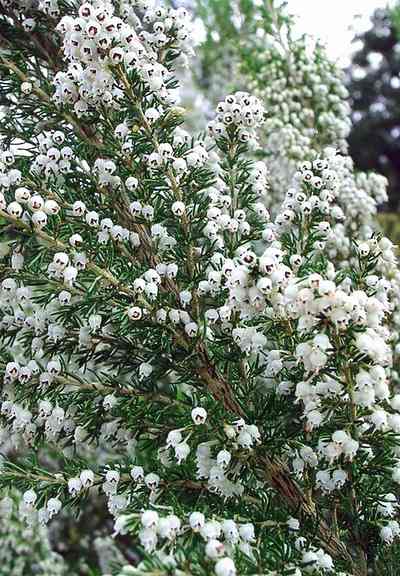
Photos
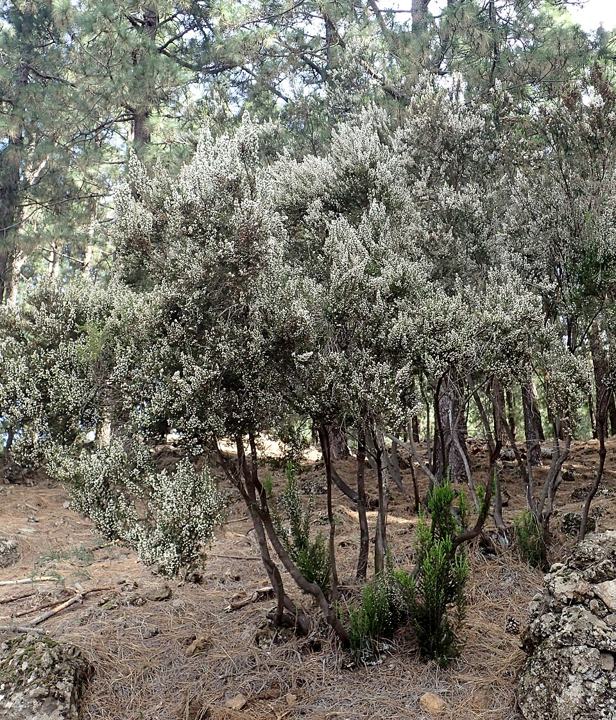
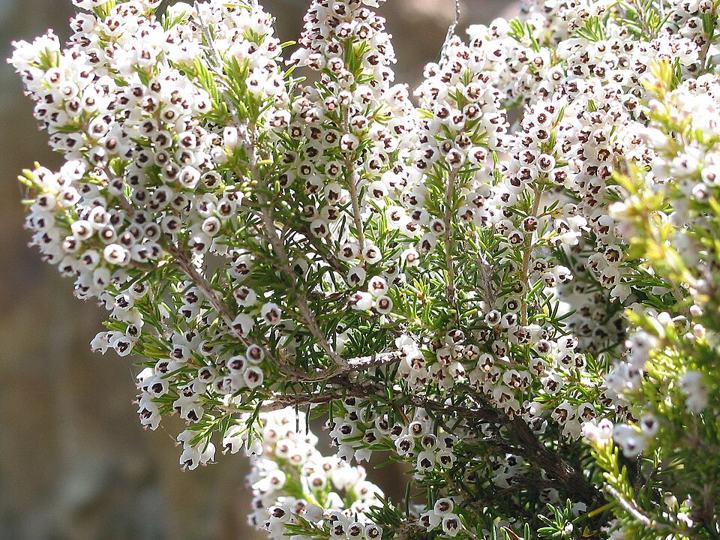
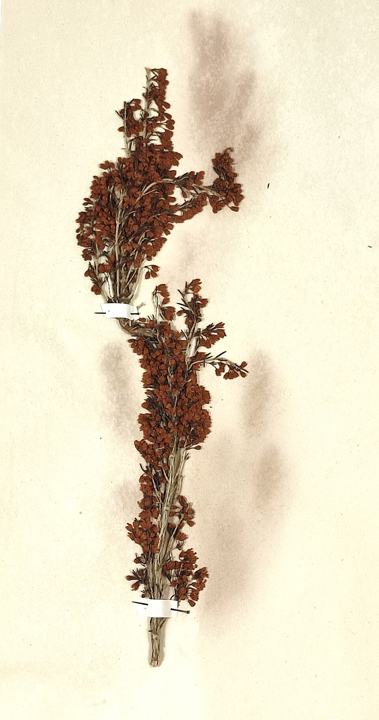
From Wikipedia
Erica arborea, the tree heath or tree heather, is a species of flowering plant (angiosperms) in the heather family Ericaceae, native to the Mediterranean Basin and Ethiopia, Kenya and Tanzania in East Africa. It is also cultivated as an ornamental.
The wood, known as briar root (French: bruyère, Catalan: bruc, Portuguese: betouro, Spanish: brezo), is extremely hard and heat-resistant, and is used for making smoking pipes. Leaf fossils attributed to this species were described for the Mio-Pleistocene deposit of São Jorge in Madeira Island.
Text from Wikipedia, CC BY-SA 4.0: Erica arborea
Description
A native species with a disjunct distribution: it is native to southern Europe, North Africa, Asia Minor and the Macaronesian archipelagos, and also occurs naturally in the mountains of central and eastern Africa. A tree, small or large, which in favourable growing conditions can exceed 15 m in height, but in scrubland remains a shrub 2-4 m tall. Bark powdery and finely fissured; twigs erect. Leaves small, 6-8 mm long, needle-like, in whorls of 3-4, dark green. Flowers in lateral racemes forming a pyramidal panicle, small, bell-shaped, pinkish white. Flowers in winter-spring.
Propagation and growing
The small, abundant fruits of this little tree, which can sometimes reach enormous dimensions (up to 20 m), are dispersed by the wind and germinate haphazardly in all sorts of places. It is enough to patiently cultivate a little soil taken from a heath area for small seedlings to come up; these grow extremely slowly and are difficult to cultivate. Tree heaths in cultivation are prone to chlorosis and very sensitive to transplanting, which must always be done with the utmost care. After a year of growing in a container it does not reach half a metre in height. It is rarely available in nurseries, in contrast to its abundance in the wild on the four western islands.
Garden use
This very beautiful small tree has undoubted ornamental value; its showy spring flowering covers our hills in white. It is little used in landscaping because it is delicate to grow: however much care is taken when planting, a high percentage of plants fail to thrive. Once established, it resprouts vigorously and tolerates repeated pruning, becoming a very hardy and long-lived species. It is suitable for hedging. It has a wide ecological range (200-1600 m above sea level) and needs watering and regular maintenance for at least the first two years.
Notes
Its wood is used in agriculture (forked props and poles), for making handcrafted utensils, producing charcoal, livestock bedding, etc. Rare in districts 7 and 8.
Protection status
Not listed.
Potential vegetation
Junipero-Oleetum cerasiformis; Visneo-Arbutetum canariensis; Lauro-Perseetum indicae; Sideritido-Pinetum canariensis.
Source: Cabildo de Tenerife, “Guía de especies vegetales”, CC BY. Translated from Spanish by us.
Bioclimatic belts
Warm coastal belt
- Inframediterranean, dry, with trade-wind fog
Warm mid-slope belt
- Thermomediterranean, semi-arid (lower level)
- Thermomediterranean, semi-arid (upper level), without trade-wind fog
- Thermomediterranean, semi-arid (upper level), with trade-wind fog
- Thermomediterranean, dry, with trade-wind fog
- Thermomediterranean, dry (lower level), without trade-wind fog
- Thermomediterranean, subhumid, with trade-wind fog
- Thermomediterranean, dry (upper level), without trade-wind fog
- Thermomediterranean, humid, with trade-wind fog
Temperate belt of laurel and pine forest
- Mesomediterranean, lower, semi-arid (upper level), without trade-wind fog
- Mesomediterranean, lower, dry, with trade-wind fog
- Mesomediterranean, lower, dry, without trade-wind fog
- Mesomediterranean, lower, subhumid, with trade-wind fog
- Mesomediterranean, lower, subhumid, without trade-wind fog
- Mesomediterranean, lower, humid, with trade-wind fog
Districts
Anaga · Metropolitan area (Santa Cruz and La Laguna) · Acentejo · La Orotava Valley · Daute · Teno · South-west · Abona · South-east · Güímar Valley