
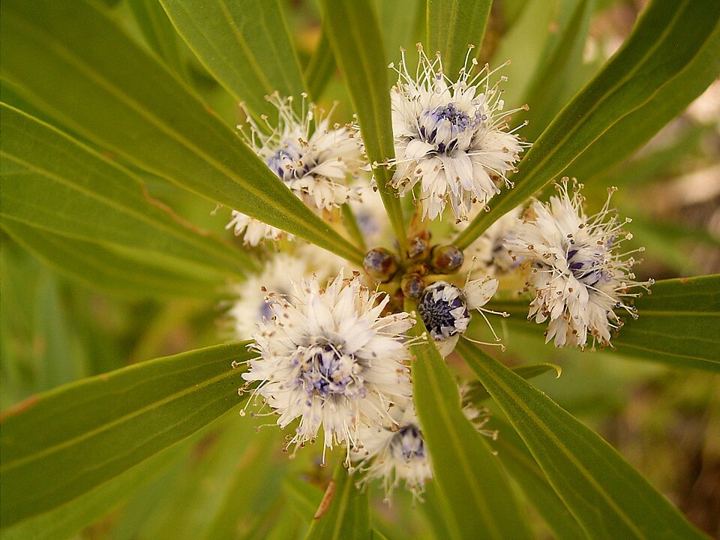
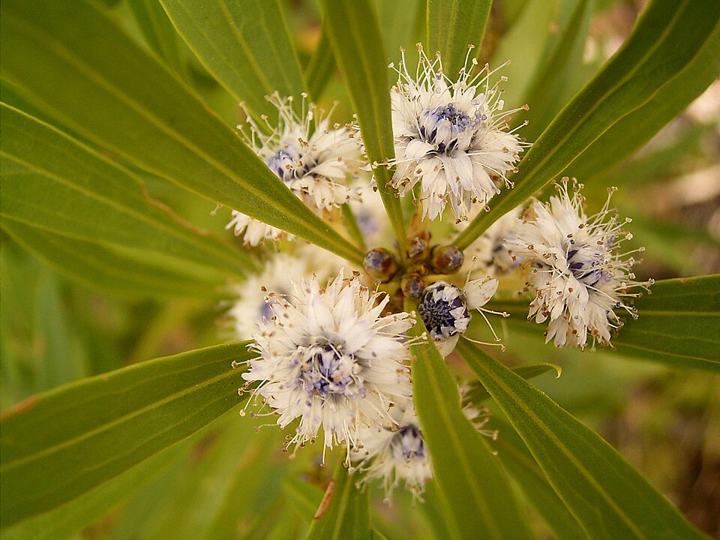
Globe daisy (Globularia salicina)
Globularia salicina Lam. · Family: Globulariaceae
Common on dry sunny stony slopes, 200–800 m, mainly in thermophilous scrub.
Where it grows on Tenerife
Grows in: South coast · North coast · South, 300–1000 m · North, 300–1000 m
Zones are derived approximately from the Cabildo belts.
Photos
From Wikipedia
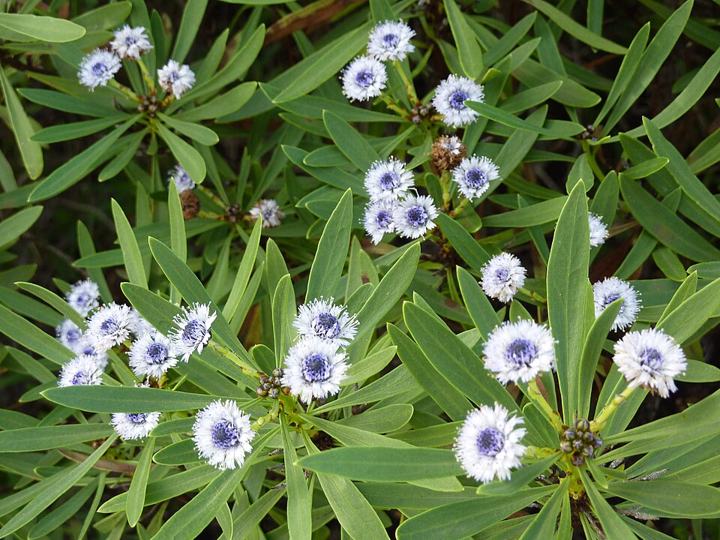
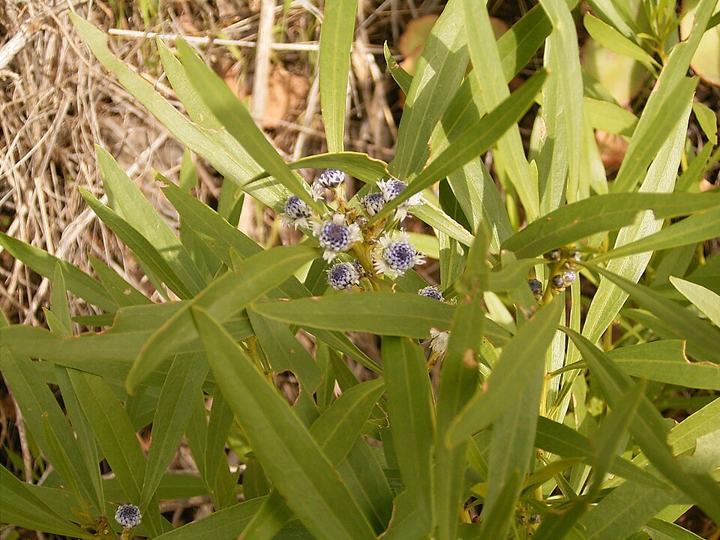
Globularia salicina is a shrub native to the archipelago of Madeira and to the central and western Canary Islands.
Text from Wikipedia, CC BY-SA 4.0: Globularia salicina
Description
A shrub up to 1.5 m tall. Leaves narrowly or broadly lanceolate, entire. Inflorescences axillary, often clustered towards the branch tips, with small flowers under 1.5 cm, pale blue or whitish. Flowers from late winter and in spring.
Propagation and growing
The fruits of the "mosquera" are small nutlets containing a single seed; mixed with soil and sown in seed trays, they germinate easily. The plants are vigorous and grow in containers without difficulty, although growth is somewhat slow. It prefers sunny positions and some soil moisture. It is not usually available in native-plant nurseries, and growing it must be ordered at least a year in advance.
Garden use
This beautiful shrub, reaching up to 1.5 m tall, with dense, always glossy foliage, has a long flowering period from late winter to autumn; the plant's main attraction is therefore its pretty and unusual bluish-white flowering. Its wide altitude range (200–800 m above sea level) and ecological range, together with its easy handling in the garden and its sturdiness and hardiness, make it an excellent species for all kinds of planting schemes. It needs no special maintenance or watering.
Notes
Also found on Madeira. Two other species of the genus have been described on Gran Canaria; they are much rarer but also of notable ornamental interest.
Protection status
Not listed.
Potential vegetation
Periploco-Euphorbietum canariensis; Junipero-Oleetum cerasiformis; Visneo-Arbutetum canariensis.
Source: Cabildo de Tenerife, “Guía de especies vegetales”, CC BY. Translated from Spanish by us.
Bioclimatic belts
Warm coastal belt
- Inframediterranean, semi-arid (lower level)
- Inframediterranean, semi-arid (upper level)
- Inframediterranean, dry, without trade-wind fog
- Inframediterranean, dry, with trade-wind fog
Warm mid-slope belt
- Thermomediterranean, semi-arid (lower level)
- Thermomediterranean, semi-arid (upper level), without trade-wind fog
- Thermomediterranean, semi-arid (upper level), with trade-wind fog
- Thermomediterranean, dry, with trade-wind fog
- Thermomediterranean, dry (lower level), without trade-wind fog
Districts
Anaga · Metropolitan area (Santa Cruz and La Laguna) · Acentejo · Daute · Teno · Abona · South-east · Güímar Valley