
Aderno (Heberdenia excelsa)
Heberdenia excelsa (Ait.) Banks ex DC. · Family: Myrsinaceae
A shade-loving laurel-forest species of slopes and cliffs within the forest.
Where it grows on Tenerife
Grows in: North, 300–1000 m · Above 1000 m
Zones are derived approximately from the Cabildo belts.
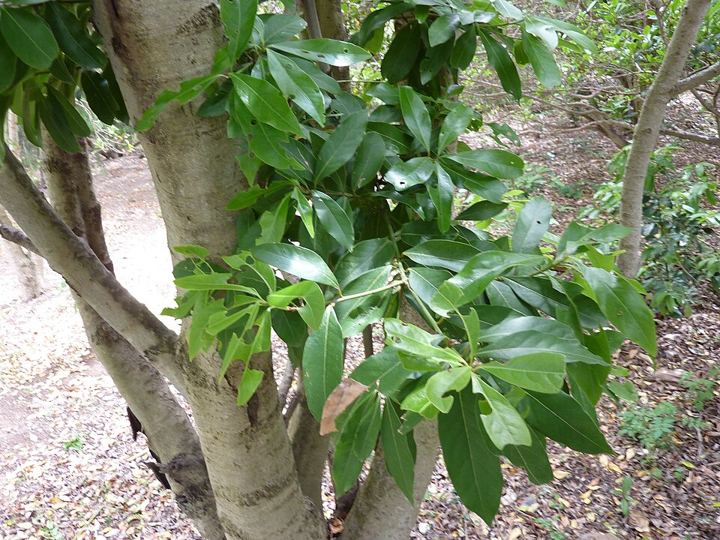
Photos
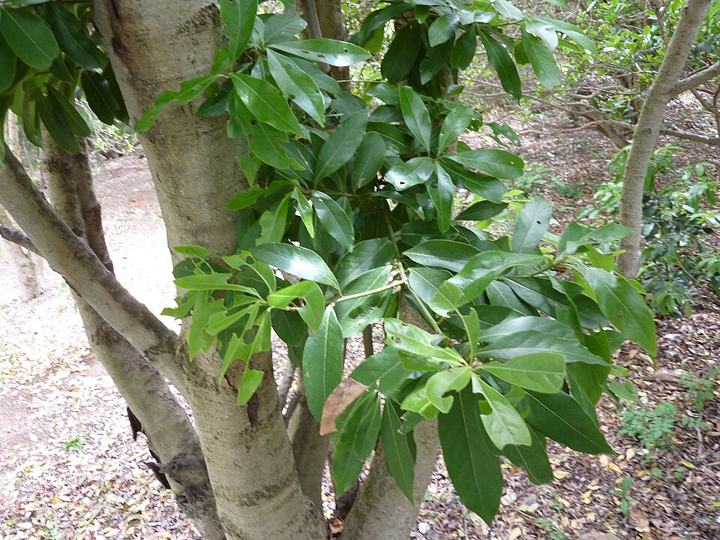
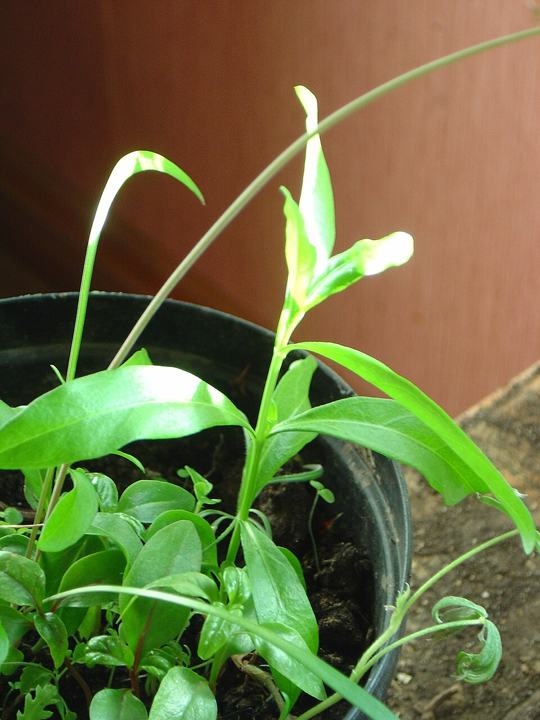
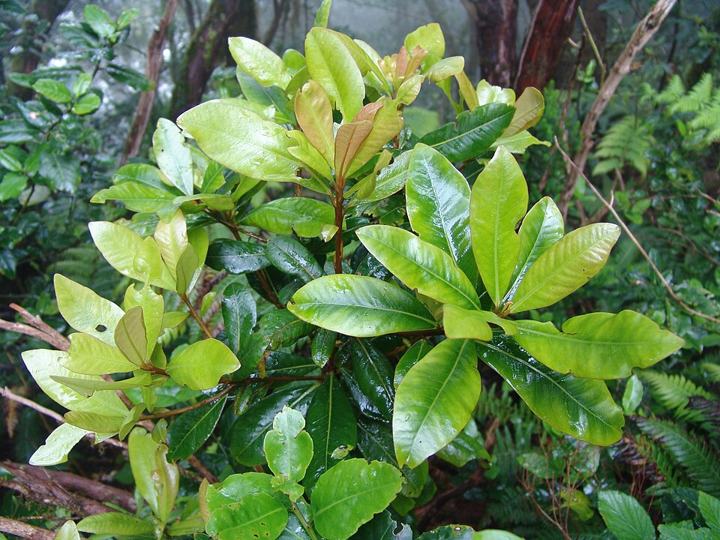
From Wikipedia
Heberdenia excelsa is a species of plant in the family Primulaceae. It is found in the Macaronesian archipelagoes of Madeira and the Canary Islands. It is threatened by habitat loss.
Text from Wikipedia, CC BY-SA 4.0: Heberdenia excelsa
Description
An evergreen tree 5–10 m tall, with dark grey bark, smooth on young branches and wrinkled on old trunks. Leaves entire, subcoriaceous, obovate to oblong, with a short petiole, 6–8 cm long, dark green on the upper surface with prominent veins. Flowers greenish-white or pinkish, fragrant, grouped in subterminal inflorescences or appearing on the branches themselves. Fruits spherical, about 5 mm in diameter, pinkish-purple. Flowers in winter–spring.
Propagation and growing
There are two forms or varieties (subspecies?), not yet formally described, of this curious and scarce species; both varieties are clearly distinguishable in the wild and in cultivation by the size and shape of their leaves and fruits. The “aderno” prefers the cool, damp areas of the laurel forest (monteverde) and readily produces root suckers from a parent plant, forming more or less dense groups of small trees belonging to the same individual (genet) (Bañares & Barquín, 1982). The “sacatero” thrives in warmer areas, “descending” into the thermophilous woodland where it finds its optimum, and does not produce root suckers (E. Barquín, pers. comm.). The fruits of the sacatero are larger and better to eat than those of the aderno, and in both cases contain a single seed that germinates without great difficulty. The aderno is particularly susceptible to thrips in summer when moisture is scarce, the underside of the leaves becoming coated brown, and even the upper side and the stems, to the extent that in extreme cases, when grown in containers, it can kill the plants; it prefers higher areas with some moisture and shade. The sacatero is easier to grow, being a very hardy plant that prefers lower, sunnier areas. The aderno grows much faster, reaching half a metre in height after one year in a container and in the wild attaining a truly tree-like size (15–20 m), whereas the sacatero only reaches 4–5 m. This species is not usually available in native-plant nurseries.
Garden use
Because it is so scarce in the wild, this species has great conservation value. The existence of two varieties, at least on the islands of Tenerife and La Palma, gives it special scientific interest as a species for research. The tree-like habit of both and their beauty make them very valuable as ornamental trees, but care must be taken to tell them apart and place each in its own habitat. The sacatero needs hardly any maintenance, unlike the aderno, which is more delicate and sensitive to lack of soil moisture and needs watering in the dry season for at least the first two years.
Notes
A scarce species on El Hierro, La Gomera, La Palma, Tenerife and Gran Canaria. Rare on Madeira.
Protection status
Annex II of the Order of 20 February 1991 on the protection of wild flora of the Canary Islands.
Potential vegetation
Lauro-Perseetum indicae; Diplazio-Ocoteetum foetentis; Ilici-ericetum platycodonis.
Source: Cabildo de Tenerife, “Guía de especies vegetales”, CC BY. Translated from Spanish by us.
Bioclimatic belts
Warm mid-slope belt
- Thermomediterranean, subhumid, with trade-wind fog
- Thermomediterranean, humid, with trade-wind fog
Temperate belt of laurel and pine forest
- Mesomediterranean, lower, dry, with trade-wind fog
- Mesomediterranean, lower, subhumid, with trade-wind fog
Districts
Anaga · Metropolitan area (Santa Cruz and La Laguna) · La Orotava Valley · Daute