
Canary ivy
Hedera canariensis Willd · Family: Araliaceae
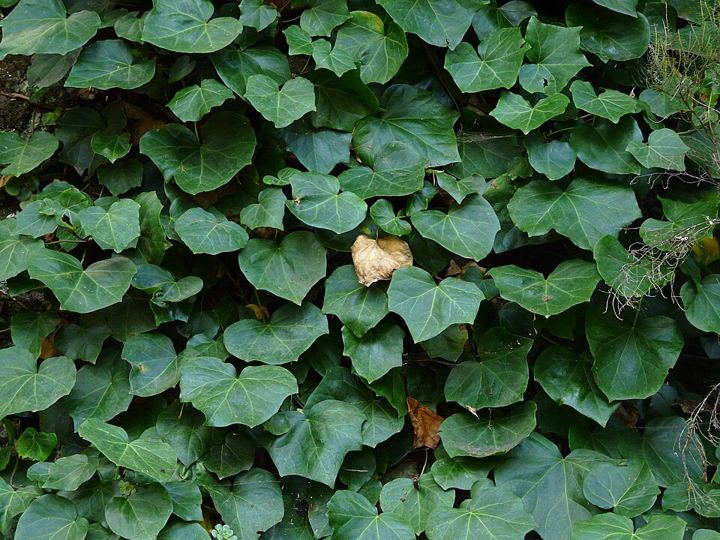
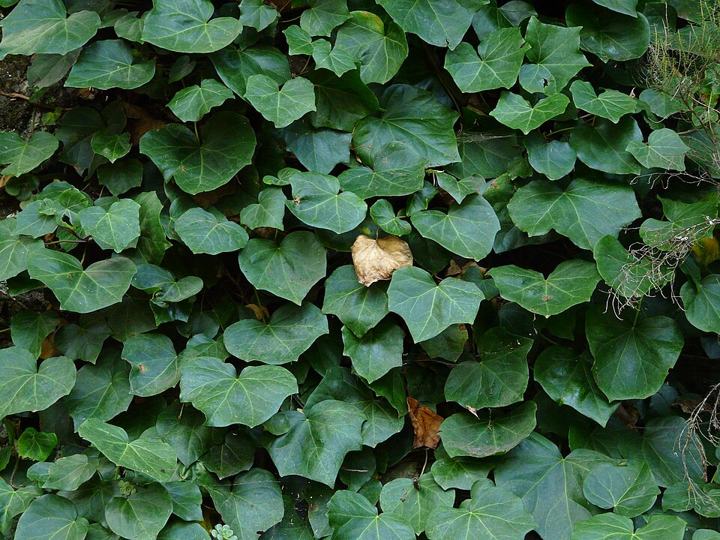
Typical of the laurel forest, always in shady, damp spots, climbing trunks and rocks or covering the forest floor.
Where it grows on Tenerife
Grows in: North, 300–1000 m · Above 1000 m
Zones are derived approximately from the Cabildo belts.
Photos
From Wikipedia
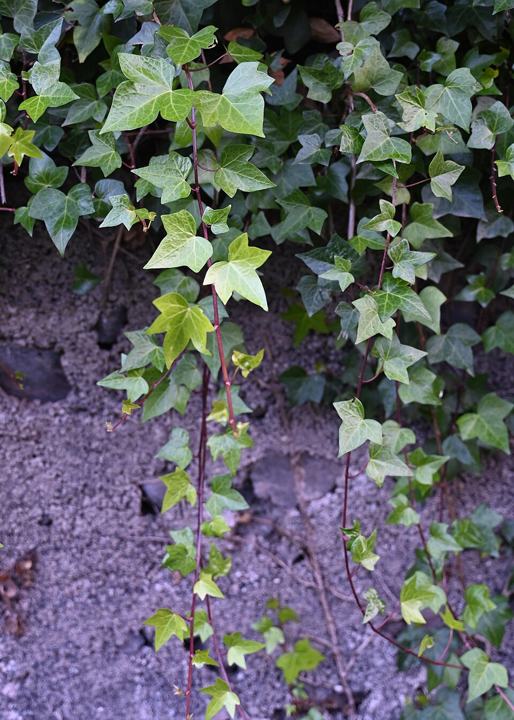
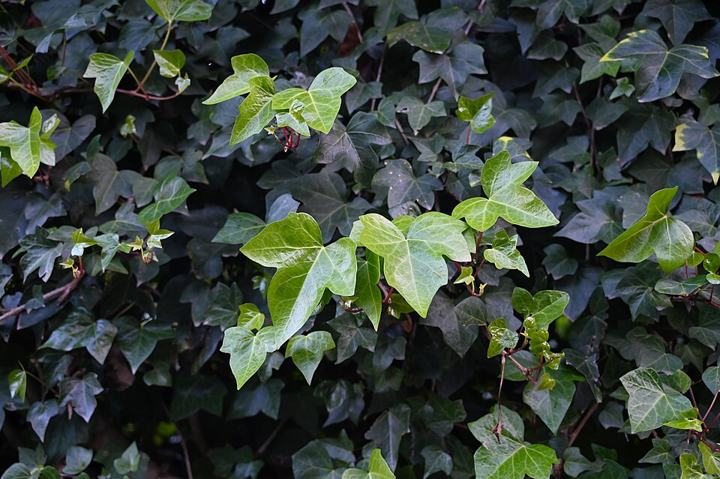
Hedera canariensis, the Canary Island ivy, Canary ivy or Madeira ivy, is a species of ivy, native to the Canary Islands and possibly the Atlantic coast of northern Africa.
Text from Wikipedia, CC BY-SA 4.0: Hedera canariensis
Description
A climbing plant with woody, reddish, flexible or brittle, evergreen stems. Leaves long-stalked, heart-shaped or three-lobed, dark green, glossy, up to 8 cm long. Flowers small, greenish, in umbel-like inflorescences. Fruits subglobose, fleshy, blackish. Flowers in summer and autumn.
Propagation and growing
The toxic fruits of the ivy, which ripen in winter–spring, contain three to five whitish seeds that germinate normally. This liana can also be propagated vegetatively by cuttings (pieces of stem, preferably with small roots), which root easily. They are vigorous, fast-growing plants that do best in cool, moist, shady places. It is not usually available in native-plant nurseries, but growing can be ordered only 3 or 4 months in advance.
Garden use
Although the European subspecies "Hedera helix" ssp. "helix" is usually used for ornamental purposes, being much more sun-loving, faster-growing and more drought-resistant, but also much more aggressive, we think the native subspecies, with its more trailing, ground-covering habit, can play an important role in cooler, moister and shadier areas and places where such an aggressive liana is not wanted. Suitable for planting between 800 and 1200 m altitude, always in shade or semi-shade; excellent as ground cover on flat or sloping ground, to cover walls and to climb fences or the trunks of large trees, which it does not harm. It needs no special maintenance or watering, apart from appropriate pruning.
Notes
Present in the Azores and Madeira. Variable in leaf shape.
Protection status
Not listed.
Potential vegetation
Lauro-Perseetum indicae.
Source: Cabildo de Tenerife, “Guía de especies vegetales”, CC BY. Translated from Spanish by us.
Bioclimatic belts
Warm mid-slope belt
- Thermomediterranean, subhumid, with trade-wind fog
- Thermomediterranean, humid, with trade-wind fog
Temperate belt of laurel and pine forest
- Mesomediterranean, lower, dry, with trade-wind fog
- Mesomediterranean, lower, subhumid, with trade-wind fog
- Mesomediterranean, lower, humid, with trade-wind fog
Districts
Anaga · Metropolitan area (Santa Cruz and La Laguna) · Acentejo · Daute · South-east · Güímar Valley