
Lemon daylily
Hemerocallis lilioasphodelus L. · Family: Liliaceae
Temperate climates. Full sun or partial shade, never arid, very exposed sites. Very frost hardy. Grows in any soil that stays fairly moist, except poorly drained clay.
Where it grows on Tenerife
Grows in: South coast · North coast · South, 300–1000 m · North, 300–1000 m · Above 1000 m
Zones are derived approximately from the Cabildo belts.
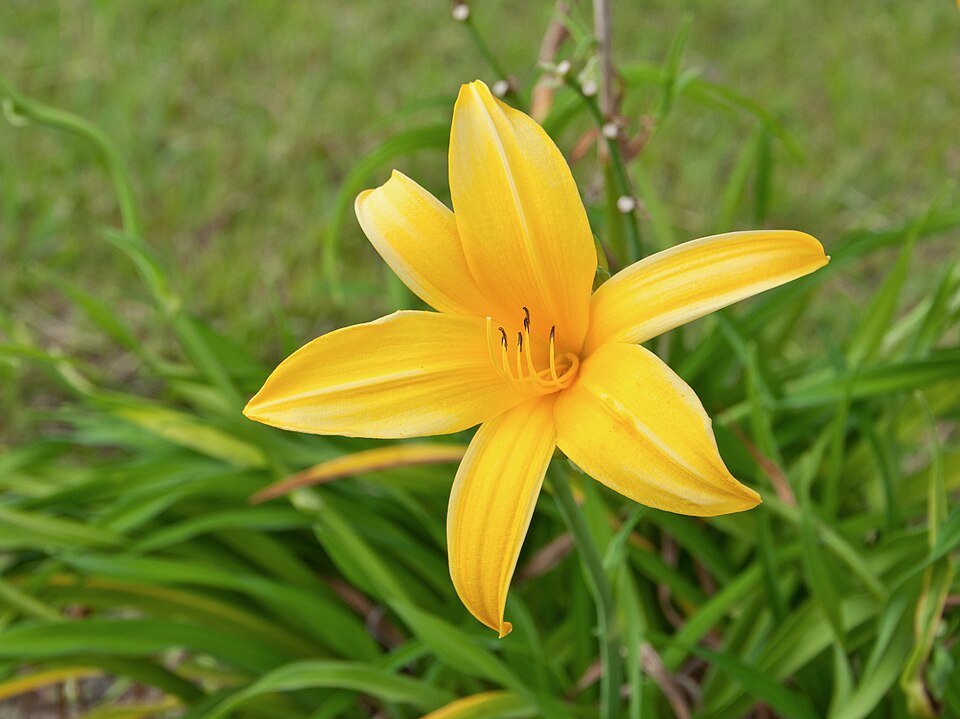
Photos
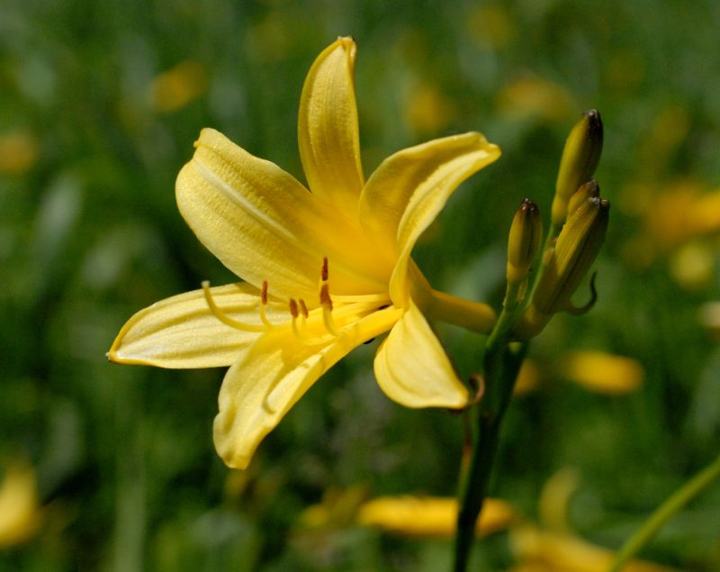
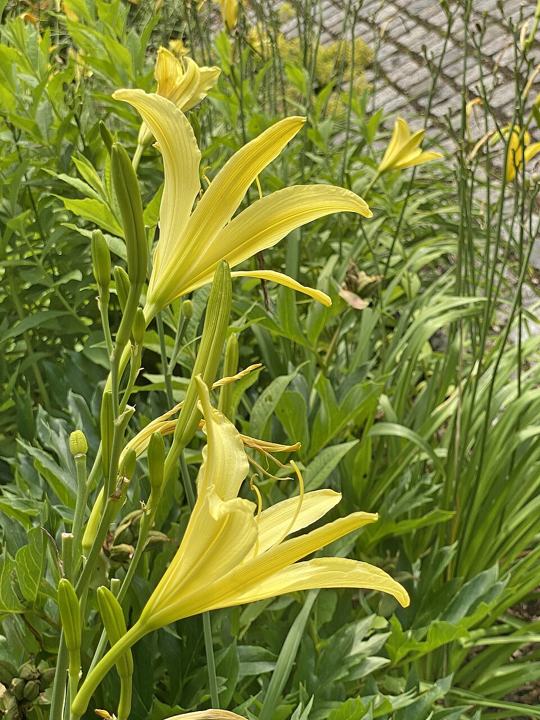
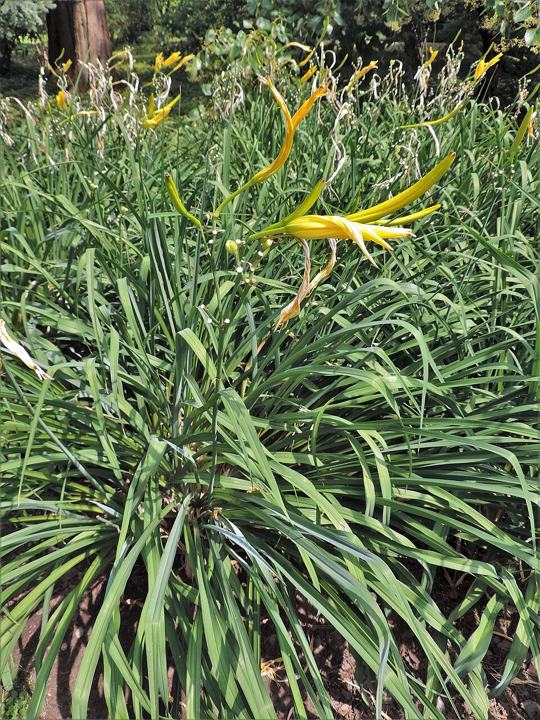
From Wikipedia
Hemerocallis lilioasphodelus (syn. Hemerocallis flava, known as lemon daylily, lemon lily, yellow daylily, and other names) is a plant of the genus Hemerocallis. It is found in China, northeastern Italy, and Slovenia. It was also one of the first daylilies used for breeding new daylily cultivars.
Hemerocallis lilioasphodelus grows in big, spreading clumps, and its leaves grow to 75 cm (30 in) long. Its scapes each bear from 3 through 9 sweetly fragrant, lemon-yellow flowers.
Text from Wikipedia, CC BY-SA 4.0: Hemerocallis lilioasphodelus
Description
A robust rhizomatous herbaceous perennial native to Asia, spreading and forming groups of several plants. Leaves in two rows, recurved, 50–65 cm long, green. Flower scapes erect, longer than the leaves, branched at the top. Racemes of 8–12 large, fragrant, trumpet-shaped flowers, lemon to chrome yellow, appearing in late spring and early summer and lasting a very short time.
Propagation and growing
It is usually propagated by dividing its roots. It is a herbaceous perennial and prefers places with little sun and a moist, not waterlogged, substrate. It flowers from May to July. A hardy, fast-growing plant that is easy to grow. Propagation is by division of the clump.
Garden use
Like all such species, it is much in demand in gardening for rows or as edging for flower beds. Its use has also become widespread on terraced land. Once cut, the flowers keep looking good for several days. It needs moderate watering and a reasonably fertile substrate. Frequently grown in parks, gardens and flower beds for its showy flowers, to form blocks of colour, borders and beds. It requires regular watering every 2–3 days, a spring feed and removal of flower stems after flowering. To obtain pure forms it must be grown apart from other species of the same genus. It is a species with medicinal properties.
Notes
None given.
Source: Cabildo de Tenerife, “Guía de especies vegetales”, CC BY. Translated from Spanish by us.
Bioclimatic belts
Warm coastal belt
- Inframediterranean, hyperarid
- Inframediterranean, arid
- Inframediterranean, semi-arid (lower level)
- Inframediterranean, semi-arid (upper level)
- Inframediterranean, dry, without trade-wind fog
- Inframediterranean, dry, with trade-wind fog
Warm mid-slope belt
- Thermomediterranean, semi-arid (lower level)
- Thermomediterranean, semi-arid (upper level), without trade-wind fog
- Thermomediterranean, dry (lower level), without trade-wind fog
- Thermomediterranean, subhumid, with trade-wind fog
- Thermomediterranean, dry (upper level), without trade-wind fog
- Thermomediterranean, humid, with trade-wind fog
Temperate belt of laurel and pine forest
- Mesomediterranean, lower, semi-arid (upper level), without trade-wind fog
- Mesomediterranean, lower, dry, with trade-wind fog
- Mesomediterranean, lower, dry, without trade-wind fog
- Mesomediterranean, lower, subhumid, with trade-wind fog
- Mesomediterranean, lower, subhumid, without trade-wind fog
- Mesomediterranean, lower, humid, with trade-wind fog