
Hibiscus
Hibiscus rosa-sinensis L. · Family: Malvaceae
- Light
- sun
- Watering
- medium
- Hardy to
- 2 °C
- Soil
- fertile
Where it grows on Tenerife
Grows in: North coast
With watering: South coast · South, 300–1000 m
Indicative conditions, reviewed by Marianna.
Photos
Origin and history
From tropical Asia; unknown in the wild and cultivated in China since antiquity. It reached Europe in the 18th century.
Written for this site, pending Marianna's review.
From Wikipedia
Hibiscus × rosa-sinensis (known colloquially as Chinese hibiscus, China rose, Hawaiian hibiscus, rose mallow and shoeblack plant) is a cultigen of tropical hibiscus, a flowering plant in the Hibiscus genus and Hibisceae tribe of the family Malvaceae.
It is an artificial hybrid created in cultivation during the pre-Columbian era by Polynesians in the west Pacific from the species Hibiscus cooperi and H. kaute (native to Vanuatu and French Polynesia, respectively). It is widely cultivated as an ornamental plant in the tropics and subtropics. The hibiscus is the national flower of Malaysia, where it holds official status, and is also considered the unofficial national flower of Haiti.
Text from Wikipedia, CC BY-SA 4.0: Hibiscus × rosa-sinensis
Description
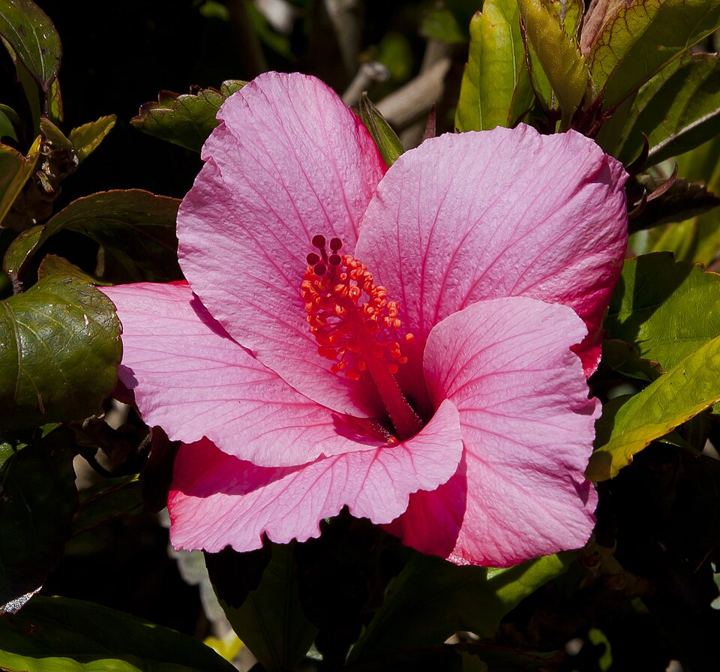
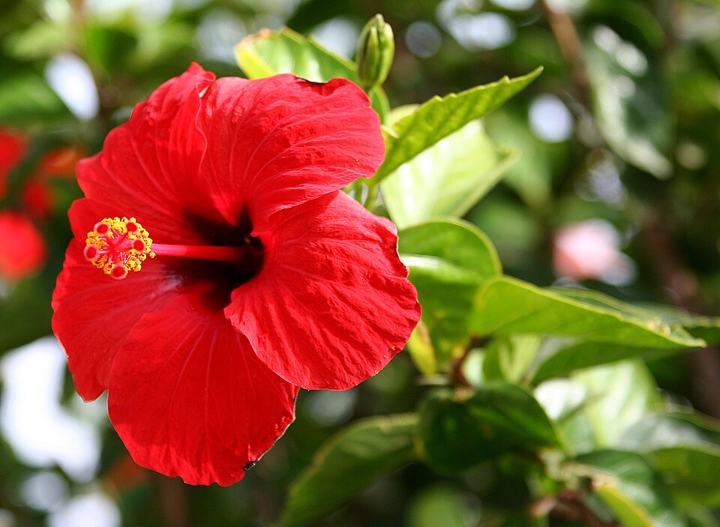
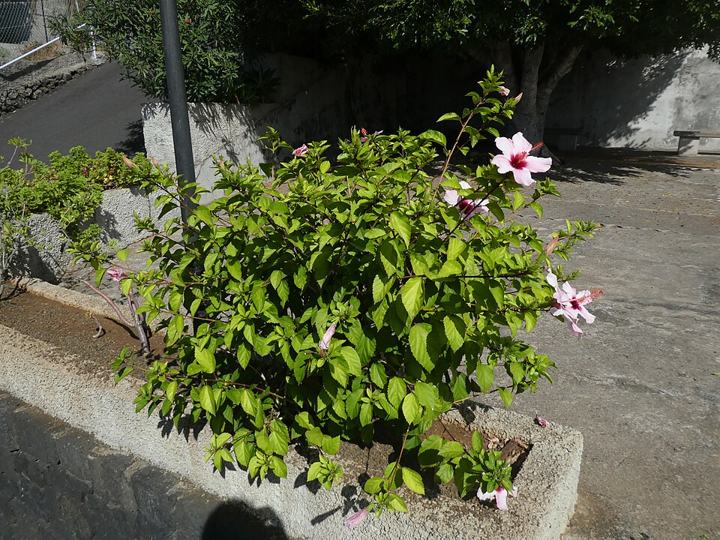
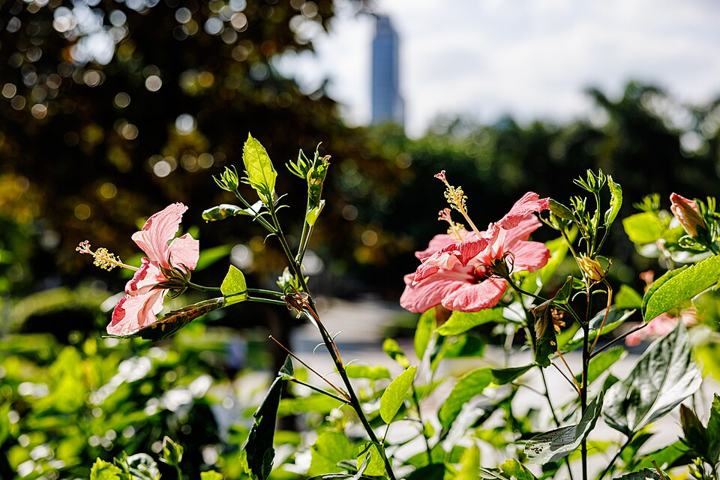
Shrub or small tree, native to tropical Asia, which can reach 4 m in height. Leaves petiolate, oval, with coarsely toothed margins and an acute tip, up to 15 cm long and glossy bright green on the upper surface. Flowers large, solitary, borne in the axils of the upper leaves. The corolla was originally red, but there are numerous cultivars with single or double flowers in colours ranging from white to various shades of red, yellow or orange. Stamens united in a staminal column that protrudes from the corolla. Flowers all year round.
Propagation and growing
A dense, evergreen shrub that is very widely cultivated; there are numerous varieties. It flowers in summer and requires a sunny, warm and also sheltered position. It thrives in deep, free-draining soil rich in humus. It can withstand sunny exposures as long as the soil is rich and moist. Fast-growing. Propagation by cuttings.
Garden use
This shrub is very widespread thanks to its attractive appearance and high decorative value. It is ideal for gardens in general. It tolerates hard pruning, which is best done after flowering. It is grown both as an indoor pot plant and outdoors in parks and gardens in areas with a mild climate; it is often used in groups or clipped to form hedges. It needs frequent, generous watering.
Notes
In urban settings it is moderately affected by whitefly.
Source: Cabildo de Tenerife, “Guía de especies vegetales”, CC BY. Translated from Spanish by us.