
Bigleaf hydrangea
Hydrangea macrophylla (Thunb.) Ser. · Family: Hydrangeaceae
- Light
- partial shade
- Watering
- high
- Hardy to
- -10 °C
- Soil
- acid, moist
Where it grows on Tenerife
Grows in: North, 300–1000 m
With watering: North coast · Above 1000 m
Indicative conditions, reviewed by Marianna.
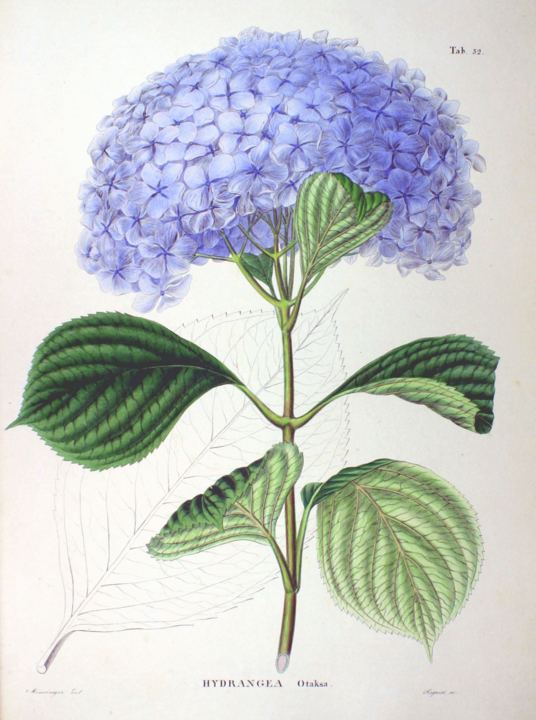
Photos
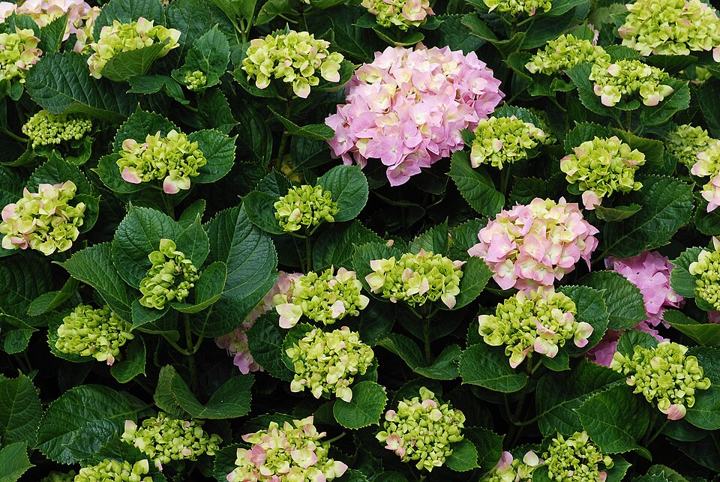
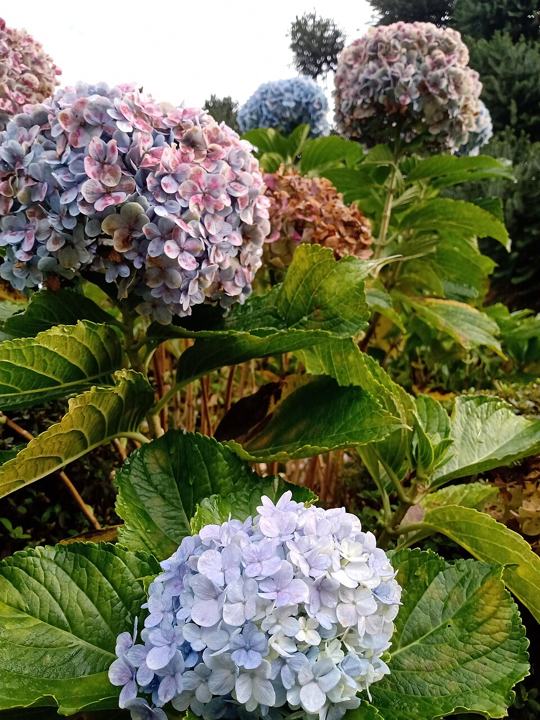
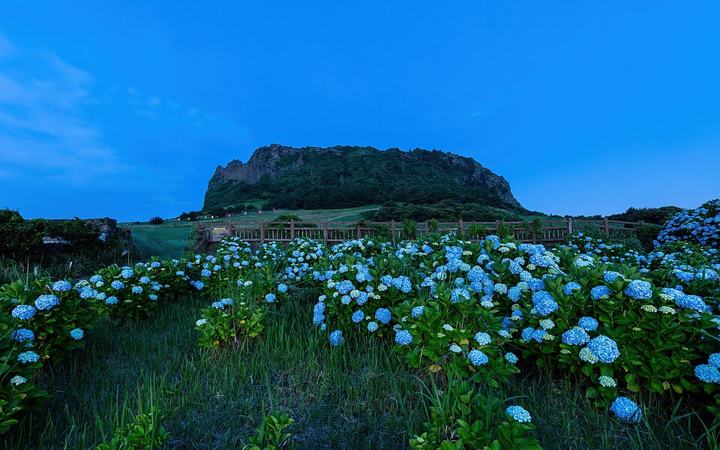
Origin and history
Native to Japan. It reached Europe in the late 18th century: Joseph Banks brought a plant to Kew in 1789. Flower colour depends on soil acidity: acid soil turns the flowers blue.
Written for this site, pending Marianna's review.
From Wikipedia
Hydrangea macrophylla is a species of flowering plant in the family Hydrangeaceae, native and endemic to Japan. It is a deciduous shrub growing to 3 m (10 ft) tall by 2.5 m (8 ft) or more broad with large heads of pink or blue flowers in summer and autumn. It is currently treated as monotypic, with no subspecies or varieties. Common names include bigleaf hydrangea, and, for particular cultivar groups, the names lacecap hydrangea, mophead hydrangea, and hortensia. It is widely cultivated in many parts of the world in many climates. It is not to be confused with H. aspera 'Macrophylla'.
Text from Wikipedia, CC BY-SA 4.0: Hydrangea macrophylla
Description
Deciduous shrub, native to Japan, which can reach 3 m in height, with thick, more or less glabrous twigs. Leaves opposite, broadly ovate, petiolate, acute or acuminate, with serrated margins, glossy, hairless, deep green on the upper surface and paler on the underside, which may be slightly hirsute. Petioles thick, leaving conspicuous scars when the leaves fall. Flowers gathered in more or less globose or flattened corymbs. The flowers are usually all sterile and variable in colour, from blue to pink, more rarely white. The fertile flowers, when present, are in the centre and are pink or blue. Flowers from June until the end of summer, sometimes even into autumn.
Propagation and growing
A very widely cultivated species with many varieties. Propagated by cuttings. Flowering normally takes place in April, with fruiting in July. It can reach sizes of up to 2 to 3 metres. It needs a partly sunny position and plenty of water. Fast-growing and easy to cultivate. Propagation by cuttings.
Garden use
Its use in gardening has become very widespread, especially in the wetter areas of the north of the Island. It is suitable for hedges or groups; it is also used in linear plantings in flower beds, planters, roundabouts and road junctions. It needs drastic pruning once the flowering period is over. Its substrate must be kept moist. In recent years its use as a houseplant has increased, and because its flowers are so striking, they are left to dry and then used to make dried-flower bouquets. It needs frequent watering and organic fertiliser. It may need support if it grows very large.
Notes
Although in the Islands its naturalisation is not a problem as it is in Madeira or the Azores, its indiscriminate use in monteverde (laurel forest) areas is not recommended.
Source: Cabildo de Tenerife, “Guía de especies vegetales”, CC BY. Translated from Spanish by us.