
Canary St John's wort
Hypericum canariense L. · Family: Hypericaceae
Typical of thermophilous scrub in the middle zones of the islands.
Where it grows on Tenerife
Grows in: South coast · North coast · South, 300–1000 m · North, 300–1000 m · Above 1000 m
Zones are derived approximately from the Cabildo belts.
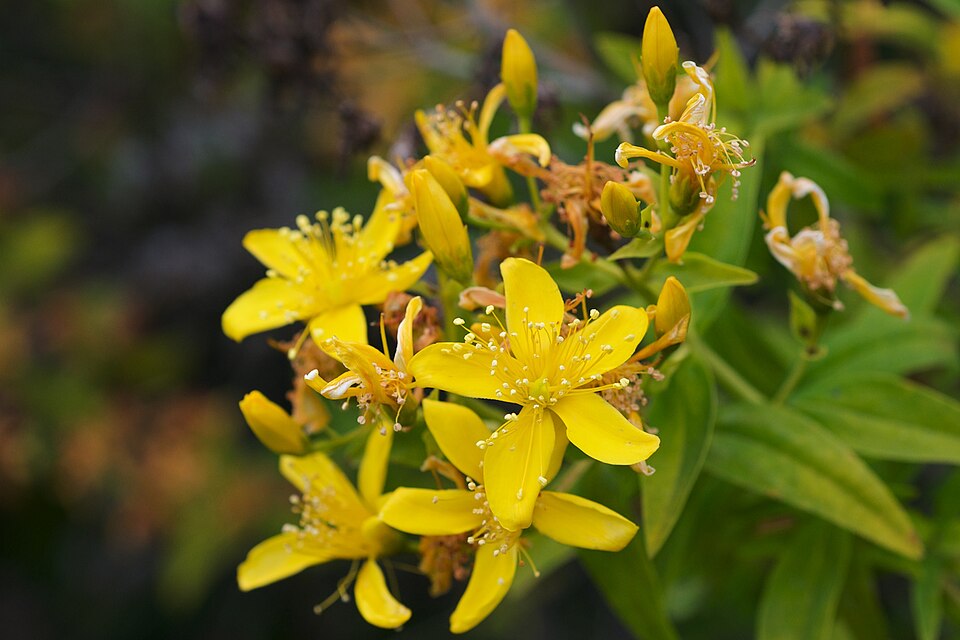
Photos
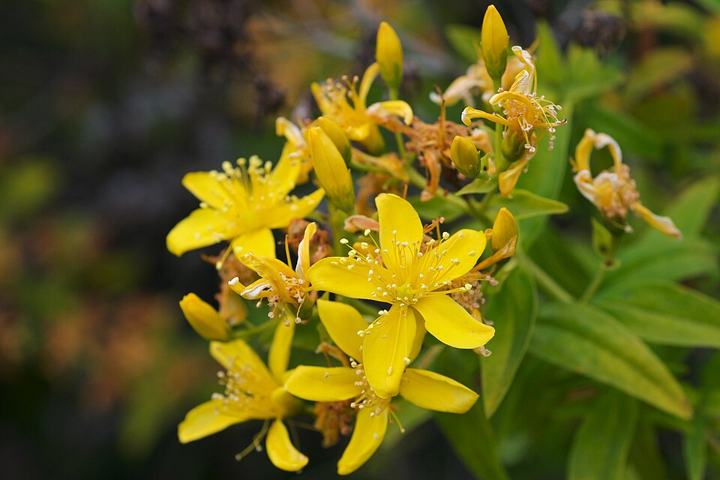
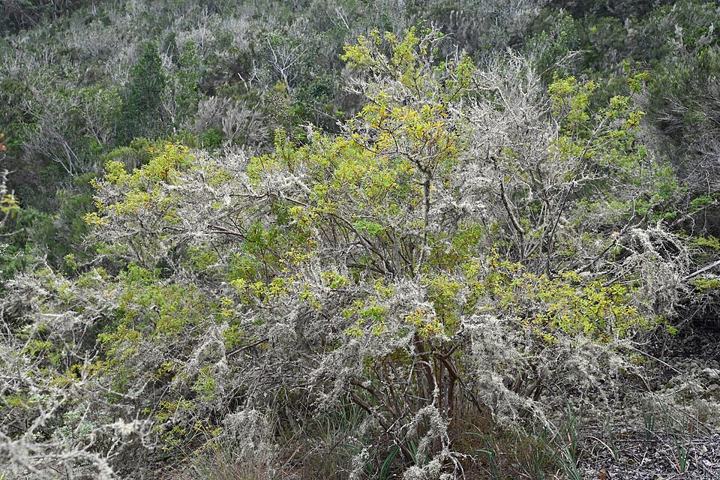
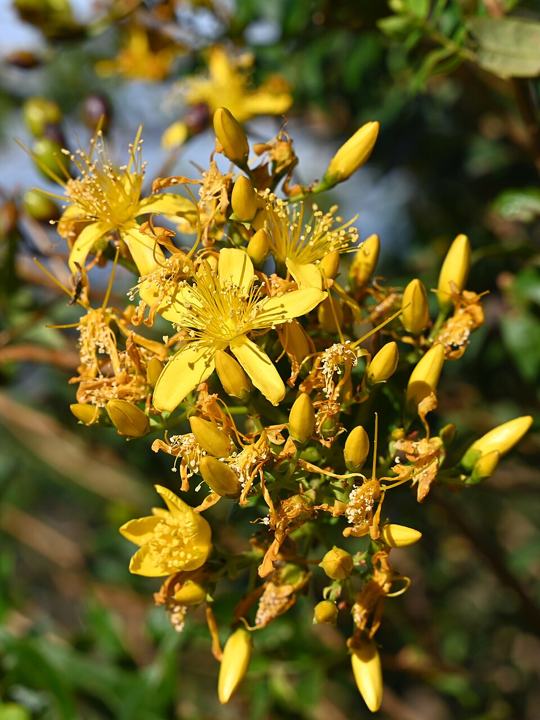
From Wikipedia
Hypericum canariense is a species of flowering plant in the family Hypericaceae known by the common name Canary Islands St. John's wort. It is the sole member of Hypericum sect. Webbia.
Text from Wikipedia, CC BY-SA 4.0: Hypericum canariense
Description
Erect shrub that can exceed 2.5 m in height, with greenish or chestnut-brown young twigs, linear-lanceolate or narrowly elliptic leaves and yellow, star-shaped flowers borne in large, dense, terminal inflorescences. Fruits capsular, leathery, ovoid, brown when ripe. Flowers in spring.
Propagation and growing
It is not very cold-hardy and prefers sunny or lightly shaded positions. It prefers moderately fertile, well-drained soils. It is propagated by seed, softwood or semi-ripe cuttings, layering or division. Not currently available in the Cabildo nurseries. In summer this shrub produces abundant capsular fruits, easy to collect, containing a multitude of tiny orange seeds which, mixed with soil and sown in seedbeds, germinate easily. Container-grown plants are vigorous and hardy and not demanding as to soil, although they prefer it well drained, in sun or partial shade. Overwatering should be avoided. It grows quickly and after a year of cultivation can reach half a metre in height and flower. It is not usually available in native-plant nurseries, but it can be ordered 4 or 5 months in advance.
Garden use
It is grown as a specimen plant or in groups for its attractive yellow flowers, in flower beds, rockeries or on banks. It needs watering in spring and summer. Once fruiting is over, in winter, it needs light pruning. Ideal for forest areas, especially recreational areas. Very resistant to adverse weather conditions (rain and wind). Seeds easy to collect. Striking for its yellow flowers, making it a shrub that adds colour. This pretty shrub can sometimes reach up to 4 m in height and a considerable spread. It has abundant, attractive bright yellow flowers, normally in spring (March to July), although it can flower two or three times and plants can be seen in flower almost all year round. In summer it usually loses much of its foliage, so it is advisable to prune it lightly after fruiting. It thrives in rocky, sunny places with some soil moisture, over a wide altitudinal range (200-1300 m above sea level), showing great resistance to adverse conditions. It is an extremely interesting species for reforesting lowland scrub and monteverde. It takes pruning perfectly well and is suitable for hedges. It needs almost no maintenance or watering, and plants should be spaced at least two or three metres apart.
Notes
Also present in Madeira; three varieties have been described ("canariense", "floribundum" and "platysepala"), linked by intermediate forms as regards floral morphology.
Protection status
Not listed.
Potential vegetation
Orlas potenciales de Rhamno crenulatae-Hypericetum canariensis.
Source: Cabildo de Tenerife, “Guía de especies vegetales”, CC BY. Translated from Spanish by us.
Bioclimatic belts
Warm coastal belt
- Inframediterranean, semi-arid (upper level)
- Inframediterranean, dry, without trade-wind fog
- Inframediterranean, dry, with trade-wind fog
Warm mid-slope belt
- Thermomediterranean, semi-arid (lower level)
- Thermomediterranean, semi-arid (upper level), without trade-wind fog
- Thermomediterranean, semi-arid (upper level), with trade-wind fog
- Thermomediterranean, dry, with trade-wind fog
- Thermomediterranean, dry (lower level), without trade-wind fog
Temperate belt of laurel and pine forest
- Mesomediterranean, lower, semi-arid (upper level), without trade-wind fog
Districts
Anaga · Metropolitan area (Santa Cruz and La Laguna) · Acentejo · La Orotava Valley · Daute · Teno · South-west · Abona · South-east · Güímar Valley