
St John's wort (Hypericum reflexum)
Hypericum reflexum L.f. · Family: Hypericaceae
A cliff species at 150–1,700 m on rocky scarps of laurel and thermophilous forest, sometimes ravine edges in the spurge zone where there is moisture.
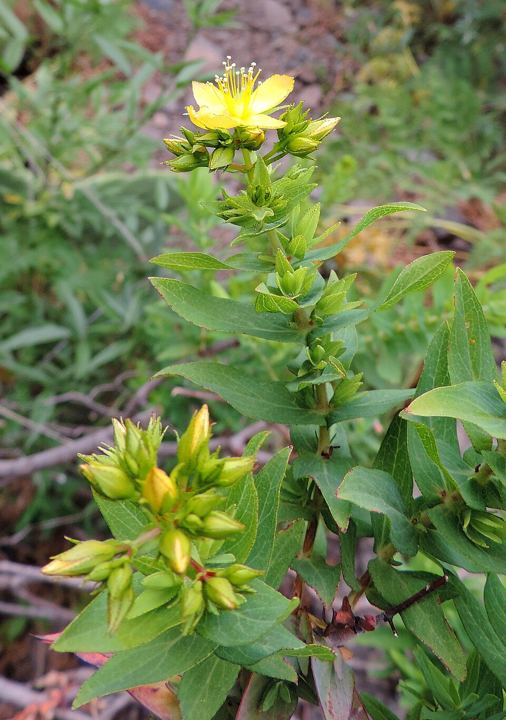
Photos
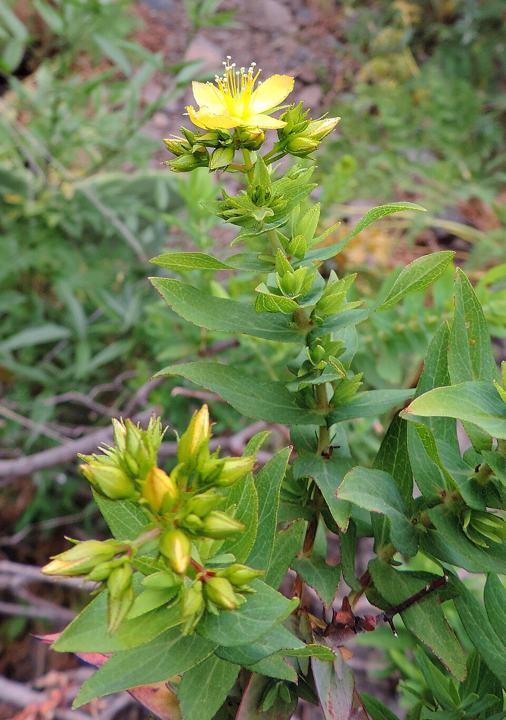
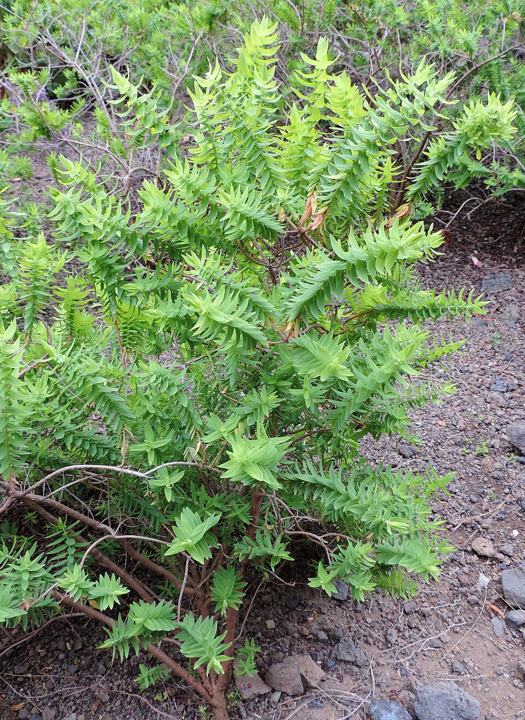
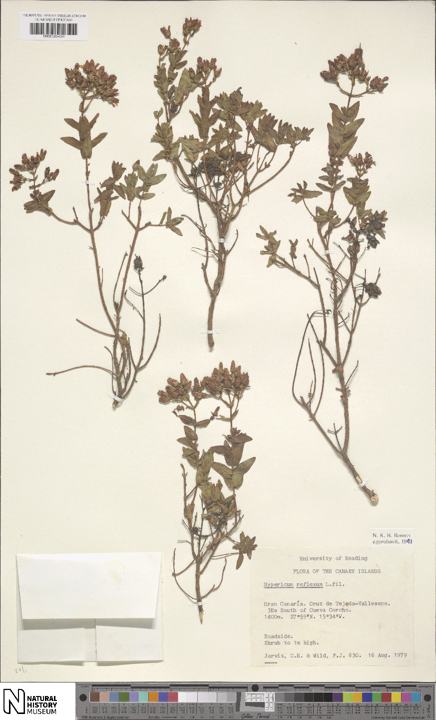
From Wikipedia
Hypericum reflexum is a species of plant in the St. Johns wort family, Hypericaceae, endemic to the Canary Islands. It is a small shrub up to 1 m (3 ft 3 in) in height with opposite, sessile leaves up to 25 mm (0.98 in) long and 12 mm (0.47 in) across. The flowerheads produce 5–40 bright yellow flowers with five petals each.
Hypericum reflexum was described in 1782 by Carl Linnaeus the Younger.
Text from Wikipedia, CC BY-SA 4.0: Hypericum reflexum
Description
A small, fairly branched shrub with erect branches, sometimes reaching 1.7 m tall. The leaves are light green, hairless, sessile and semi-clasping at the base, with glandular margins. The leaves are broadly ovate and the inflorescences are terminal, made up of a good number of pale yellow flowers. The fruits are ovoid capsules with many very small brown seeds.
Propagation and growing
To grow well, this species needs warm temperatures, averaging around 23 ºC. It should be placed in spots with moderate sun exposure, and moisture should be ensured by watering, especially in the dry season. In addition, the soil must drain well.
Garden use
This species has a high water requirement and a medium need for hours of light. It grows best at a temperature of 23 ºC in stony, moist soils. Its root growth is small, so there is no need to fear any destructive effect underground. It flowers between April and August. It is used as an ornamental plant. It is credited with certain anxiolytic and antidepressant properties, like the popular St John's wort, which also belongs to the genus Hypericum. Today it is highly prized as an ornamental, above all for its showy yellow flowers. In the wild it grows on rocky soils over a wide altitude range, which makes it ideal for difficult gardens such as banks or cliffs.
Notes
A Canary Islands endemic found on La Gomera, Tenerife and Gran Canaria.
Protection status
Not listed.
Potential vegetation
Matorrales rupícolas.
Source: Cabildo de Tenerife, “Guía de especies vegetales”, CC BY. Translated from Spanish by us.
Districts
Anaga · Metropolitan area (Santa Cruz and La Laguna) · Acentejo · La Orotava Valley · Daute · Teno · South-west · Abona · South-east · Güímar Valley