
Wild orange holly (Ilex perado)
Ilex perado Aiton ssp. platyphylla (Webb & Berthel.) Tutin · Family: Aquifoliaceae
Typical of the laurel forest, demanding shade and moisture.
Where it grows on Tenerife
Grows in: North, 300–1000 m · Above 1000 m
Zones are derived approximately from the Cabildo belts.
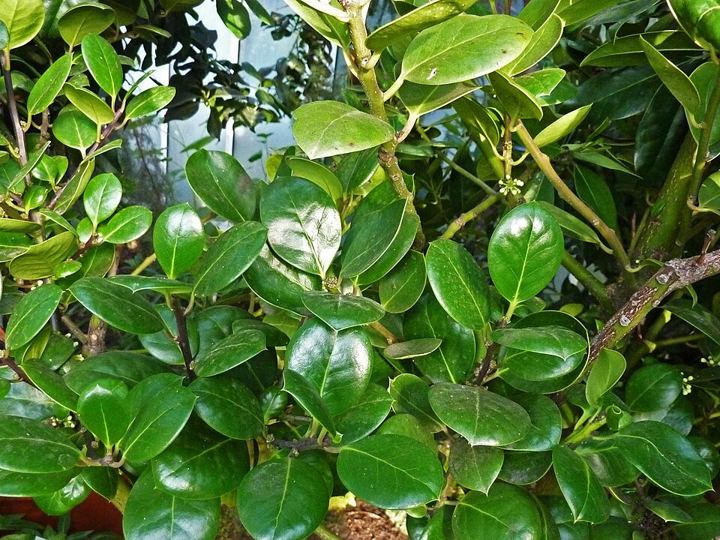
Photos
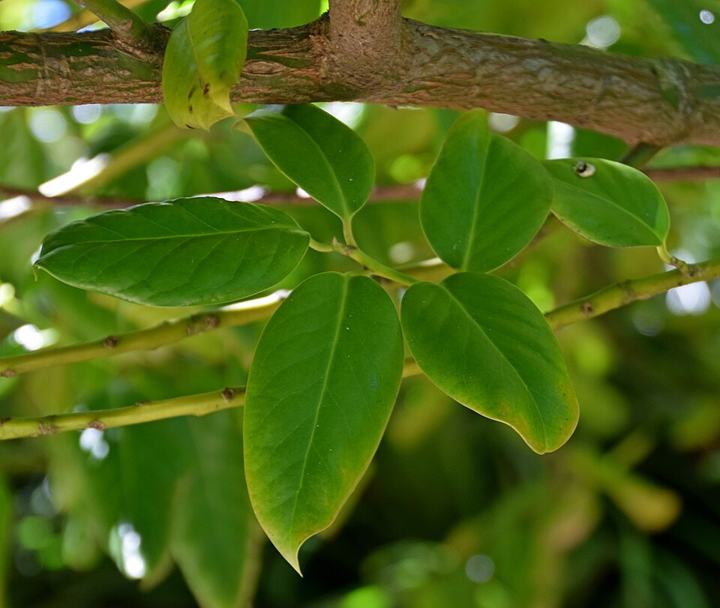
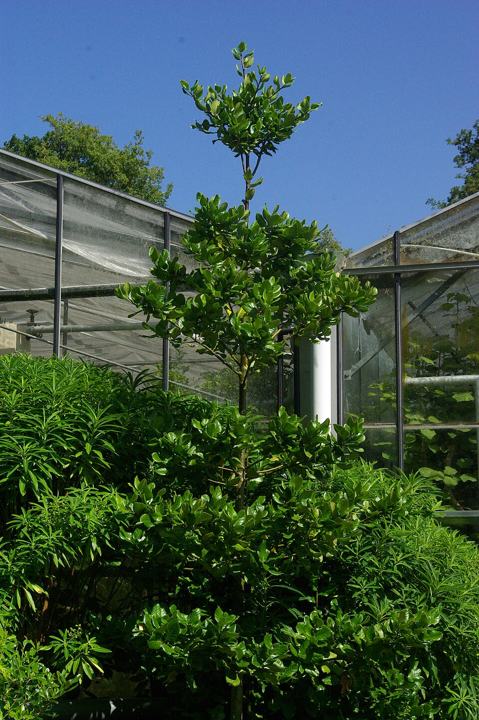
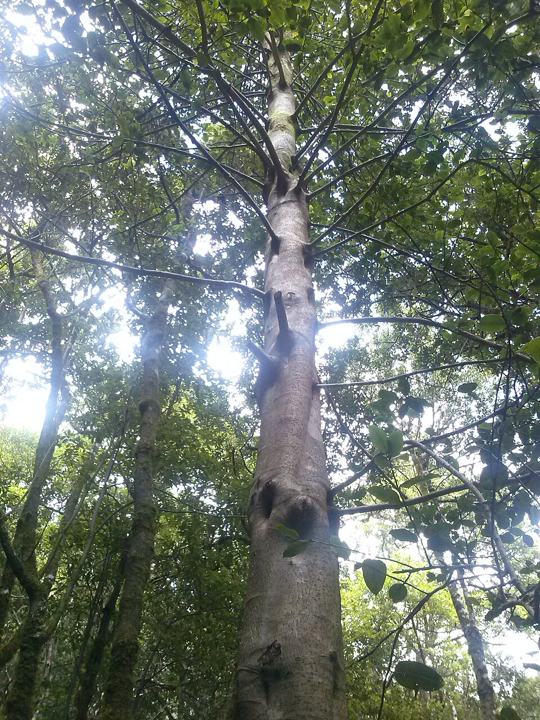
From Wikipedia
Ilex perado, the Macaronesian holly, is a species of holly endemic to Macaronesia, distributed throughout the Azores, Madeira and Canary islands. It is an important component of the natural high-altitude Macaronesian rainforest, known as 'laurisilva', found mostly at 500 to 1,200 m (1,640 to 3,937 ft) altitude but it also appears in forest formations at lower elevation. Many of the subspecies have been classified as threatened, probably because of very small population sizes, and are protected by local, national and regional legislation.
Text from Wikipedia, CC BY-SA 4.0: Ilex perado
Description
Evergreen tree, never exceeding 15 m in height, with greyish bark. Leaves glossy, up to 15 cm long, broadly ovate to orbicular, alternate, with wavy, usually spiny margins. Flowers small, white, borne in axillary clusters; fruits spherical, 6-9 mm in diameter, deep red. Flowers and fruits from February to June.
Propagation and growing
Propagated by seed and by basal shoots. The attractive red fruits of the female specimens of this beautiful tree do not darken on ripening as those of the “acebiño” do; they contain several very hard seeds that generally take more than a year to germinate, and germination is also very low and very irregular. Seedlings do not grow as slowly as those of the “acebiño”; this species is more susceptible to scale insects and aphids and less so to fungi. Growing it in containers is somewhat less difficult than the “acebiño”, but similar. It is more demanding as regards soil, needing more soil moisture and a neutral to acid pH. Because of the difficulty of germinating and growing it, it is not usually available in nurseries in sufficient quantity and must be ordered at least two years in advance. After one year in a container the plants are less than half a metre tall.
Garden use
The beauty and glossiness of its leaves, prickly at the tip, and its showy winter fruiting give it great value as an ornamental tree. Because of its scarcity, its endemic status and its presence in the most mature (climax) stands of the laurel forest (laurisilva), it is a species of extremely high conservation value (Bañares & Barquín, 1982). It needs watering and continuous maintenance for the first two years after planting. Although it is a laurel-forest species and needs suitable conditions of moisture, sunlight and soil to be grown, cultivation is possible, as has been shown elsewhere in Spain. It is suitable for parks and gardens where soil fertility and reliable watering can be guaranteed, especially in places with low rainfall; strong sun exposure should also be avoided. It tolerates moderate pruning.
Notes
This subspecies is endemic to the Canary Islands and found only on the islands of Tenerife and La Gomera.
Protection status
Annex II of the Order of 20 February 1991 on the protection of wild flora of the Canary Islands.
Potential vegetation
Lauro-Perseetum indicae.
Source: Cabildo de Tenerife, “Guía de especies vegetales”, CC BY. Translated from Spanish by us.
Bioclimatic belts
Warm mid-slope belt
- Thermomediterranean, subhumid, with trade-wind fog
- Thermomediterranean, humid, with trade-wind fog
Temperate belt of laurel and pine forest
- Mesomediterranean, lower, dry, with trade-wind fog
- Mesomediterranean, lower, subhumid, with trade-wind fog
- Mesomediterranean, lower, humid, with trade-wind fog
Districts
Anaga · Metropolitan area (Santa Cruz and La Laguna) · Acentejo · Daute