
Reina del monte (Ixanthus)
Ixanthus viscosus (Aiton) Griseb. · Family: Gentianaceae
Laurel forest and tree-heath woodland. Favours shade and moisture: under the canopy, at the edge of clearings, where trees break the wind.
Photos
From Wikipedia
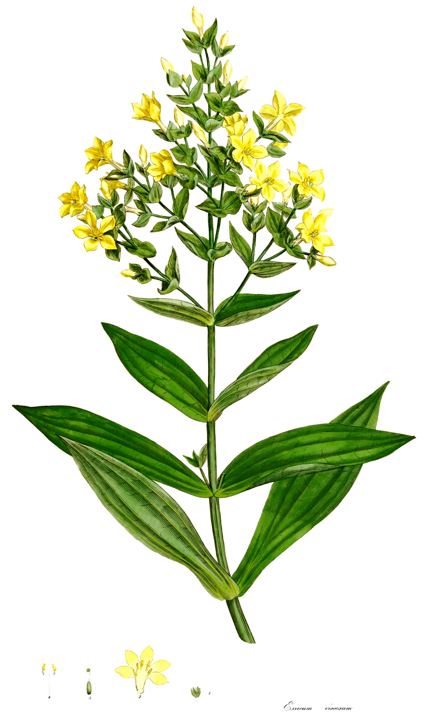
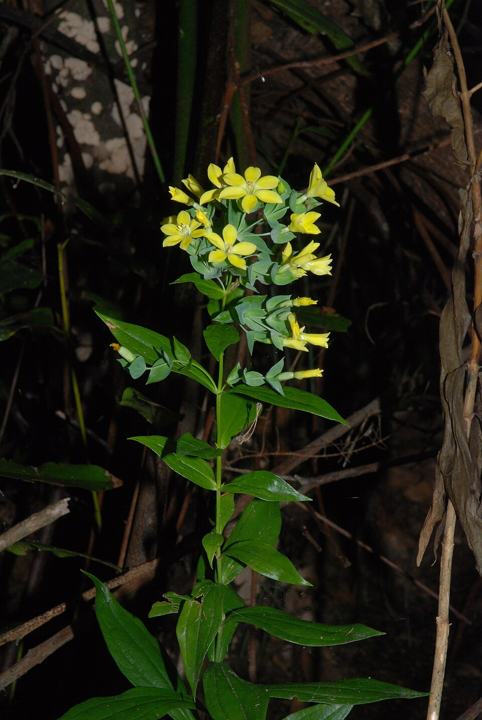
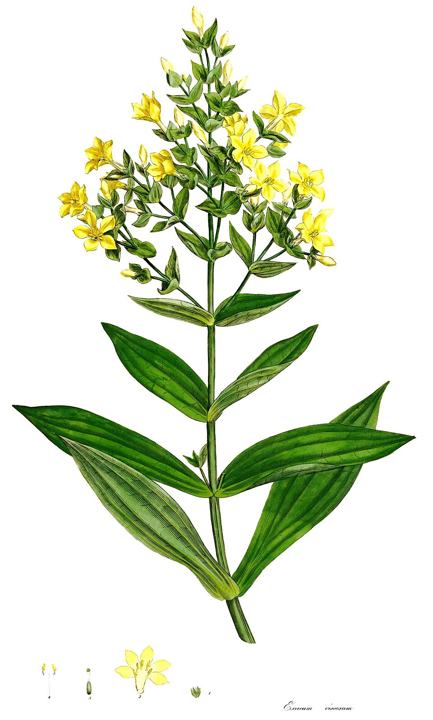
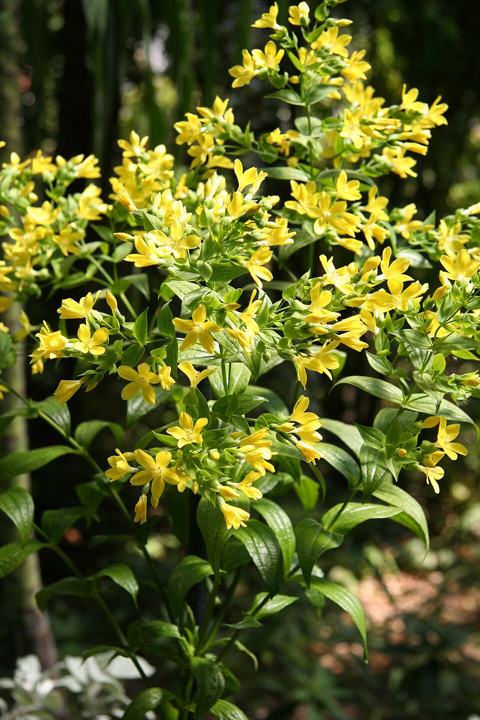
Ixanthus is a monotypic plant genus in the family Gentianaceae. The sole species, Ixanthus viscosus, is endemic to Canary Islands laurel fields and displays small yellow flowers when in bloom.
Text from Wikipedia, CC BY-SA 4.0: Ixanthus
Description
A herbaceous perennial up to 1 m tall, with opposite, ovate-lanceolate, very sticky leaves. The flowers are yellow, borne in branched, bracteate terminal inflorescences.
Propagation and growing
This species is propagated by seed. It has a good germination rate under normal laboratory conditions, with up to 25 % germination in the standard test. Sow in a standard substrate with 50% humus-rich soil. Seeds should be broadcast and left on the surface, not covered. A monteverde (laurel forest) species, it should be planted in the northern mid-altitude zones (medianías) in shade or semi-shade, in very humus-rich, laurisilva-type soils with plenty of organic matter and humus at the surface.
Garden use
A species of great interest for ornamental use. Its roots are credited with appetite-stimulating and stomachic properties and with stimulating liver function; they can be taken as an infusion, crushed, or chewed when dry. Water needs are medium to moderate, with watering in spring and winter if rainfall is low and light watering in summer. It has a medium need for hours of light. It grows best at cool temperatures (23–17 ºC) and adapts well to loam soils with some drainage, but not excessive. Its root growth is small, so there is no need to fear any destructive effect underground. It flowers between April and July.
Protection status
Annex II of the Order of 20 February 1991 on the protection of wild flora of the Canary Islands.
Potential vegetation
Monteverde…
Source: Cabildo de Tenerife, “Guía de especies vegetales”, CC BY. Translated from Spanish by us.
Districts
Metropolitan area (Santa Cruz and La Laguna) · Acentejo · La Orotava Valley · Daute · South-east · Güímar Valley