
Wild jasmine
Jasminum odoratissimum L. · Family: Oleaceae
Typical of thermophilous scrub in the low and middle zones up to the edge of the laurel forest, 400–1,000 m.
Where it grows on Tenerife
Grows in: South coast · North coast · South, 300–1000 m · North, 300–1000 m
Zones are derived approximately from the Cabildo belts.
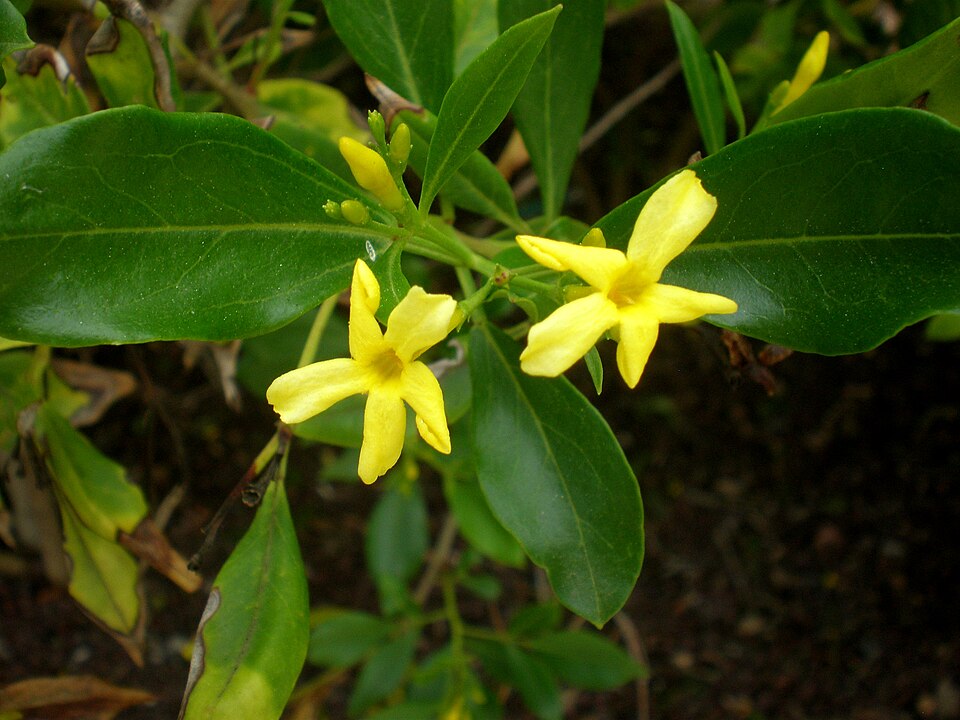
Photos
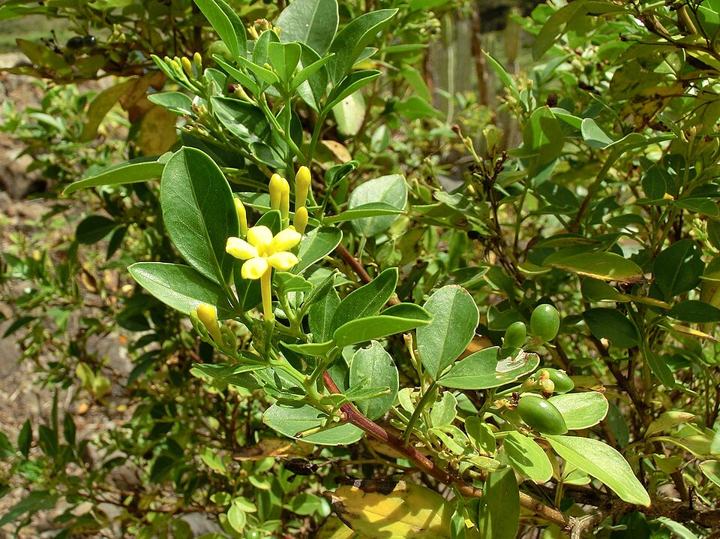
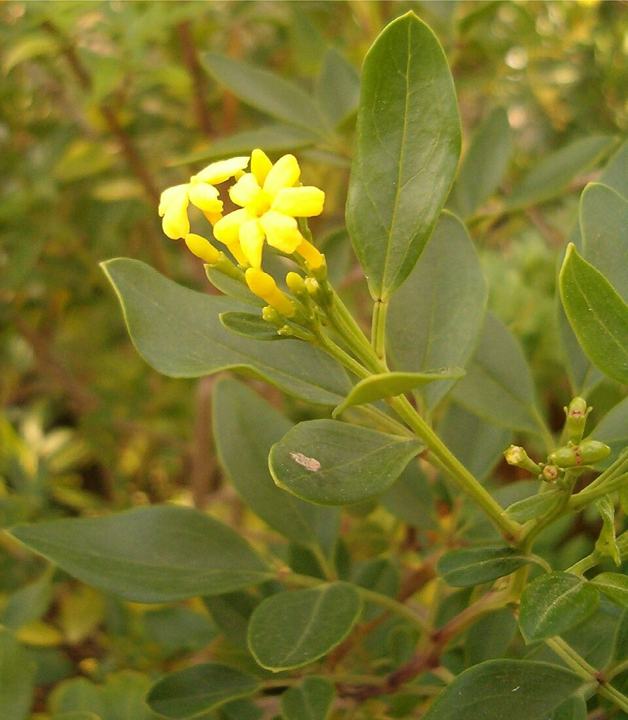
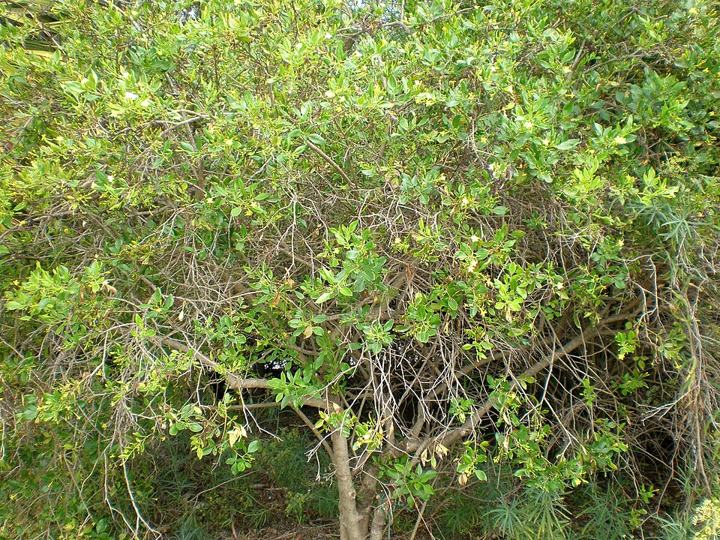
From Wikipedia
Chrysojasminum odoratissimum, the fragrant jasmine, is a species of flowering plant in the family Oleaceae. It is native to Madeira and the Canary Islands. A scrambling evergreen climber reaching 2.5 m (8 ft), under its synonym Jasminum odoratissimum it has gained the Royal Horticultural Society's Award of Garden Merit as a wall shrub.
Text from Wikipedia, CC BY-SA 4.0: Chrysojasminum odoratissimum
Description
Shrub 1.5-4 m tall, with ascending branches and brownish bark. Leaves trifoliate, up to 4 cm long, dark green and glossy, with obovate-oblong leaflets, the terminal one being the largest. Flowers small, yellow, in terminal or subterminal inflorescences. Fruits fleshy, oblong, blackish when ripe. Flowers in winter-spring.
Propagation and growing
Propagated by seed and cuttings. The fruits of this evergreen shrub are curious sticky berries, green at first and then turning translucent, so that two blackish seeds can be seen inside which, as if stuck together, look like a small olive. These seeds generally germinate easily and quickly, so it is not necessary to propagate it vegetatively by semi-ripe cuttings, although this method is perfectly possible. The plants are vigorous, fast-growing and easy to cultivate, preferring warm climates, sandy soils and sunny spots with some moisture. After a year of growing in a container it can reach half a metre in height. It is not usually available in nurseries.
Garden use
Its unusual yellow flowering (almost all jasmines have white flowers) occurs in winter and spring, although some plants flower all year round. Its normal size is about 2 m tall, but in semi-shaded places it can reach up to 4 m. Its flowers are not very fragrant, but its great hardiness together with its aesthetic qualities make it a species of high ornamental value for all kinds of landscaping, needing hardly any maintenance or watering. It is an important species for restoring thermophilous woodland.
Notes
Jasminum perhaps comes from the Arabic-Persian word "Yasmin", meaning "white flowers" (almost all jasmines have white flowers, with exceptions such as this one). "odoratissimum" comes from odora = fragrant. Although our jasmine in particular…
Protection status
Not listed.
Potential vegetation
Periploco-Euphorbietum canariensis subas. jasminetosum odoratissimae; Junipero-Oleetum cerasiformis; Visneo-Arbutetum canariensis.
Source: Cabildo de Tenerife, “Guía de especies vegetales”, CC BY. Translated from Spanish by us.
Bioclimatic belts
Warm coastal belt
- Inframediterranean, semi-arid (lower level)
- Inframediterranean, semi-arid (upper level)
- Inframediterranean, dry, without trade-wind fog
- Inframediterranean, dry, with trade-wind fog
Warm mid-slope belt
- Thermomediterranean, semi-arid (lower level)
- Thermomediterranean, semi-arid (upper level), without trade-wind fog
- Thermomediterranean, semi-arid (upper level), with trade-wind fog
- Thermomediterranean, dry, with trade-wind fog
- Thermomediterranean, dry (lower level), without trade-wind fog
Districts
Anaga · Metropolitan area (Santa Cruz and La Laguna) · Acentejo · La Orotava Valley · Daute · Teno · South-west · Abona · South-east · Güímar Valley