
Pink jasmine
Jasminum polyanthum Franch. · Family: Oleaceae
Native to the mountains of southern and central China. Naturalised in New Zealand and Australia, where it tends to become invasive.
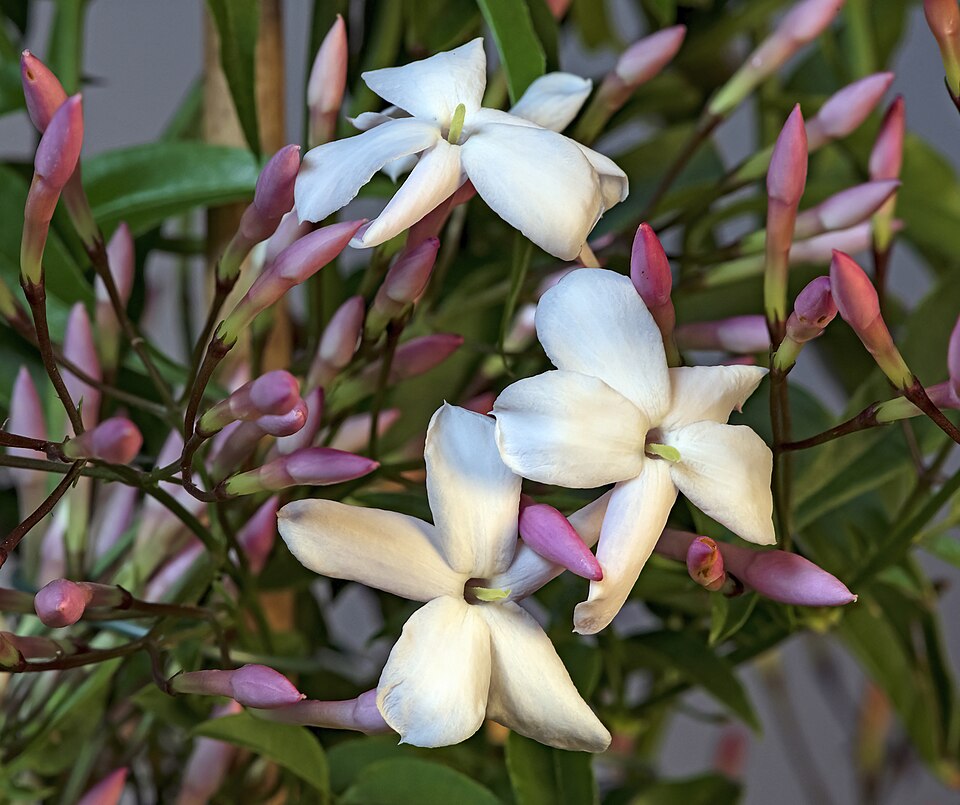
Photos
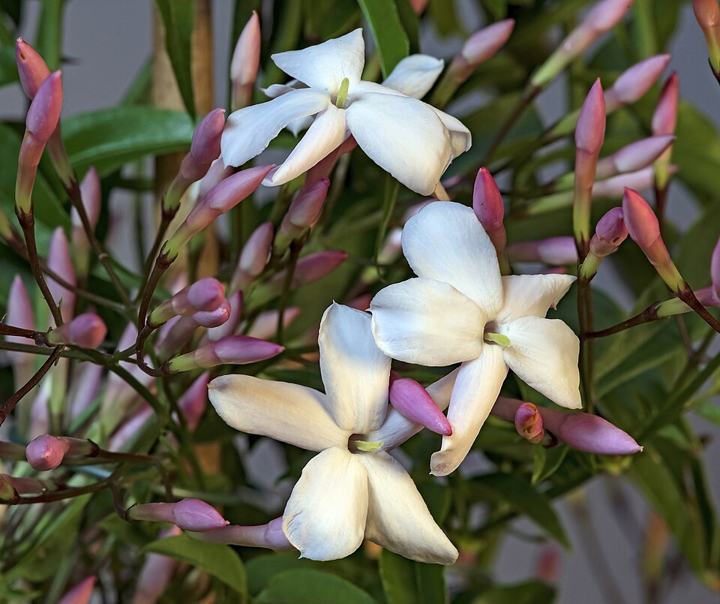
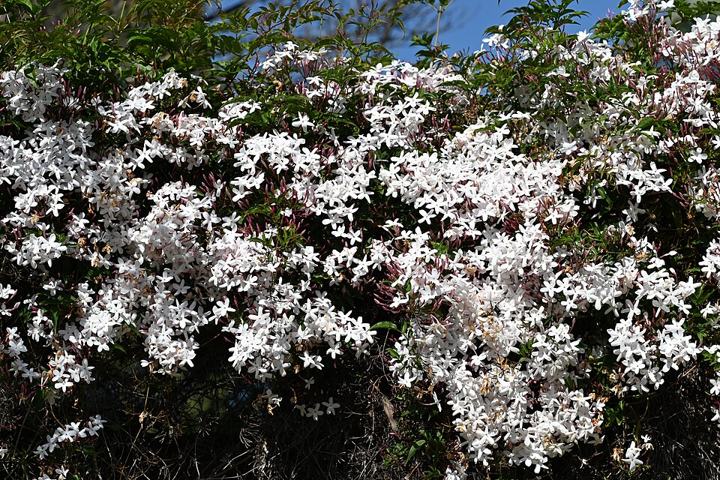
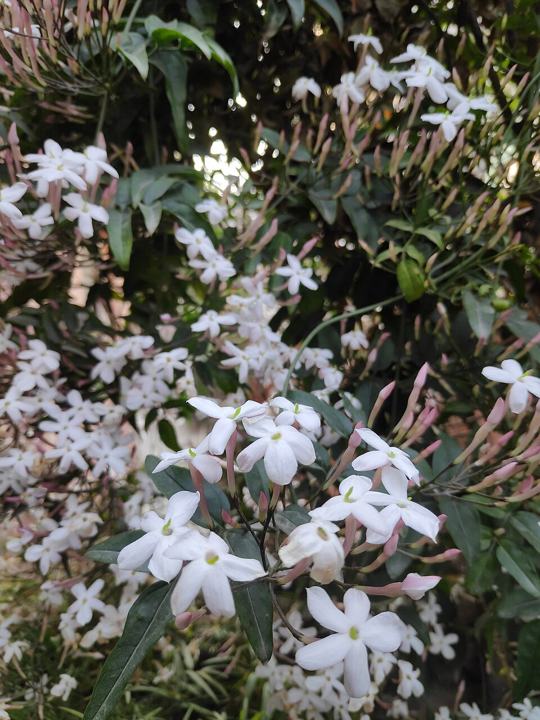
From Wikipedia
Jasminum polyanthum (Chinese: 多花素馨; pinyin: Duōhuāsùxīn), the many-flowered jasmine, pink jasmine, or white jasmine, is a species of flowering plant in the olive family Oleaceae, native to China and Myanmar. A strong evergreen twining climber, it is especially noted for its abundant, highly fragrant pink to white flowers.
Text from Wikipedia, CC BY-SA 4.0: Jasminum polyanthum
Description
Evergreen or deciduous climbing shrub up to 8 m tall. It has opposite leaves with 5-7 lanceolate, acuminate leaflets, the terminal one longer than the lateral ones. Fragrant flowers in axillary panicles, with a corolla about 2 cm across, white tinged with pink on the outside. Native to China.
Propagation and growing
It is propagated by taking 8-10 cm cuttings from semi-ripe shoots. The cuttings should be placed in rooting trays using a mix of peat and sand. Once rooted, the plants are transplanted into 8-10 cm pots. Planting is recommended in spring in a light soil, rich in humus and with added sand (it may be calcareous). It should also be sheltered from the wind. The most common pests affecting jasmine are aphids and scale insects, especially in sheltered spots; on the other hand, excessive humidity during the period of vegetative growth can encourage attacks of grey mould. Its flowering is short (a month and a half), in spring.
Garden use
It is used as an ornamental on pergolas, walls, railings or balconies (it is best to help it climb with some kind of support). It is also grown as a houseplant in very bright parts of the home. Chinese jasmine can thrive in full sun or partial shade. It does not tolerate frost, which kills it. Ordinary garden soil or potting compost with added organic fertiliser (manure) and good drainage is enough for it. Water often enough for the soil to be slightly moist but not waterlogged. It is important not to overwater. It does not need hard pruning, but it benefits from gradually removing dry leaves and faded flowers. It can also be pruned lightly in winter to control its growth or shape it. It is advisable to feed with mineral fertiliser every 15 days from midwinter to midsummer. Its worst enemy is overwatering, which can rot the roots.
Notes
Plant in a place sheltered from the wind where its delicate scent can be enjoyed.
Source: Cabildo de Tenerife, “Guía de especies vegetales”, CC BY. Translated from Spanish by us.