
Canary juniper (sabina)
Juniperus turbinata Guss. subsp. canariensis (A. P. Guyot in Mathou & A. P. Guyot) Rivas-Mart., Wild · Family: Cupressaceae
Typical of mid-elevation thermophilous woodland on fairly deep soil, on cliffs and slopes; can descend lower, especially in the north of the island.
Where it grows on Tenerife
Grows in: South coast · North coast · South, 300–1000 m · Above 1000 m
Zones are derived approximately from the Cabildo belts.
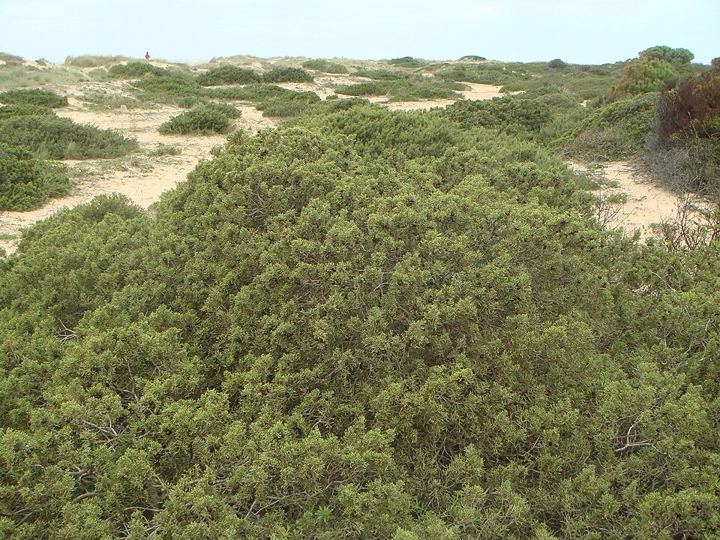
Photos
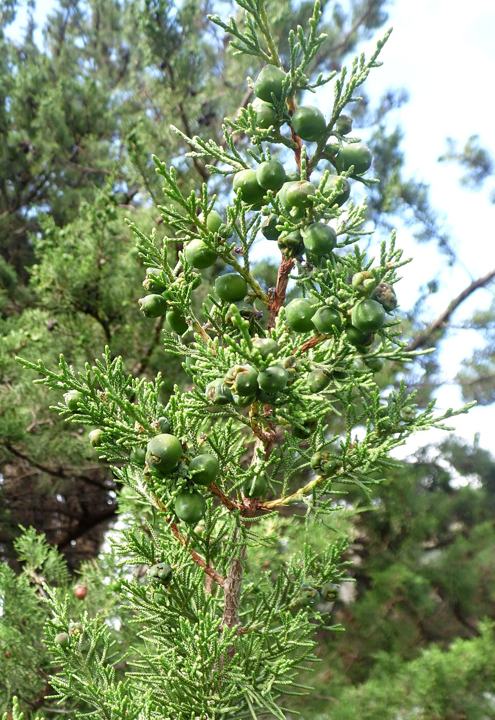
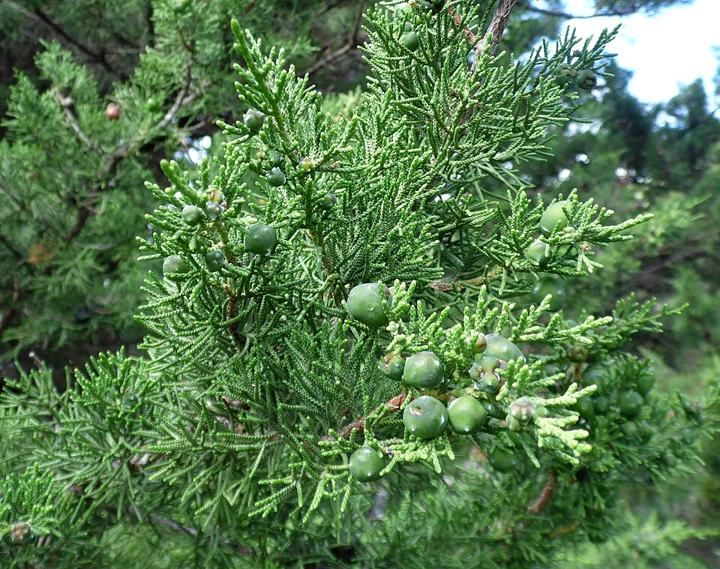
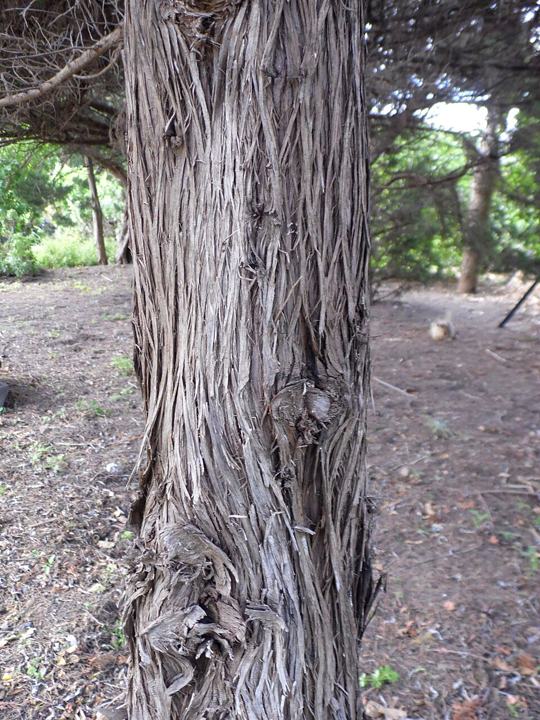
From Wikipedia
Juniperus turbinata is a woody plant in the family Cupressaceae.
The species was previously treated as part of Juniperus phoenicea, which is now regarded as restricted to Spain and France, whereas J. turbinata is found throughout the Mediterranean and in the Arabian Peninsula. As of 2023, plants occurring in the Canary Islands, previously considered as part of the same species, are treated as the separate species J. canariensis.
Text from Wikipedia, CC BY-SA 4.0: Juniperus turbinata
Description
Small tree up to 8 m tall, with dark brown, scaly bark. Adult leaves scale-like, 2-3 mm long, more or less triangular, acuminate, tightly pressed against the twigs, aromatic. Female cones globose, terminal, black at first and turning reddish-brown when ripe (mainly from February to May).
Propagation and growing
The galbuli (false fruits) of the female specimens of this species contain between four and ten seeds which, once sown, take one to two months to germinate, provided they have been thoroughly cleaned and freed of resinous substances with a detergent or solvent. Seedlings are vigorous and hardy, and they are not difficult to grow. It is not demanding as to soil; growth is very slow and it needs warmth to grow; it takes three years or more of cultivation to exceed one metre in height. Because germination is sometimes difficult, it is not usually available in nurseries in sufficient quantity, and it is advisable to order it well in advance.
Garden use
A very hardy species; it withstands extreme temperatures and strong winds very well, as its distinctive appearance in the windiest and steepest parts of the island shows. Its soil requirements mean it grows well even in stony soils, so it copes well with water shortage. Its particular characteristics make it ideal for slopes and sites highly exposed to wind. It is an extremely interesting species for gardening since, besides its emblematic character and handsome habit, it lends itself to various uses such as windbreaks and hedges. Its value in reforestation is also notable, given the scarcity caused by the massive felling it suffered in the past for its prized wood. Once planted it grows slowly but needs little care, and it is highly resistant to lack of moisture, requiring sunny conditions for optimal growth.
Notes
The plant symbol of the island of El Hierro. The “sabina” sometimes takes on rounded forms only a few metres high, or squat forms with trunks and branches twisted by the wind. Flowering takes place from February to Ma…
Protection status
Annex II of the Order of 20 February 1991 on the protection of wild flora of the Canary Islands.
Potential vegetation
Junipero canariensis-Oleetum cerasiformis.
Source: Cabildo de Tenerife, “Guía de especies vegetales”, CC BY. Translated from Spanish by us.
Bioclimatic belts
Warm coastal belt
- Inframediterranean, semi-arid (upper level)
- Inframediterranean, dry, without trade-wind fog
Warm mid-slope belt
- Thermomediterranean, semi-arid (lower level)
- Thermomediterranean, semi-arid (upper level), without trade-wind fog
- Thermomediterranean, dry (lower level), without trade-wind fog
Temperate belt of laurel and pine forest
- Mesomediterranean, lower, semi-arid (upper level), without trade-wind fog
Districts
Anaga · Metropolitan area (Santa Cruz and La Laguna) · Acentejo · La Orotava Valley · Daute · Teno · South-west · Abona · South-east · Güímar Valley