
Azores laurel
Laurus azorica (Seub.) Franco · Family: Lauraceae
Very abundant and typical of the humid laurel forest, though it withstands more exposed, sunnier sites.
Where it grows on Tenerife
Grows in: North coast · North, 300–1000 m · Above 1000 m
Zones are derived approximately from the Cabildo belts.
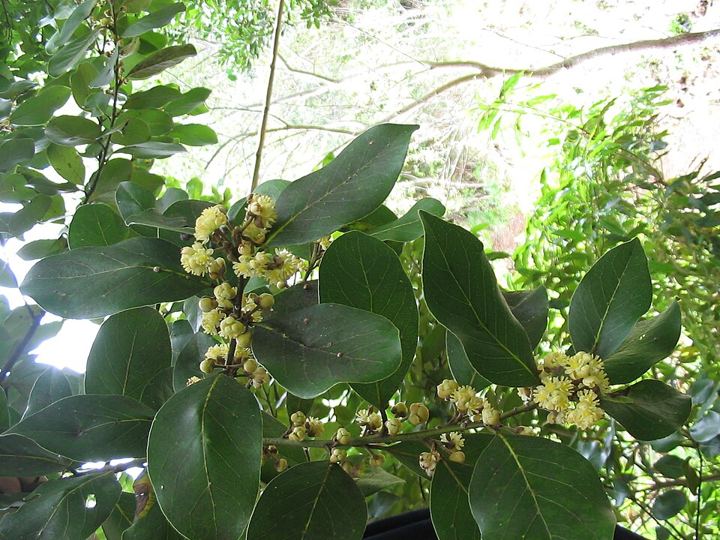
Photos
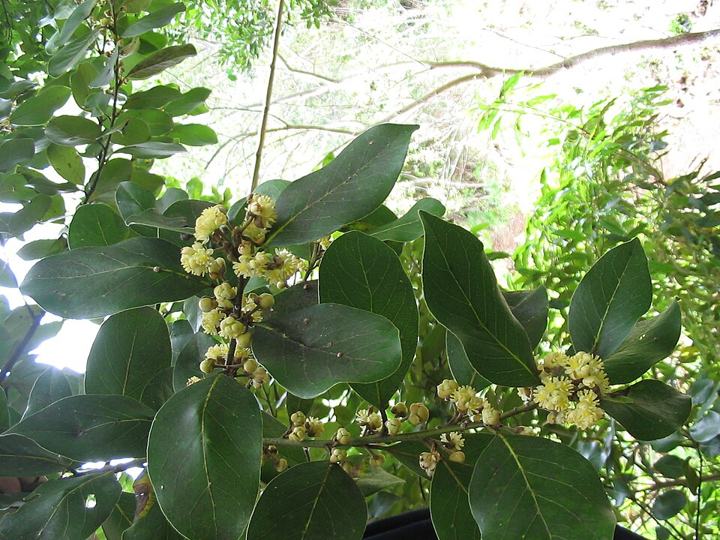
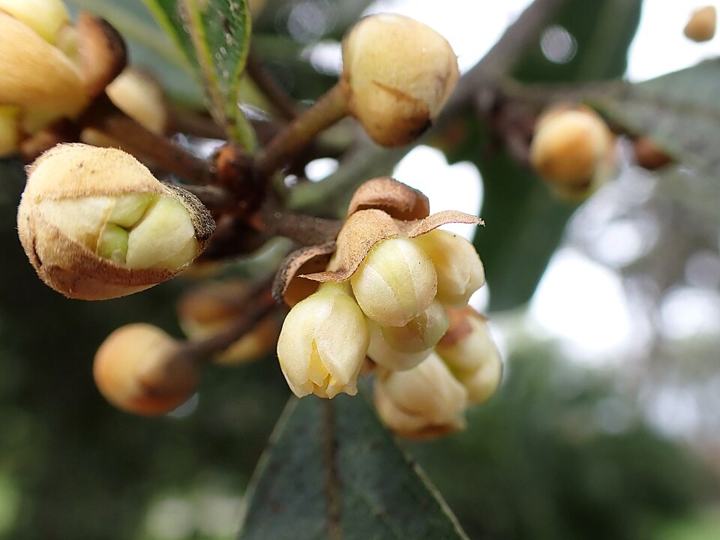
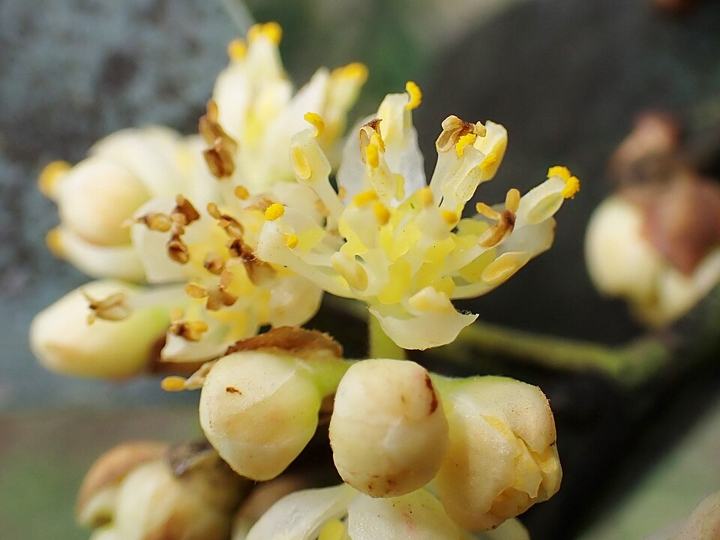
From Wikipedia
Laurus azorica, the Azores laurel, is a small, evergreen tree in the laurel family (Lauraceae), found only on the Azores island group in the North Atlantic.
Text from Wikipedia, CC BY-SA 4.0: Laurus azorica
Description
Dioecious tree reaching 20 m in height, with greyish-black bark, smooth or slightly fissured, and young twigs that are thick, greyish-green and densely covered with rusty hairs. Leaves large (7-8 cm long), leathery, ovate-lanceolate, deep green, with small glands in the axils of the veins. Flowers greenish-cream, in axillary inflorescences. Fruits ovoid, about 2 cm long, blackish when ripe. Flowers in winter and spring.
Propagation and growing
It fruits abundantly, the female plants producing berries the size and shape of olives, each containing a single seed that germinates easily. The seedling is vigorous, with leathery young leaves, and grows without difficulty in suitable substrates (peat). This species is usually available in native-plant nurseries, with a growing period of 12 to 18 months, after which the plant is usually less than half a metre tall. It prefers soils rich in organic matter, with plenty of moisture, and a sunny position. Propagated by seed and cuttings. Available at the Teno nursery.
Garden use
Its status as the emblematic tree of our laurel forest (monteverde), which gives the “laurisilva” its name, its value as a relict species of its genus and its ecological potential make it an essential element in garden design and landscape restoration. It shows great adaptability and fast growth when planted in degraded and marginal areas (Bañares & Barquín 1982). From very early on it starts producing suckers, or “chirpiales”, around the main trunk, so for certain uses it needs regular pruning. It needs moderate watering during the dry season for the first two years. In gardening it is used as a shade tree. It requires soils with a certain degree of moisture and reasonable fertility. It is best planted away from overly sunny areas; it tolerates only very moderate pruning, and it is recommended for recreational areas, gardens and squares and, in general, for places without excessive vehicle traffic.
Notes
It shows great variability, both within the species and between individuals. The form or variety “longifolia” (O.Ktze.) Kunkel is found in the Las Mercedes forest (G. Kunkel 1991). The species has recently been named “Laurus novo-canariensis” Rivas-Martínez…
Protection status
Annex III of the Order of 20 February 1991 on the protection of wild flora of the Canary Islands.
Potential vegetation
Visneo mocanerae-Arbutetum canariensis, Lauro-Perseetum indicae, Diplazio caudati-Ocoteetum foetentis e Ilici canariensis-Ericetum platycodonis.
Source: Cabildo de Tenerife, “Guía de especies vegetales”, CC BY. Translated from Spanish by us.
Bioclimatic belts
Warm coastal belt
- Inframediterranean, dry, with trade-wind fog
Warm mid-slope belt
- Thermomediterranean, semi-arid (upper level), with trade-wind fog
- Thermomediterranean, dry, with trade-wind fog
- Thermomediterranean, subhumid, with trade-wind fog
- Thermomediterranean, humid, with trade-wind fog
Temperate belt of laurel and pine forest
- Mesomediterranean, lower, dry, with trade-wind fog
- Mesomediterranean, lower, subhumid, with trade-wind fog
- Mesomediterranean, lower, humid, with trade-wind fog
Districts
Anaga · Metropolitan area (Santa Cruz and La Laguna) · Acentejo · La Orotava Valley · Daute · Güímar Valley