
Til (Ocotea foetens)
Ocotea foetens (Aiton) Baill. · Family: Lauraceae
Typical of damp, shady stream beds inside the laurel forest.
Where it grows on Tenerife
Grows in: North, 300–1000 m · Above 1000 m
Zones are derived approximately from the Cabildo belts.
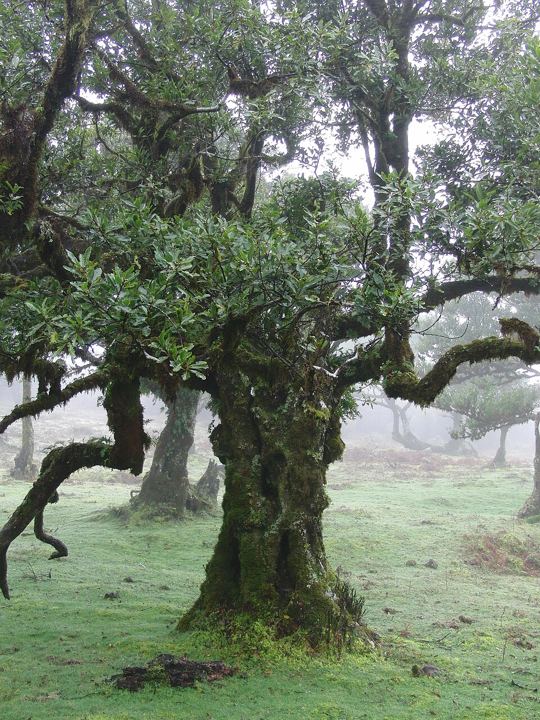
Photos
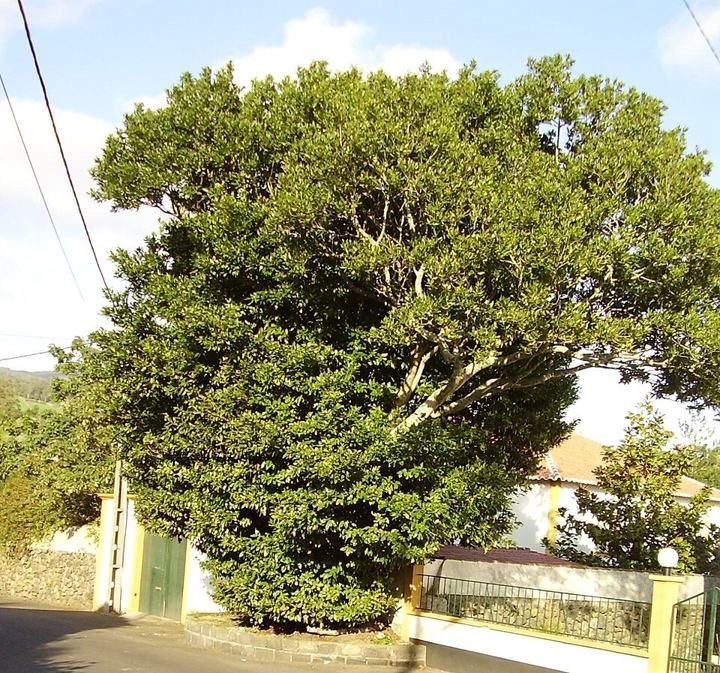
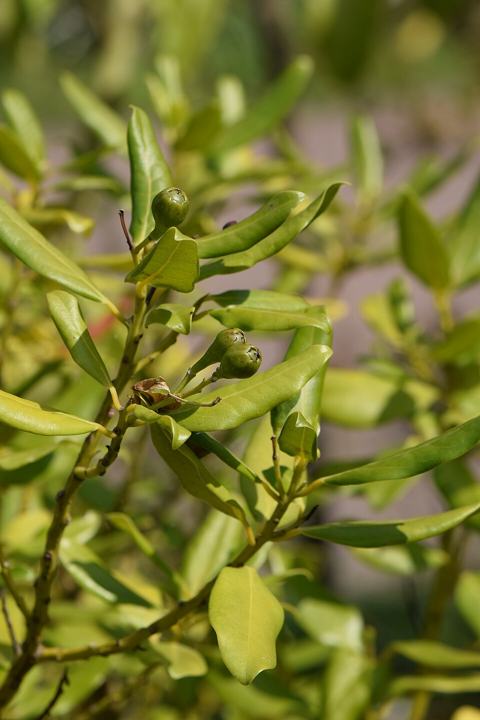
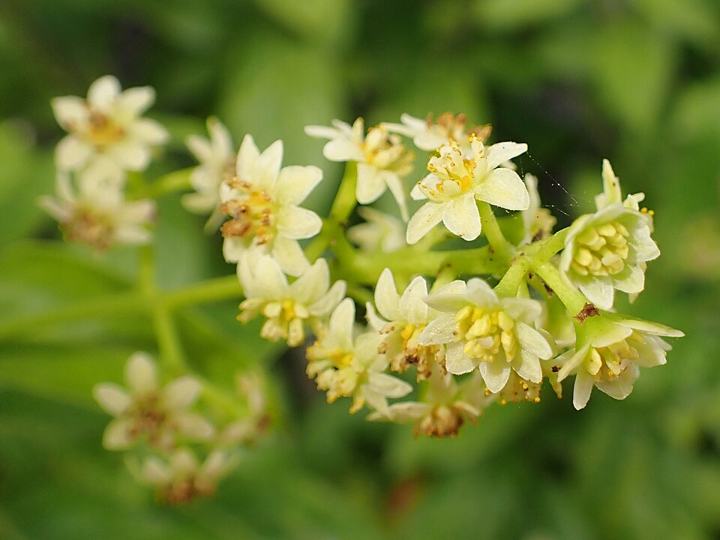
From Wikipedia
Ocotea foetens, commonly called til or stinkwood is a species of tree in the family Lauraceae. It is evergreen and grows up to 40 m tall. It is a common constituent of the laurisilva forests of Madeira and the Canary Islands. Leaf fossils of this species are known from the Mio-Pleistocene of Madeira Island.
The species was first described as Laurus foetens by William Aiton in 1789. In 1870 Henri Ernest Baillon placed the species in genus Ocotea as O. foetens.
Text from Wikipedia, CC BY-SA 4.0: Ocotea foetens
Description
Tree 20-30 m tall, with dark grey, rough bark and slender, reddish, smooth twigs. Leaves broadly ovate-lanceolate, leathery, 9-12 cm long, dark green, with two or three large glands towards the base of the blade. Flowers small, whitish, fragrant; fruit ovoid, about 3 cm long, greenish, its lower half covered by an acorn-like cup. Flowers in spring and summer.
Propagation and growing
Its acorn-shaped fruits contain a single seed which, unlike the rest of our Lauraceae, is very difficult to germinate. On the island of El Hierro we were told by the nursery foreman Mr Samuel Padrón González that fruits gathered while still green from the tree standing on the site of the old Garoé were soaked in water, freed of their pulp, and the seed left to dry before sowing. The seeds germinated easily, so much so that we counted up to two hundred seedlings in containers. It needs a temperate climate, clay-loam soils and a neutral to acid pH; it prefers shady conditions, although it copes well with partial sun as long as there is plenty of soil moisture. Because germination is difficult, it is a scarce and prized species in native-plant nurseries, where it is not usually available. Nursery cultivation takes about a year, after which the plant can exceed half a metre in height.
Garden use
It is a large species (up to 40 m), and its foliage gives the greatest canopy cover in the laurel forest (monteverde), which is why large specimens drip a great deal of water condensed from the mist. Its wood is of good quality, although if it is not properly dried it smells strongly of rot (hence “foetens”). Its scarcity gives its cultivation and planting high conservation value. It needs permanently moist soils and generous watering during the dry season for the first two years. It can be used as a shade tree in parks, gardens and avenues in humid places.
Notes
The drawing of the leaves and fruits of El Hierro's famous sacred tree, the Garoé, left to us by Leonardo Torriani, identifies it beyond doubt as a til tree. The old Garoé was brought down by a storm in 1612. In 1946, the forestry engineer…
Protection status
Annex II of the Order of 20 February 1991 on the protection of wild flora of the Canary Islands.
Potential vegetation
Diplazio caudati-Ocoteetum foetentis.
Source: Cabildo de Tenerife, “Guía de especies vegetales”, CC BY. Translated from Spanish by us.
Bioclimatic belts
Warm mid-slope belt
- Thermomediterranean, dry, with trade-wind fog
- Thermomediterranean, subhumid, with trade-wind fog
- Thermomediterranean, humid, with trade-wind fog
Temperate belt of laurel and pine forest
- Mesomediterranean, lower, dry, with trade-wind fog
- Mesomediterranean, lower, subhumid, with trade-wind fog
- Mesomediterranean, lower, humid, with trade-wind fog
Districts
Anaga · Metropolitan area (Santa Cruz and La Laguna) · Acentejo · La Orotava Valley · Daute