
Geranium (Pelargonium)
Pelargonium x hortorum L. H. Bailey · Family: Geraniaceae
A very tough plant that needs full sun and warmth. Slightly acid, well-drained soil.
Where it grows on Tenerife
Grows in: South coast · North coast · South, 300–1000 m · North, 300–1000 m · Above 1000 m
Zones are derived approximately from the Cabildo belts.
Photos
From Wikipedia
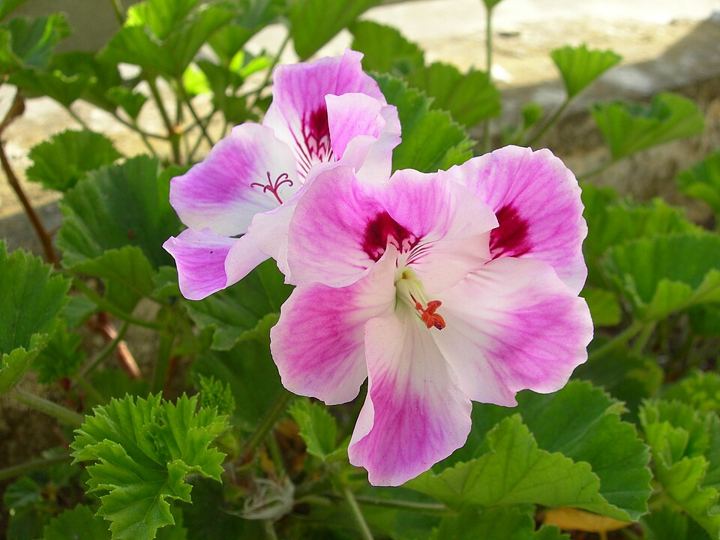
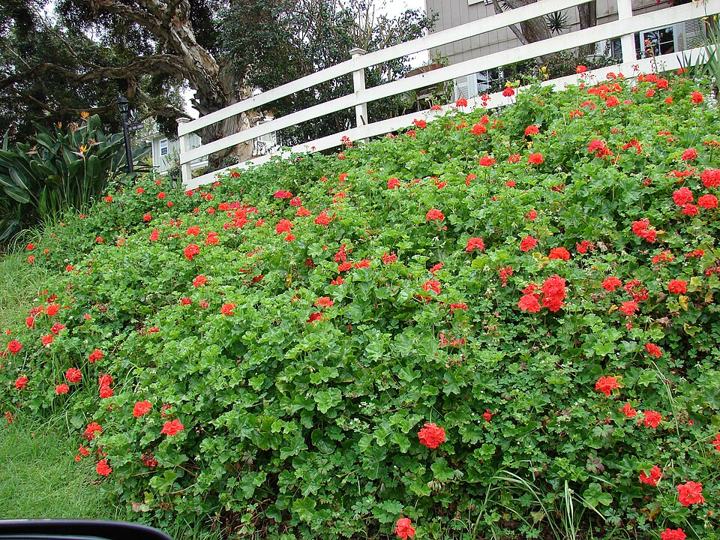
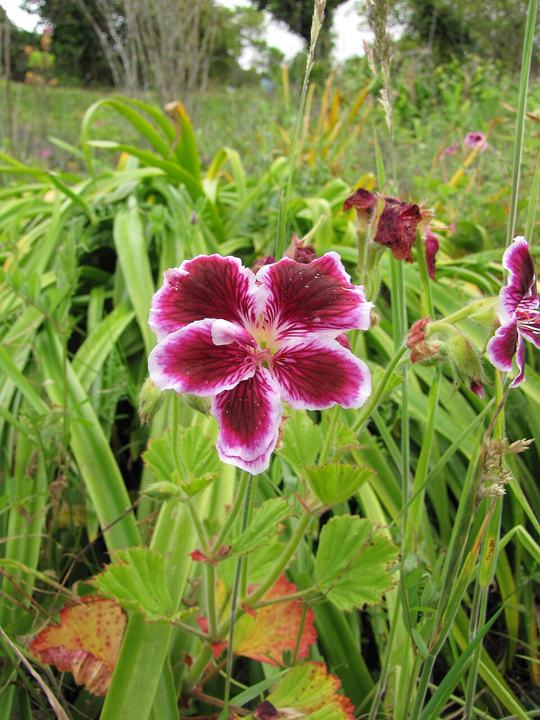
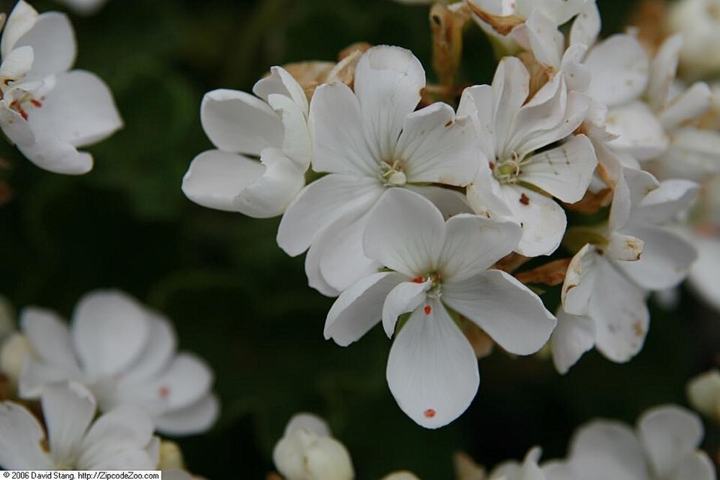
Pelargonium × hortorum, commonly called zonal geranium, or garden geranium, is a nothospecies of Pelargonium most commonly used as an ornamental plant. It is a hybrid between Pelargonium zonale and Pelargonium inquinans. They are the group of Pelargonium cultivars, with leaves marked with a brown annular zone and inflorescence in the form of large balls of tight flowers, usually red, pink, or white. These are the most common geraniums of garden centers and florists, sold in pots for windowsills and balconies or planted in flowerbeds.
Text from Wikipedia, CC BY-SA 4.0: Pelargonium × hortorum
Description
Perennial herbaceous plants from South Africa, up to 60 cm tall, with succulent, nearly glabrous stems and rounded, wavy, crenate or serrate leaves up to 10 cm across, usually variegated or marked with a horseshoe-shaped zone. They are divided into several horticultural groups according to leaf shape and flower type. The flowers are regular, showy, single and five-parted or double with more than 8 petals, in various colours depending on the cultivar. Flowers all year round.
Propagation and growing
An ornamental plant par excellence; it is propagated by cuttings and comes in many varieties. It needs sunny positions and a substrate that stays somewhat moist. Evergreen, it flowers in March and fruits in June. It is very widely cultivated and very tough, so it is often found in a range of settings, from coastal areas to the mountains. Propagation by seed or cuttings.
Garden use
It is used in all kinds of planting schemes, so it can be seen in pots, planters or in various groupings, even rockeries. Because it is so tough it is also seen on roadside verges, junctions and roundabouts. It needs little maintenance, although regular tidying is recommended, as is keeping the substrate somewhat moist in sunnier spots. Because of its beautiful, long-lasting flowering it is commonly used as an outdoor pot plant (balconies, terraces, patios) and for flower beds. It needs regular feeding to improve flowering and frequent watering in summer. Excessive moisture causes the stems to blacken and the plant to die.
Notes
They form a large group of hybrids derived mainly from crossing "P. inquinans" (L.) L’Hér. ex Aiton and "P. zonale" (L.) L’Hér. ex Aiton.
Source: Cabildo de Tenerife, “Guía de especies vegetales”, CC BY. Translated from Spanish by us.
Bioclimatic belts
Warm coastal belt
- Inframediterranean, hyperarid
- Inframediterranean, arid
- Inframediterranean, semi-arid (lower level)
- Inframediterranean, semi-arid (upper level)
- Inframediterranean, dry, without trade-wind fog
- Inframediterranean, dry, with trade-wind fog
Warm mid-slope belt
- Thermomediterranean, semi-arid (lower level)
- Thermomediterranean, semi-arid (upper level), without trade-wind fog
- Thermomediterranean, semi-arid (upper level), with trade-wind fog
- Thermomediterranean, dry, with trade-wind fog
- Thermomediterranean, dry (lower level), without trade-wind fog
- Thermomediterranean, subhumid, with trade-wind fog
- Thermomediterranean, dry (upper level), without trade-wind fog
- Thermomediterranean, humid, with trade-wind fog
Temperate belt of laurel and pine forest
- Mesomediterranean, lower, semi-arid (upper level), without trade-wind fog
- Mesomediterranean, lower, dry, with trade-wind fog
- Mesomediterranean, lower, dry, without trade-wind fog
- Mesomediterranean, lower, subhumid, with trade-wind fog
- Mesomediterranean, lower, subhumid, without trade-wind fog
- Mesomediterranean, lower, humid, with trade-wind fog