
Palomera (Pericallis lanata)
Pericallis lanata (L'Hér.) B. Nord. · Family: Asteraceae
Rocky slopes, cliffs and crags facing north across the south and west of the island, from 200 to over 1,000 m.
Where it grows on Tenerife
Grows in: South coast · North coast · South, 300–1000 m · North, 300–1000 m · Above 1000 m
Zones are derived approximately from the Cabildo belts.
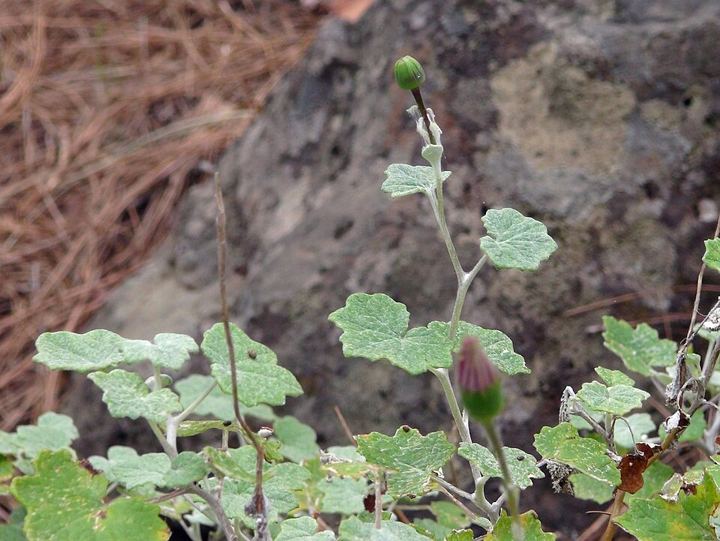
Photos
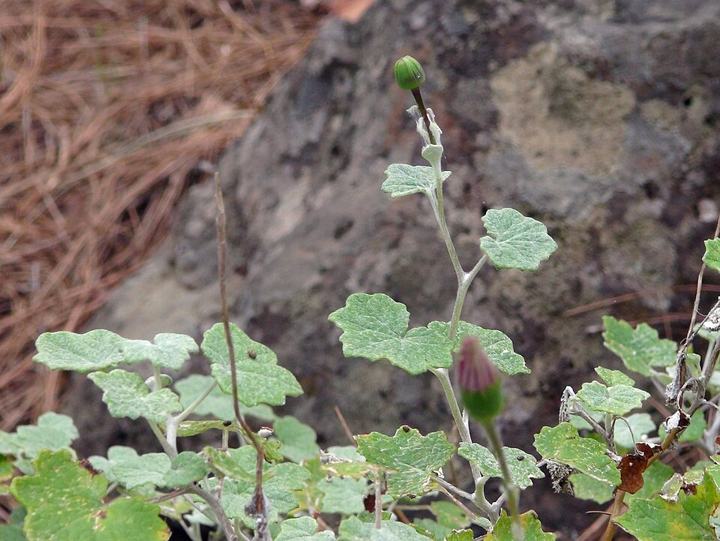
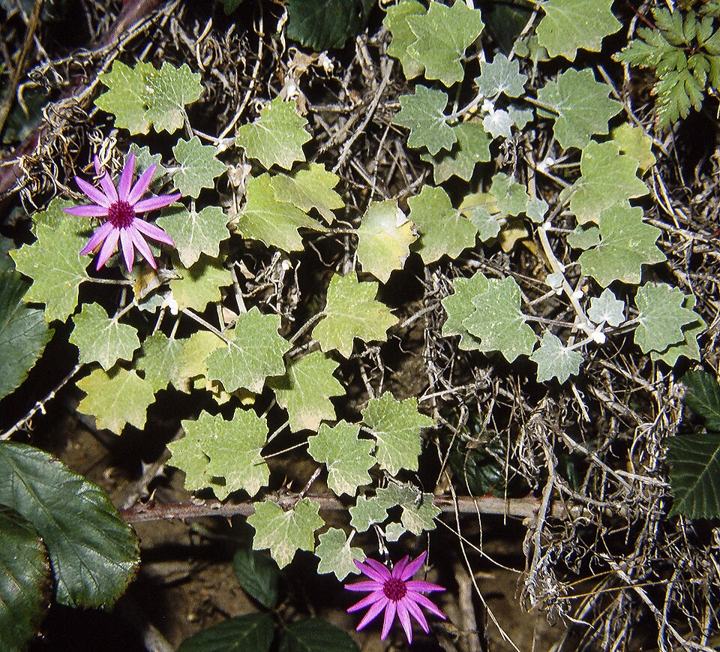
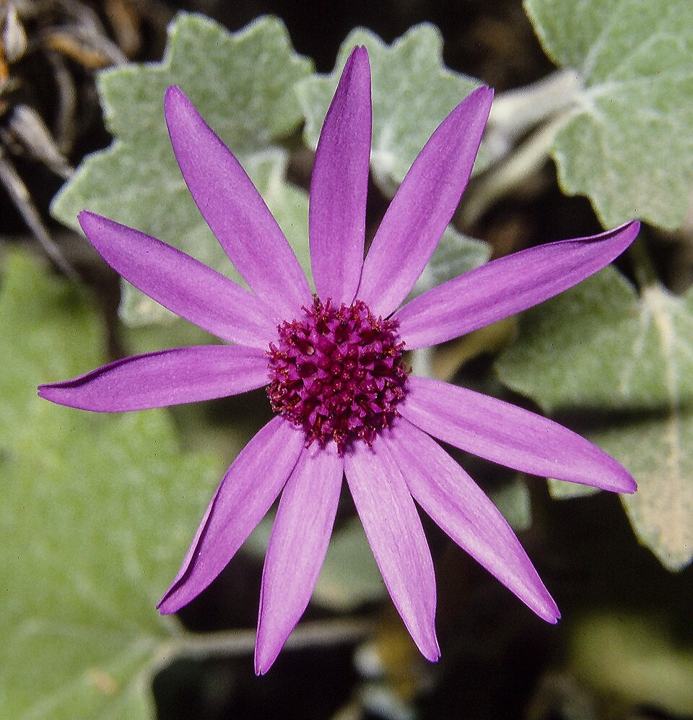
From Wikipedia
Pericallis lanata is a species of flowering plant in the family Asteraceae. It is endemic to the Canary Islands.
Text from Wikipedia, CC BY-SA 4.0: Pericallis lanata
Description
A perennial plant, erect or procumbent, with slightly woody, densely pubescent stems. Leaves suborbicular, about 3 cm wide, with 5–7 small lobes, pubescent on the underside. Flowers in more or less solitary heads 3–5 cm across, the outer ones ligulate and mauve, those of the central disc purple. Flowers in spring.
Propagation and growing
The fruits of the "palomera" are small achenes which, mixed with soil and sown in seed trays in September, germinate normally. The plants are vigorous, easy to handle and convenient to grow, provided they are kept in shade. After fruiting, which takes place in spring and summer, they usually lose their leaves, which normally sprout again after the first rains; so it is best not to water them during the resting season (summer), so that they do not rot, but to keep them in a shady place so that they do not dry out completely and can sprout again. They are also prone to attack by fungi, insects, slugs and snails; they prefer sandy soils in shaded positions and need plenty of moisture for optimal development. The whole genus has a strong tendency to hybridise, so particular care is needed in choosing the species to grow and the origin of the seed used for propagation. It is not usually available in nurseries, and plants should be ordered from nurseries specialising in native flora at least a year in advance.
Garden use
The beautiful flowering of this herbaceous plant comes as small, almost always solitary inflorescences that brighten the landscapes of the island's southern slopes in spring. Endemic to Tenerife, this species has long been grown in Europe, as it tolerates cold climates well. Its quality as an ornamental and its wide altitudinal range make it an excellent species to grow throughout the south side of the island, between 400 and 2000 m altitude. Very suitable for rockeries in cool gardens, it self-seeds easily and suits all kinds of landscaping. It needs no special maintenance, but does need frequent watering or moist soil during the growing season.
Notes
Specimens with white inflorescences are known from Vilaflor.
Protection status
Not listed.
Potential vegetation
Periploco-Euphorbietum canariensis; Junipero-Oleetum cerasiformis; Visneo-Arbutetum canariensis; Sideritido-Pinetum canariensis.
Source: Cabildo de Tenerife, “Guía de especies vegetales”, CC BY. Translated from Spanish by us.
Bioclimatic belts
Warm coastal belt
- Inframediterranean, semi-arid (lower level)
- Inframediterranean, semi-arid (upper level)
- Inframediterranean, dry, without trade-wind fog
- Inframediterranean, dry, with trade-wind fog
Warm mid-slope belt
- Thermomediterranean, semi-arid (lower level)
- Thermomediterranean, semi-arid (upper level), without trade-wind fog
- Thermomediterranean, semi-arid (upper level), with trade-wind fog
- Thermomediterranean, dry, with trade-wind fog
- Thermomediterranean, dry (lower level), without trade-wind fog
- Thermomediterranean, dry (upper level), without trade-wind fog
Temperate belt of laurel and pine forest
- Mesomediterranean, lower, semi-arid (upper level), without trade-wind fog
- Mesomediterranean, lower, dry, without trade-wind fog
Districts
South-west · Abona · South-east · Güímar Valley