
Cornical (Periploca laevigata)
Periploca laevigata Aiton · Family: Asclepiadaceae
Very common in dry scrub on dry sunny sites in the low and middle zones. Typical of spurge scrub.
Where it grows on Tenerife
Grows in: South coast · North coast · South, 300–1000 m
Zones are derived approximately from the Cabildo belts.
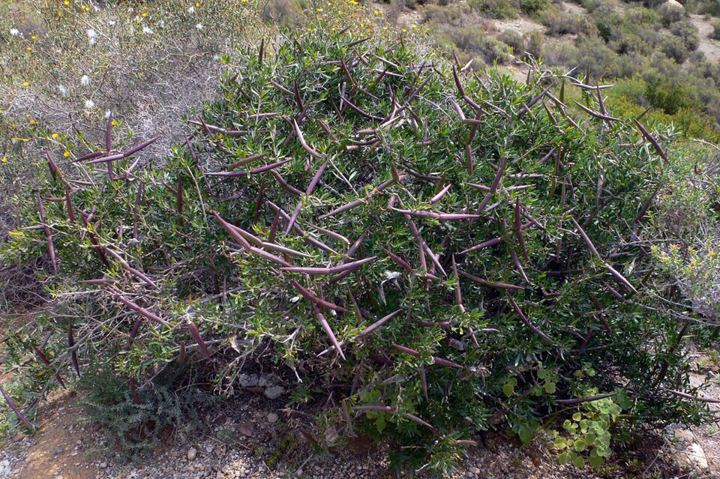
Photos
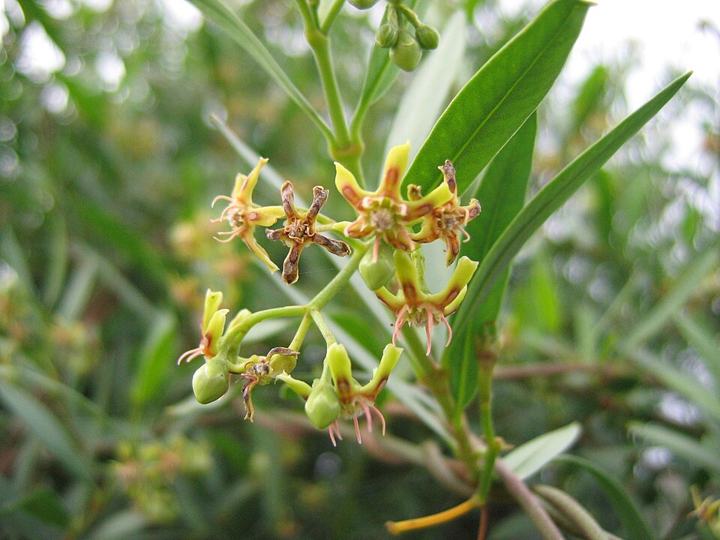
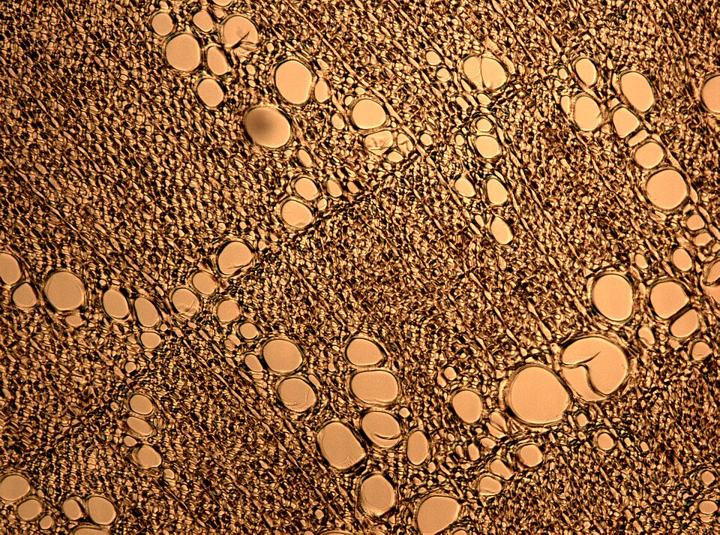
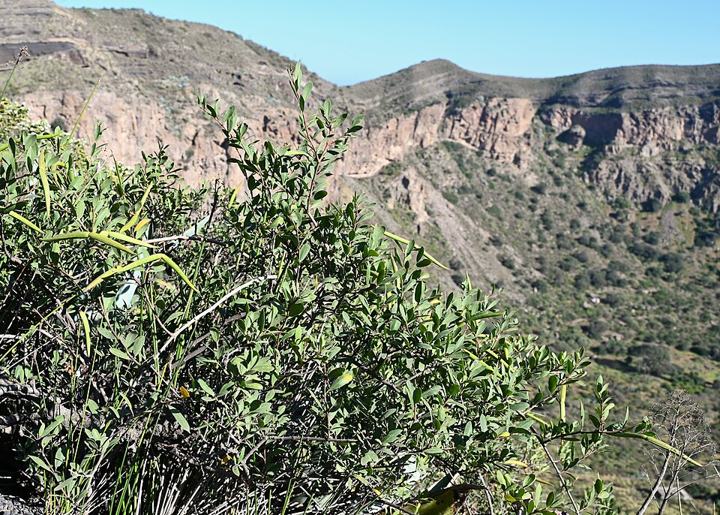
From Wikipedia
Periploca laevigata is a species of flowering plant in the family Apocynaceae, native to the Canary Islands, the Savage Islands and Cape Verde.
The species was described by William Aiton and was published in Hortus Kewensis in 1789. Its Spanish names are cornicabra or cornica. "Cornicabra" means goat horn.
Text from Wikipedia, CC BY-SA 4.0: Periploca laevigata
Description
A climbing shrub with milky latex and brownish-chestnut bark, normally up to 1 m tall, but with intertwining branches that can reach more than 2 m in length. Leaves somewhat fleshy, deciduous, lanceolate, glossy green. Flowers star-shaped, small, brownish-yellow. Fruits made up of two opposite horn-shaped follicles, 5–10 cm long, which contain numerous seeds bearing very fine white filaments that help them disperse through the air. Flowers in autumn–winter.
Propagation and growing
The curious fruits of the “cornical” (two long opposite follicles up to 15 cm), whose shape recalls goats’ horns, contain numerous seeds with large pappi that help the wind carry them over long distances; the plants germinate easily and are convenient to grow, undemanding as to soil and resistant to drought and other adverse climatic conditions. Fast-growing in cultivation, this liana, with its abundant whitish latex, is best tied to a support; it tolerates pruning. It needs full sun and sparse to moderate watering. It is not usually available in nurseries, and orders for growing it must be placed at least a year in advance.
Garden use
In autumn and winter this vigorous shrubby climber flowers; it is native to all the islands but not endemic, as it has a wide distribution (Macaronesia, the Sahara, the Mediterranean region, Syria, etc.). It is an interesting plant to grow and use ornamentally as a climber to cover fences, to provide shade and to separate spaces, within the wide altitudinal range in which it thrives (50–700 m above sea level). Indispensable in gardens recreating cardonal (Canary spurge scrub) habitats, since in nature it is associated with Euphorbia canariensis, over which it frequently climbs. It is very drought-resistant and needs no special maintenance apart from occasional pruning as its position may require.
Notes
Quite variable in the shape and width of its leaves, which it sheds almost entirely during summer. (KUNKEL, 1978).
Protection status
Not listed.
Potential vegetation
Periploco laevigatae-Euphorbietum cabariensis; Ceropegio fuscae-Euphorbietum balsamiferae; Junipero canariensis-Oleetum cerasiformis.
Source: Cabildo de Tenerife, “Guía de especies vegetales”, CC BY. Translated from Spanish by us.
Bioclimatic belts
Warm coastal belt
- Inframediterranean, hyperarid
- Inframediterranean, arid
- Inframediterranean, semi-arid (lower level)
- Inframediterranean, semi-arid (upper level)
- Inframediterranean, dry, without trade-wind fog
Warm mid-slope belt
- Thermomediterranean, semi-arid (lower level)
- Thermomediterranean, semi-arid (upper level), without trade-wind fog
Districts
Anaga · Metropolitan area (Santa Cruz and La Laguna) · Acentejo · La Orotava Valley · Daute · Teno · South-west · Abona · South-east · Güímar Valley