
Mount Atlas mastic tree (almácigo)
Pistacia atlantica Desf. · Family: Anacardiaceae
Typical of mid-elevation thermophilous woodland, 150–500 m.
Where it grows on Tenerife
Grows in: South coast · North coast · South, 300–1000 m · Above 1000 m
Zones are derived approximately from the Cabildo belts.
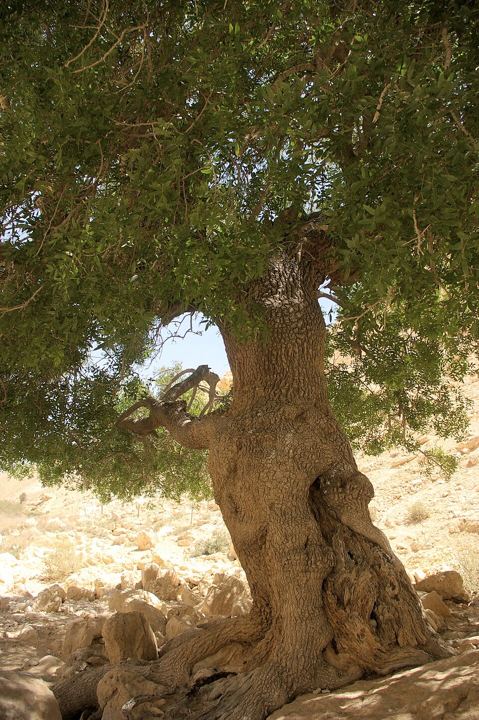
Photos
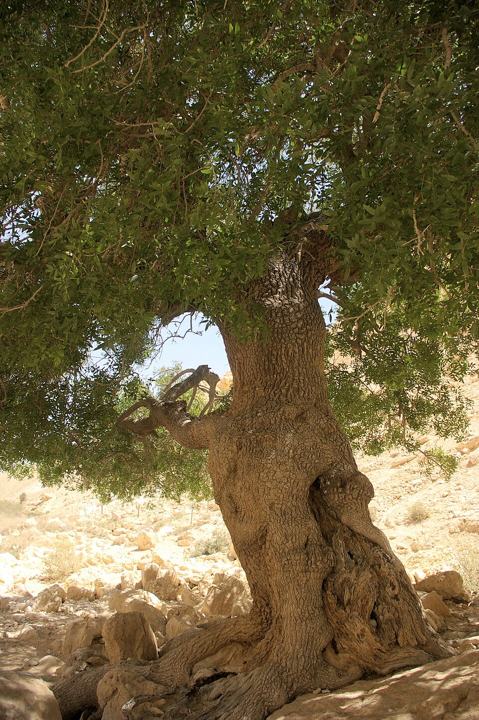
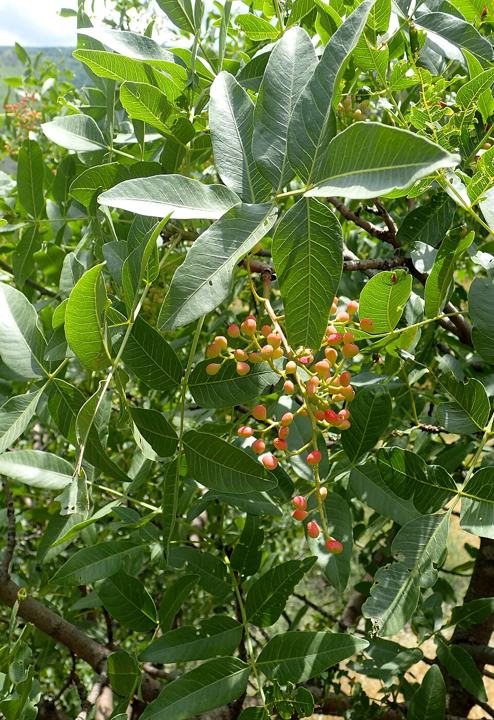
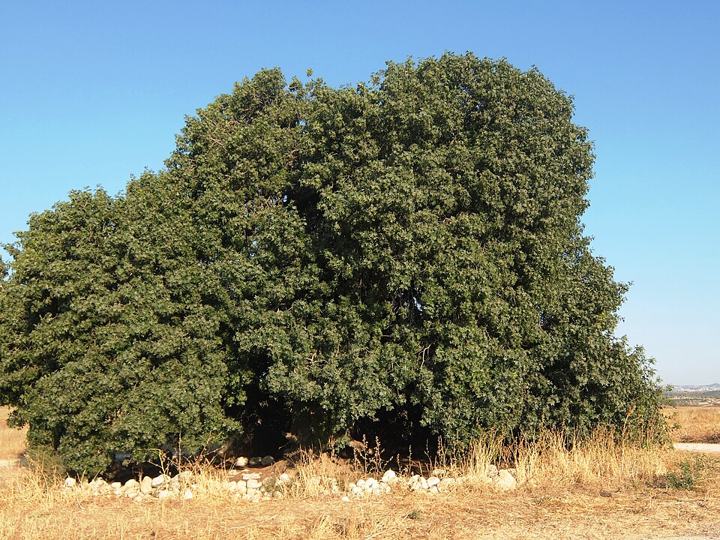
From Wikipedia
Pistacia atlantica is a species of pistachio tree known by the English common names Mt. Atlas mastic tree, Mount Atlas pistachio, Atlantic pistachio, wild pistachio, turpentine tree and Atlantic terebinth.
P. atlantica has three subspecies or varieties which have been described as atlantica, cabulica, and mutica. According to molecular phylogenetic studies, P. atlantica subsp. kurdica is actually a separate species, Pistacia eurycarpa.
Text from Wikipedia, CC BY-SA 4.0: Pistacia atlantica
Description
Deciduous, dioecious tree about 10–12 m tall, with a broad, well-shaped crown and a trunk with dark grey, deeply fissured bark. Leaves imparipinnate, with 5–11 oblong-lanceolate leaflets, somewhat unequal at the base, dark green, 4–5 cm long. Inflorescences terminal and axillary, with greenish male flowers and reddish female flowers. Fleshy fruits, also reddish, borne in showy clusters. Flowers in spring.
Propagation and growing
The small fruits of female plants of this species grow in clusters, and their initial reddish colour turns a metallic greenish shade as they ripen. The seeds are difficult to germinate, so artificial propagation is usually done asexually from cuttings; it is advisable to leave a few terminal leaves on them and to dip the base in rooting hormone. Cuttings should be kept in cultivation for at least a year to detect false shoots. Cultivation is delicate and needs sunny conditions and a certain degree of soil moisture. It is not usually available in nurseries, so it is best to order its cultivation well in advance.
Garden use
Because of the size it can reach in cultivation (up to 10 m) and its showy colouring, it is a suitable species for landscaping. Given how scarce it is in the wild, its conservation importance is high and its use in reforestation of thermophilous woodland is highly advisable. Bear in mind that it is one of the few native deciduous trees. It needs sustained watering until it is established in the ground, and occasional pruning thereafter. It has had various uses: its resin was useful in making varnishes; the fruits and bark taken as an infusion have astringent properties, and chewing the bark hardens the gums. It is not often cultivated, although this is possible provided the soil has a certain degree of fertility and watering is appropriate, since as a species of thermophilous woodland it needs a certain amount of moisture and not too exposed a position in the sun. Recommended for squares and certain gardens that receive proper maintenance.
Notes
The leaves are often deformed by galls, conspicuous red-purple swellings. Not an endemic species; it also occurs naturally around the Mediterranean.
Protection status
Annex II of the Order of 20 February 1991 on the protection of wild flora of the Canary Islands.
Potential vegetation
Junipero canariensis-Oleetum cerasiformis.
Source: Cabildo de Tenerife, “Guía de especies vegetales”, CC BY. Translated from Spanish by us.
Bioclimatic belts
Warm coastal belt
- Inframediterranean, semi-arid (upper level)
- Inframediterranean, dry, without trade-wind fog
Warm mid-slope belt
- Thermomediterranean, semi-arid (lower level)
- Thermomediterranean, semi-arid (upper level), without trade-wind fog
- Thermomediterranean, dry (lower level), without trade-wind fog
Temperate belt of laurel and pine forest
- Mesomediterranean, lower, semi-arid (upper level), without trade-wind fog
Districts
Anaga · Metropolitan area (Santa Cruz and La Laguna) · Acentejo · Daute · Teno · South-west · Abona · South-east · Güímar Valley