
Hija (Portugal laurel)
Prunus lusitanica L. subsp. hixa (Willd.) Franco. · Family: Rosaceae
Typical of the dampest, shadiest parts of the laurel forest.
Where it grows on Tenerife
Grows in: North, 300–1000 m · Above 1000 m
Zones are derived approximately from the Cabildo belts.
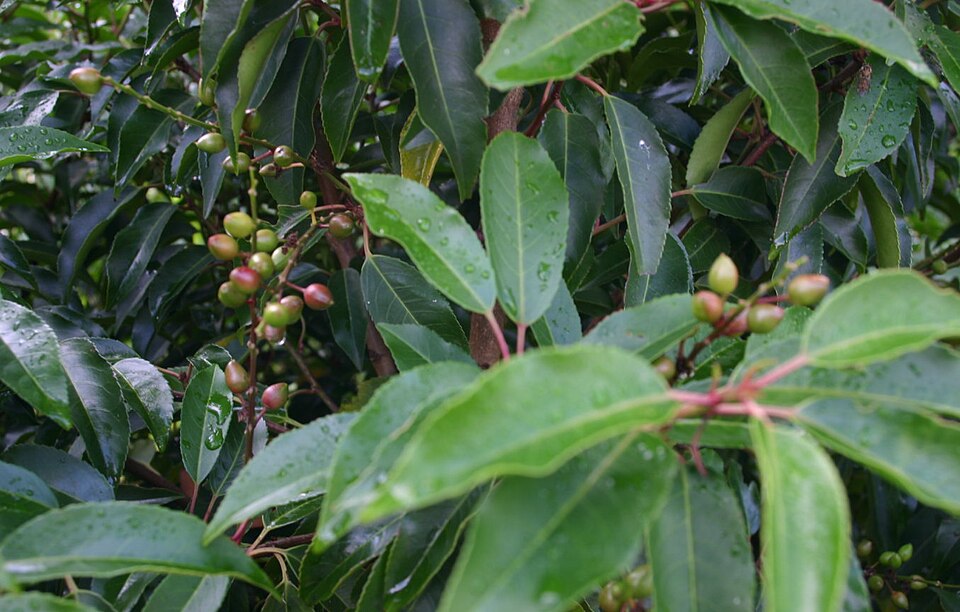
Photos
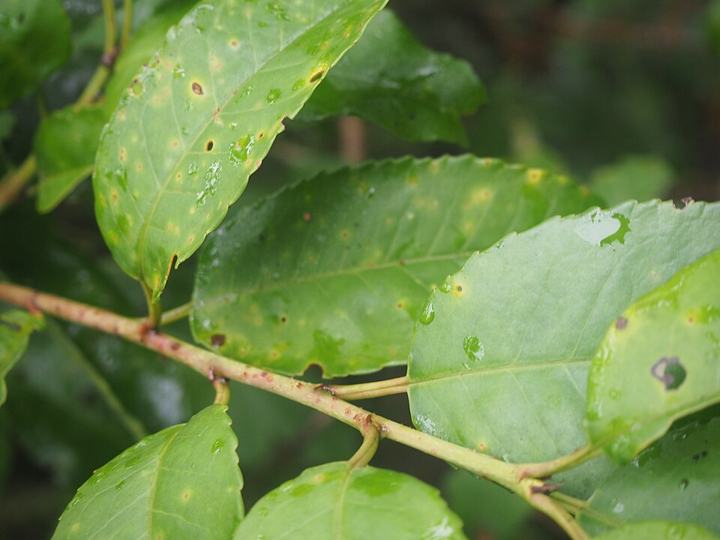
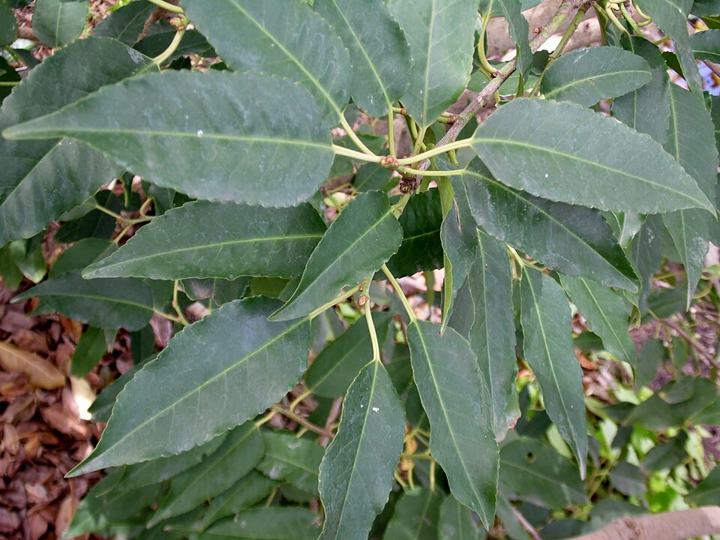
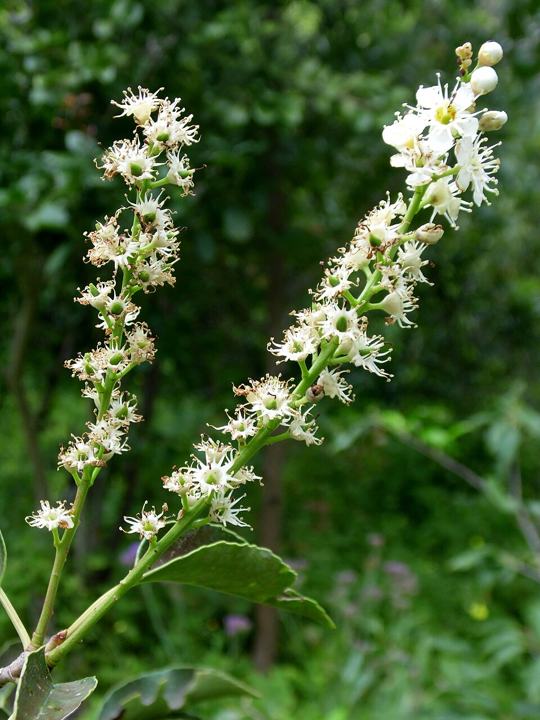
From Wikipedia
Prunus lusitanica, the Portuguese laurel cherry or Portugal laurel, is a species of flowering plant in the rose family Rosaceae, native to the Iberian Peninsula, Morocco, the Macaronesian archipelagos, and the French Basque Country.
The split between the subspecies (subsp. azorica, hixa, and lusitanica) is dated around the Pliocene.
Text from Wikipedia, CC BY-SA 4.0: Prunus lusitanica
Description
Evergreen tree up to 10 m tall, with smooth, greyish bark. Leaves ovate-lanceolate, 8–12 cm long, leathery, dark green, with pinkish petioles and a blade with crenate margins, a prominent midrib and a long-acuminate tip. Flowers white, numerous, in long, very showy racemes. Fruits subglobose, blackish and glossy when ripe. Flowers in winter–spring.
Propagation and growing
The reddish fruits of this tree turn purplish-black when ripe and usually contain a single seed of moderate germination capacity. Seedlings develop normally, though somewhat slowly, and need a temperate climate, humid conditions, mixed exposure, clay-loam soils, acid pH and moderate watering (J.C.Delgado 1986). After a year in a container the plants do not usually reach half a metre in height. This is not a species usually found in native-plant nurseries. Propagation by seed and cuttings.
Garden use
A tree suitable for gardens in shady areas and on very moist soils. Its flowering is very showy and its leaves glossy and leathery. Even when young it produces a great many suckers, and branches touching the ground tend to root. Its scientific value is high, as a relict representative of the Mediterranean Tertiary flora, which still has representatives in North Africa and the south of the Iberian Peninsula. Its conservation value is also very high because of its scarcity (it has almost disappeared from other islands). It needs moist soils and plenty of water during the dry season for the first two years. An easy tree to grow. In the past its wood was used in cabinet-making. Its flowering is very striking because of the shape and colour of the inflorescences. It prefers humid conditions and tolerates moderate pruning. Recommended for gardens and squares with proper maintenance.
Notes
Also present on Madeira.
Protection status
Annex II of the Order of 20 February 1991 on the protection of wild flora of the Canary Islands.
Potential vegetation
Lauro-Perseetum indicae; Diplazio-Ocoteetum foetentis; Ilici-Ericetum platycodonis.
Source: Cabildo de Tenerife, “Guía de especies vegetales”, CC BY. Translated from Spanish by us.
Bioclimatic belts
Warm mid-slope belt
- Thermomediterranean, subhumid, with trade-wind fog
- Thermomediterranean, humid, with trade-wind fog
Temperate belt of laurel and pine forest
- Mesomediterranean, lower, dry, with trade-wind fog
- Mesomediterranean, lower, subhumid, with trade-wind fog
Districts
Anaga · Metropolitan area (Santa Cruz and La Laguna) · Acentejo