
Rosalillo (Pterocephalus dumetorum)
Pterocephalus dumetorum Coult. · Family: Caprifoliaceae
Scrub near dry laurel forest, pine forest and thermophilous strips, on slopes and in ravines over a wide range of altitudes.
Photos
Description
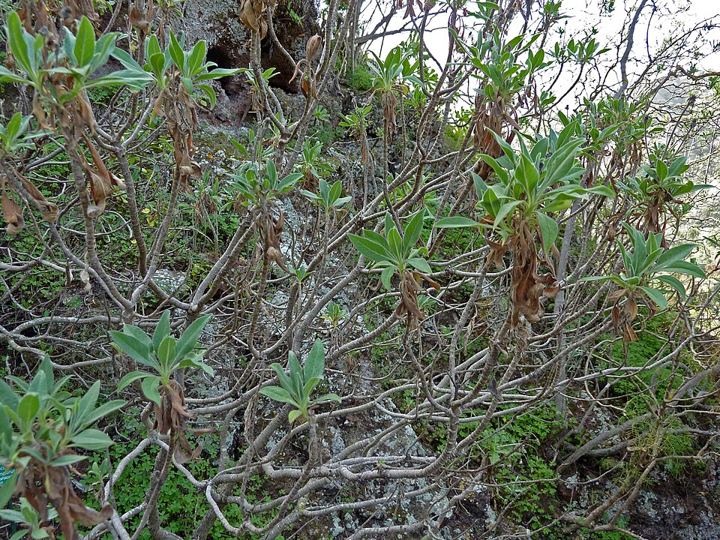
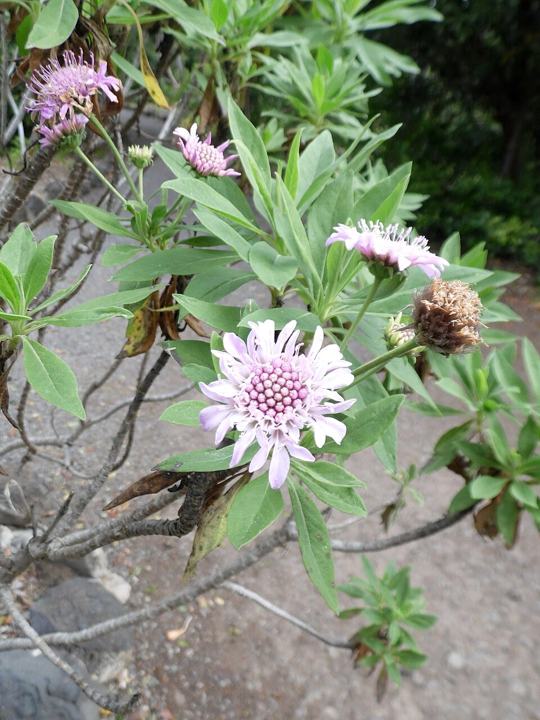
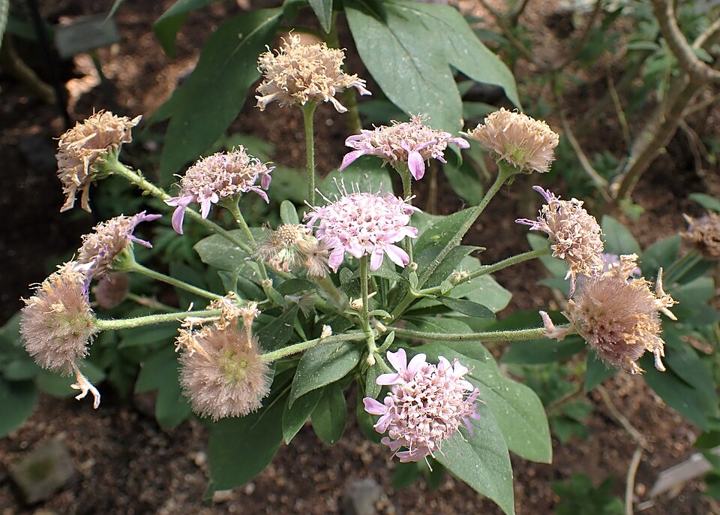
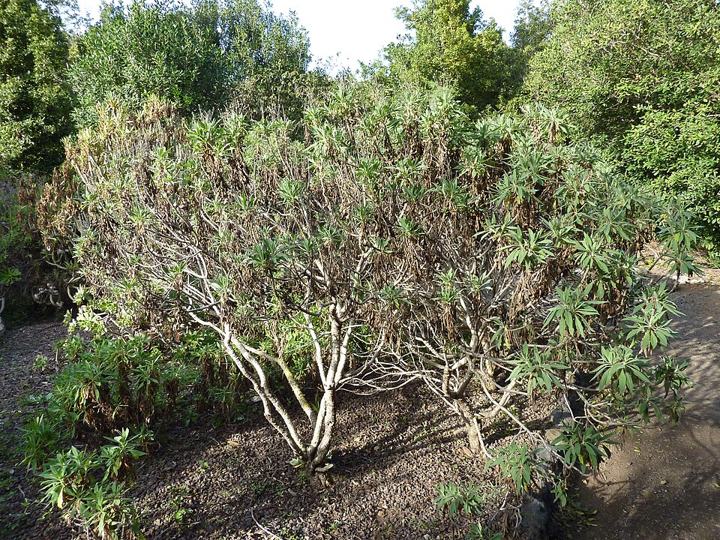
A shrub just over one metre tall with a rounded habit. Densely branched, with compact foliage, it is characterised by brown stems and dull green or greyish lanceolate leaves that are velvety to the touch on both sides. They are clustered towards the tips of the branches. Inflorescences with few flowers, roughly 3 to 7, with pink petals. From spring onwards its flowers stand out, with abundant petals in shades of pink or mauve.
Propagation and growing
Propagation by seed. Although no germination data for this species were found in the literature consulted, good germination rates have been achieved in the closely related Pterocephalus porphyranthus, the optimum germination temperature being… Sowing in autumn is therefore recommended. Germination in standard substrate. Surface broadcast sowing. A plant for full sun or partial shade. Best suited to the southern medianías (mid-altitude zone) of the island.
Garden use
Today it is used mainly as an ornamental, thanks to its showy flowering and easy cultivation, and a size that is convenient to place and manage. It prefers mild temperatures of around 23 ºC and spots with moderate exposure to sunlight. Watering should be moderate, enough to keep the soil moist. The soil, in turn, must drain well.
Protection status
Annex II of the Order of 20 February 1991 on the protection of wild flora of the Canary Islands.
Potential vegetation
Matorrales de medianías…
Source: Cabildo de Tenerife, “Guía de especies vegetales”, CC BY. Translated from Spanish by us.
Districts
Güímar Valley