
Tasaigo (Rubia fruticosa)
Rubia fruticosa Aiton · Family: Rubiaceae
Dry scrub on lava fields, ravines, slopes and cliffs of the lowlands, from 25 to over 1,000 m.
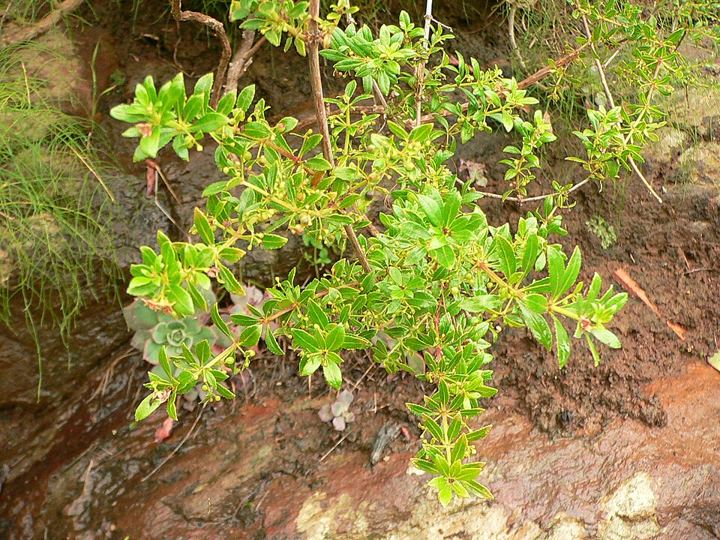
Photos
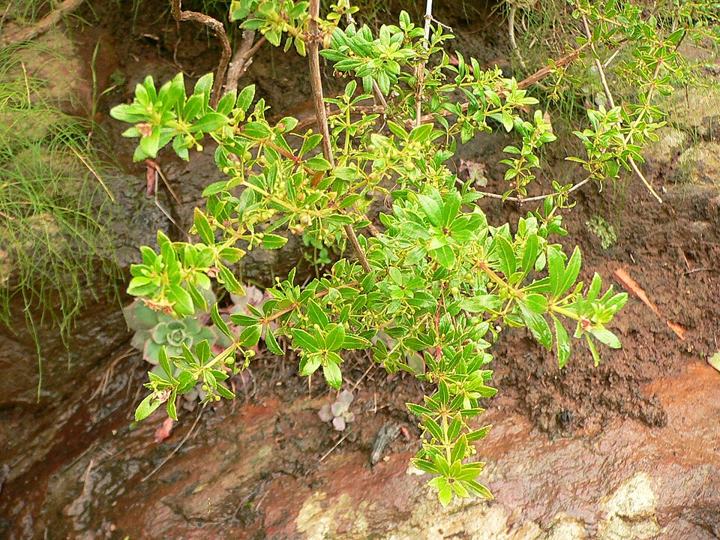
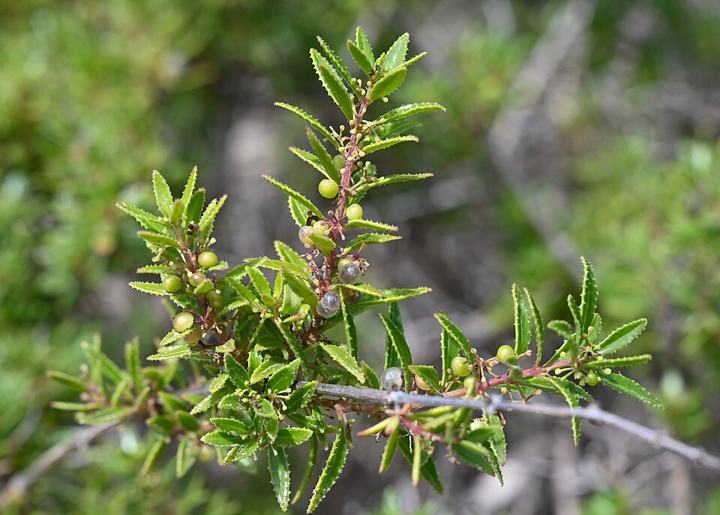
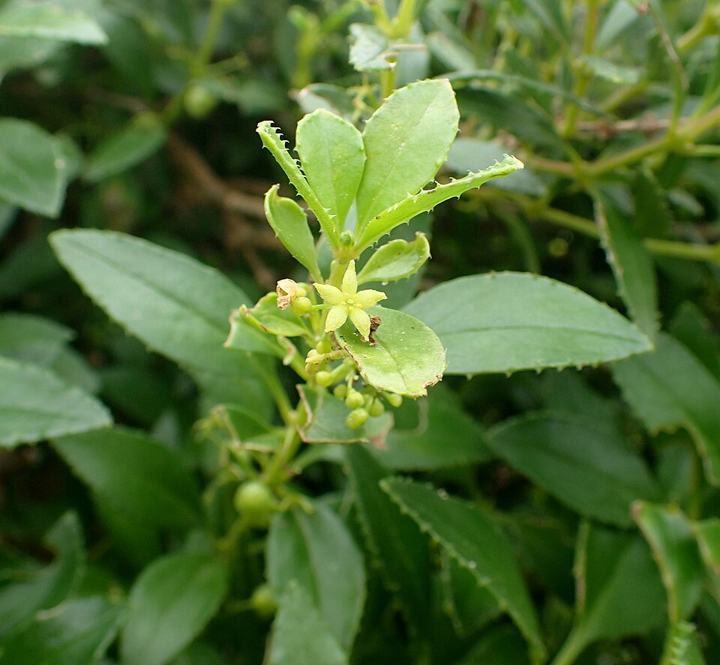
From Wikipedia
Rubia fruticosa is a species of flowering plant in the family Rubiaceae, native to the Canary Islands, Madeira and the Savage Islands.
Text from Wikipedia, CC BY-SA 4.0: Rubia fruticosa
Description
A shrubby plant with a woody base, climbing or scrambling, with prickles on the stems and on the margins and undersides of the leaves, which are whorled and elliptic to ovate. Old branches are woody, while young ones are herbaceous and brittle, channelled and extremely rough. The leaves are lanceolate, elliptic or ovate, up to 4 cm long, green, glossy, subcoriaceous, very prickly on the margins and underside, in whorls of 3 or 4. Flowers small, pale yellow or greenish, in axillary or terminal clusters. The fruits are globose berries of about 4–6 mm, whitish or blackish depending on the variety. It differs from subspecies melanocarpa, which has black berries and leaves 10 to 12 mm long and 4 to 5 mm wide, and from subspecies periclymenum, which has longer stems, 3 to 6 m, flexible and pendulous, that climb over trees, larger leaflets (4 to 6 cm long and 15 to 25 mm wide) and flower cymes with long pedicels (20–25 mm).
Propagation and growing
Propagation by seed. The best germination rates have been obtained from autumn sowings. Seeds are dispersed by lizards and birds (Sylvia spp.). Germination in standard substrate. Sow almost on the surface.
Garden use
Chemically, tasaigo is rich in anthraquinones, the compounds responsible for the red colour obtained from its roots. Its main uses were in textile dyeing and pharmacology. However, tasaigo cultivation was gradually displaced by that of other species, and red colour was additionally obtained from other sources such as the dragon tree. This plant has diuretic and appetite-stimulating properties and is used for hepatitis. Because of its cleansing and draining effects, it is used against inflammation of the liver and spleen, in broths and infusions (made by boiling the young stems and roots), taken three times a day before meals. It is also used for headaches and is a good analgesic and anti-catarrhal; the fresh leaves of the plant are used, or the flowers, which also have healing qualities. It can be used as many times a day as desired.
Notes
The use of the genus Rubia dates back to the ancient Egyptian civilisations (2500 BC), which used Rubia tinctorum L. to dye their linen garments and leather red. This plant, which was used over time by different civilisations…
Protection status
Not listed.
Potential vegetation
Matorrales xerófilos. Cardonal-tabaibal.
Source: Cabildo de Tenerife, “Guía de especies vegetales”, CC BY. Translated from Spanish by us.
Districts
Anaga · Metropolitan area (Santa Cruz and La Laguna) · Acentejo · La Orotava Valley · Daute · Teno · South-west · Abona · South-east · Güímar Valley