
Peruvian pepper tree
Schinus molle L. · Family: Anacardiaceae
Grows in a wide range of climates, from subtropical to temperate. Suffers below 5 °C. Sun or partial shade; tolerates dry weather.
Where it grows on Tenerife
Grows in: South coast · North coast · South, 300–1000 m · North, 300–1000 m
Zones are derived approximately from the Cabildo belts.
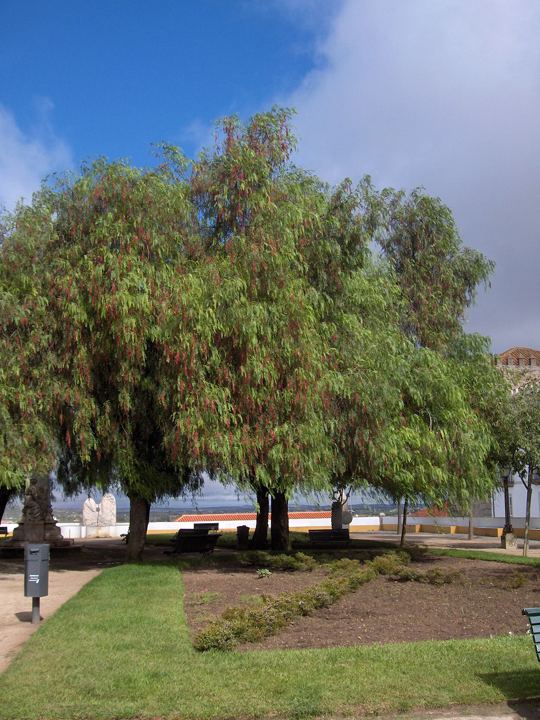
Photos
From Wikipedia
Schinus molle (Peruvian pepper, also known as American pepper, Peruvian peppertree, escobilla, false pepper, rosé pepper, molle del Peru, pepper tree, peppercorn tree, California pepper tree, pirul, Peruvian mastic, anacahuita or aguaribay and pepperina) is an evergreen tree in the cashew family (Anacardiaceae) that grows to 15 m (50 ft). It is native to an area from the Peruvian Andes to southern Brazil. The bright pink fruits of S. molle are often sold as "pink peppercorns", although it is unrelated to black pepper (Piper nigrum). The word molle in Schinus molle comes from mulli, the Quechua word for the tree. The tree is host to the pepper-tree moth, Bombycomorpha bifascia.
Text from Wikipedia, CC BY-SA 4.0: Schinus molle
Description
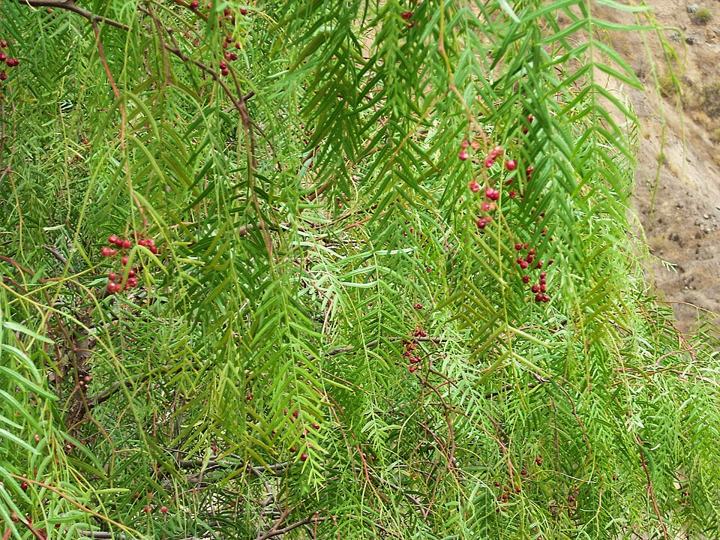
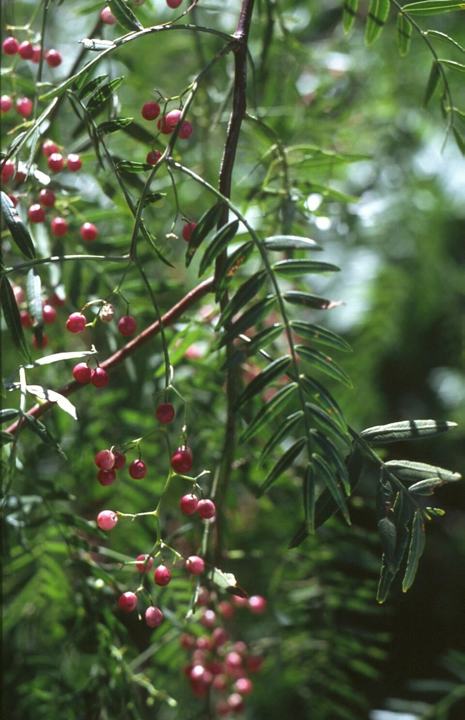
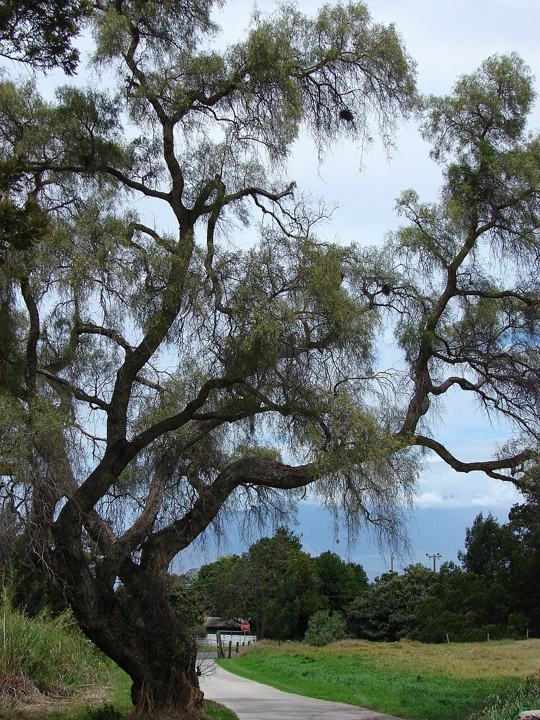
Evergreen tree, native to the Peruvian Andes, up to 15 m tall, much branched, with a stout trunk, dark brown bark and weeping branches. Leaves compound, usually imparipinnate, up to 25 cm long, with 19–41 lanceolate leaflets with serrate margins. Flowers unisexual, small and inconspicuous, yellowish-white, in hanging, much-branched inflorescences. Fruits spherical, fleshy, red. Flowers almost all year round.
Propagation and growing
An evergreen species. It is grown successfully, needs sunny positions and is very drought-resistant. It branches a good deal as it grows. Its round, reddish fruits contrast with the green of its hanging branches, which give a feeling of freshness.
Garden use
It is very resistant to wind and drought, tolerates hard pruning, responds well to transplanting and grows quickly. An ideal species for the edges of roads, tracks and promenades. It is also grown in parks and gardens. The resin from its wood is used as a gum and also serves to heal ulcers; an alcoholic drink can be made from its fruits, and the gum yields chewing gum.
Notes
It is highly resistant to wind. Its seeds have a hot taste similar to pepper, hence its common name. A species of low invasive capacity. Although it is not currently listed as an invasive species, it has become natural…
Source: Cabildo de Tenerife, “Guía de especies vegetales”, CC BY. Translated from Spanish by us.
Bioclimatic belts
Warm coastal belt
- Inframediterranean, hyperarid
- Inframediterranean, arid
- Inframediterranean, semi-arid (lower level)
- Inframediterranean, semi-arid (upper level)
- Inframediterranean, dry, without trade-wind fog
- Inframediterranean, dry, with trade-wind fog
Warm mid-slope belt
- Thermomediterranean, semi-arid (lower level)
- Thermomediterranean, semi-arid (upper level), without trade-wind fog
- Thermomediterranean, semi-arid (upper level), with trade-wind fog
- Thermomediterranean, dry, with trade-wind fog
- Thermomediterranean, dry (lower level), without trade-wind fog