
Salado (Schizogyne sericea)
Schizogyne sericea (L.f.) DC. · Family: Asteraceae
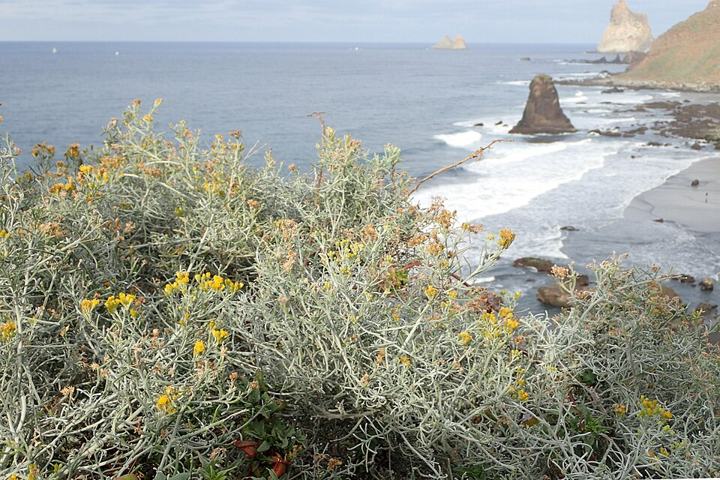
Drought- and salt-tolerant, very common in coastal scrub, dry sunny stony ground and lava fields.
Where it grows on Tenerife
Grows in: South coast · North coast
Zones are derived approximately from the Cabildo belts.
Photos
From Wikipedia
Schizogyne sericea is a species of flowering plant in the family Asteraceae. It is native to Madeira and the Canary Islands.
Text from Wikipedia, CC BY-SA 4.0: Schizogyne sericea
Description
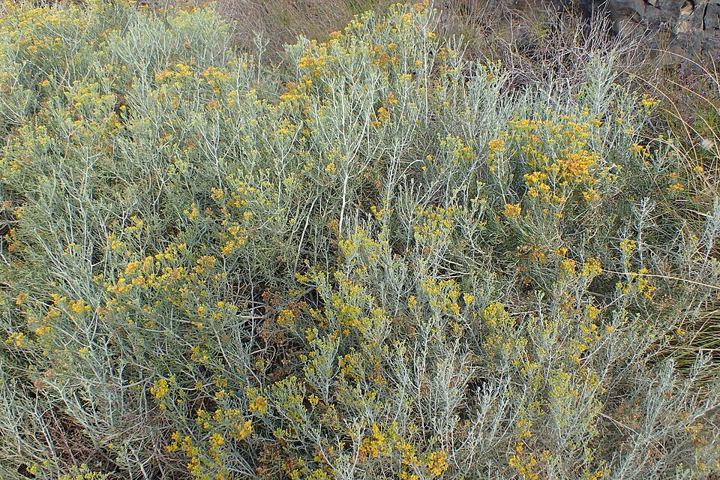
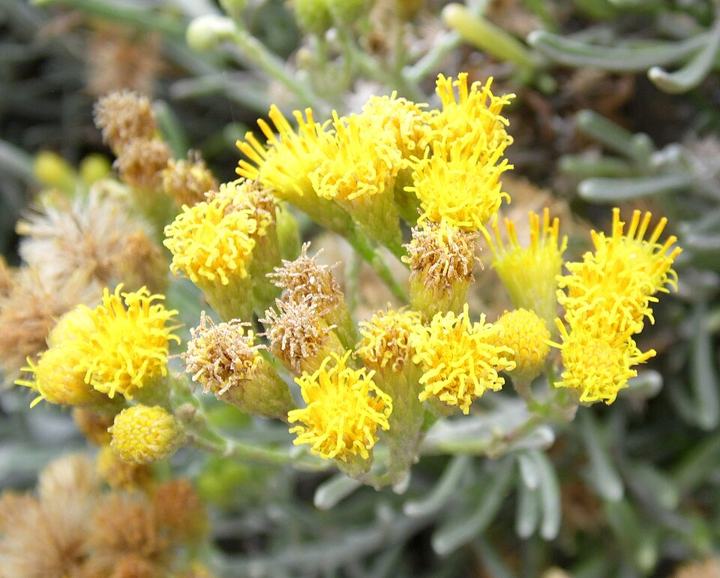
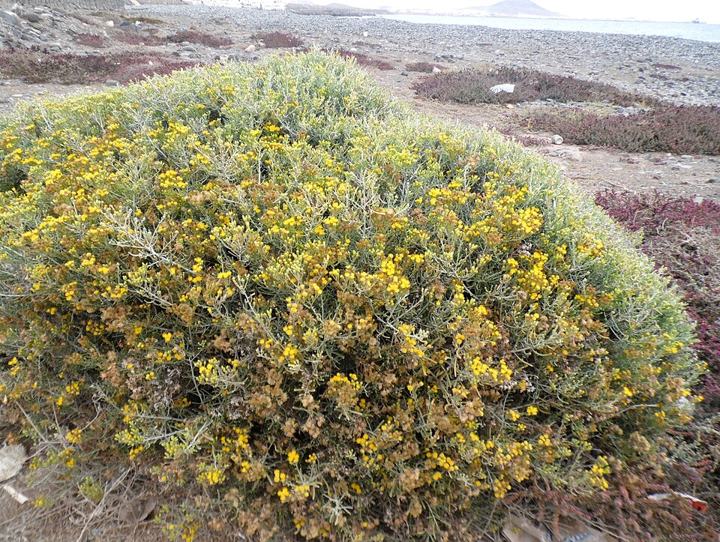
A much-branched shrub up to 1 m tall, with whitish stems and branches. Leaves linear, 3–5 cm long, flat, greyish white. Dense inflorescences made up of many small heads of yellow flowers. Flowers from winter to early summer.
Propagation and growing
The fruits of the "salado" are small achenes which, mixed with soil and sown in seed trays, germinate easily. It can also be grown from cuttings if soil and moisture conditions are suitable. For optimal development these plants need plenty of heat and sunny positions; they are undemanding as to soil, although they prefer saline ones, and very drought-resistant. They are not usually available in native-flora nurseries, and plants must be ordered at least a year in advance.
Garden use
The salado's abundant, showy flowering lasts a long period, from winter to early summer. It is a halophyte, excellent for landscaping coastal areas on all the islands directly exposed to sea spray, where other plants cannot thrive. It needs no special maintenance or watering.
Notes
It is endemic to the Canaries and the Savage Islands, present on all the islands. Its abundance, easy spread and rapid growth make it recommended for restoring disturbed areas in the lowland zone.
Protection status
Not listed.
Potential vegetation
Ceropegio-Euphorbietum balsamiferae; Periploco-Euphorbietum canariensis.
Source: Cabildo de Tenerife, “Guía de especies vegetales”, CC BY. Translated from Spanish by us.
Bioclimatic belts
Warm coastal belt
- Inframediterranean, hyperarid
- Inframediterranean, arid
- Inframediterranean, semi-arid (lower level)
Districts
Anaga · Metropolitan area (Santa Cruz and La Laguna) · Acentejo · La Orotava Valley · Daute · Teno · South-west · Abona · South-east · Güímar Valley