
Chahorra (Sideritis macrostachya)
Sideritis macrostachya Poir. · Family: Lamiaceae
Cliffs and rocky slopes in the laurel forest belt.
Where it grows on Tenerife
Grows in: North coast · North, 300–1000 m
Zones are derived approximately from the Cabildo belts.
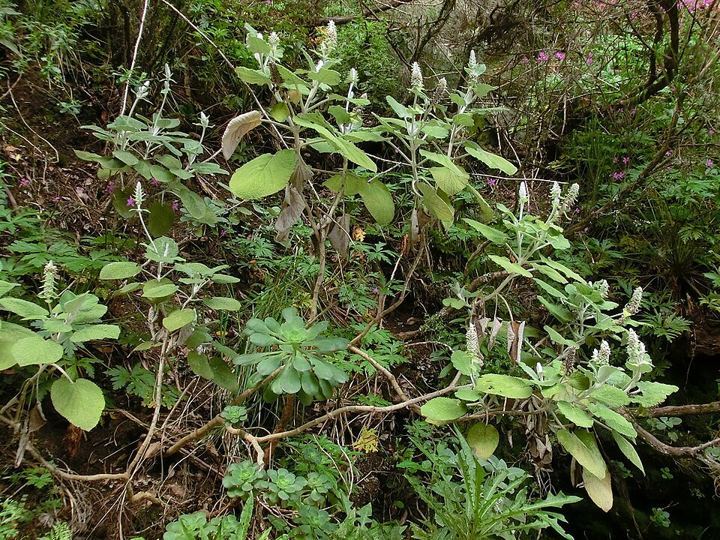
Photos
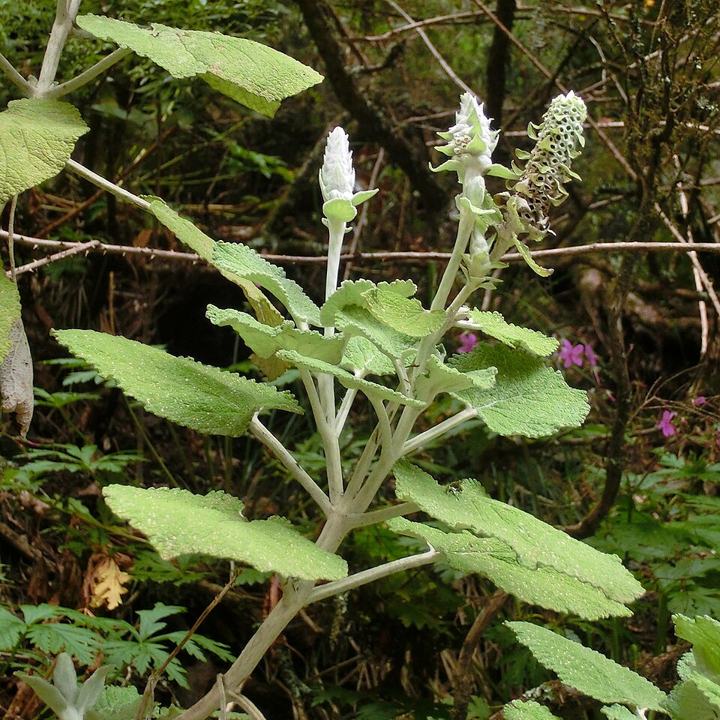
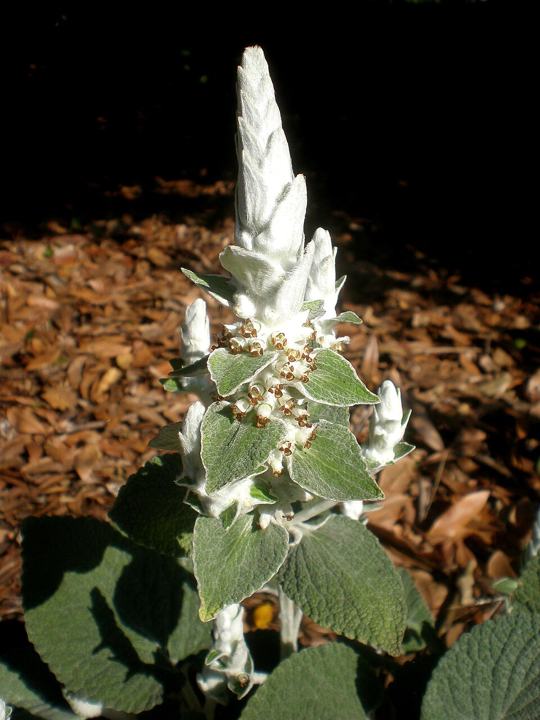
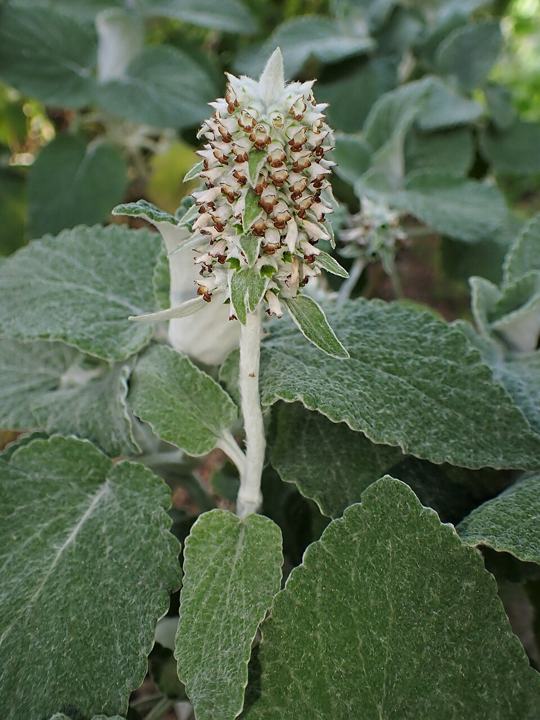
From Wikipedia
Sideritis macrostachyos is a species of flowering plant in the family Lamiaceae, native to north and north-eastern Tenerife in the Canary Islands.
Text from Wikipedia, CC BY-SA 4.0: Sideritis macrostachyos
Description
A woody subshrub with densely white-felted, abundantly branching stems. Leaves large, heart-shaped, white and cottony beneath and dark green or greyish, glabrous or nearly so and very wrinkled above. Flowers whitish with brown tones, densely hairy, small, gathered in compact branched inflorescences. Flowers in spring.
Propagation and growing
This attractive shrub fruits in summer and produces seeds that germinate fairly easily (about 50% within 10 to 40 days, without pre-treatment). The plants are fragile and delicate, but can be grown in containers without much difficulty. They need moderate watering with some air humidity, and rich soils in a semi-shaded position. Growth is slow and it is not usually available in native-plant nurseries.
Garden use
This small shrub, barely half a metre tall, has great ornamental value for its delicate velvety leaves and its beautiful, curious inflorescences. It is endemic to Tenerife and, although rare overall, is relatively frequent on the edges, clearings and rocky outcrops around the monteverde laurel forest on the Anaga peninsula, between 300 and 1000 m above sea level. Listed as "vulnerable", its propagation and use in gardening have been proposed as a conservation measure. It is an interesting species for planting in cool areas, taking care not to plant it next to "Sideritis dendro-chahorra" Bolle, with which it tends to hybridise.
Notes
Hybridises with "Sideritis dendro-chahorra" Bolle.
Protection status
Annex II of the Order of 20 February 1991 on the protection of wild flora of the Canary Islands.
Potential vegetation
Visneo-Arbutetum canariensis; Lauro-Perseetum indicae.
Source: Cabildo de Tenerife, “Guía de especies vegetales”, CC BY. Translated from Spanish by us.
Bioclimatic belts
Warm coastal belt
- Inframediterranean, dry, with trade-wind fog
Warm mid-slope belt
- Thermomediterranean, semi-arid (upper level), with trade-wind fog
- Thermomediterranean, dry, with trade-wind fog
- Thermomediterranean, subhumid, with trade-wind fog
- Thermomediterranean, humid, with trade-wind fog
Districts
Anaga · Metropolitan area (Santa Cruz and La Laguna)