
Canary sarsaparilla
Smilax canariensis Willd. · Family: Smilacaceae
Lives inside the laurel forest, where it finds the shade and moisture it needs.
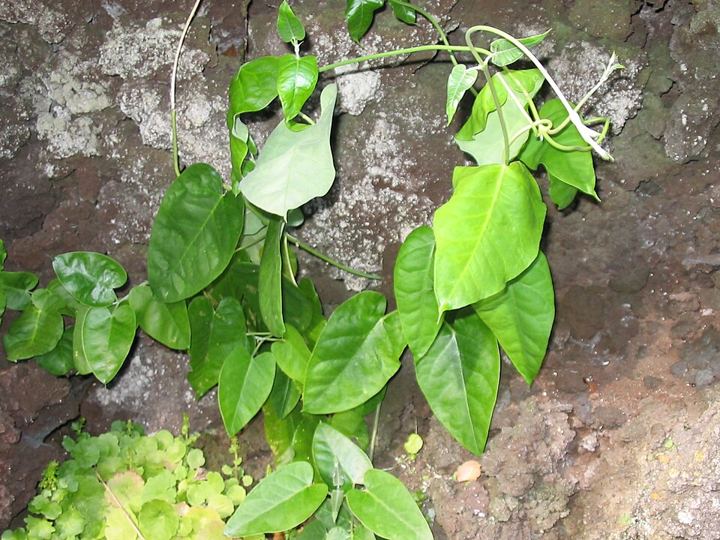
Photos
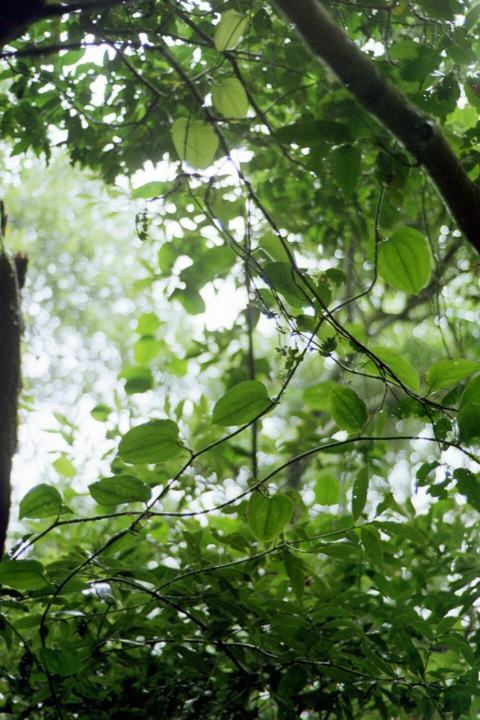
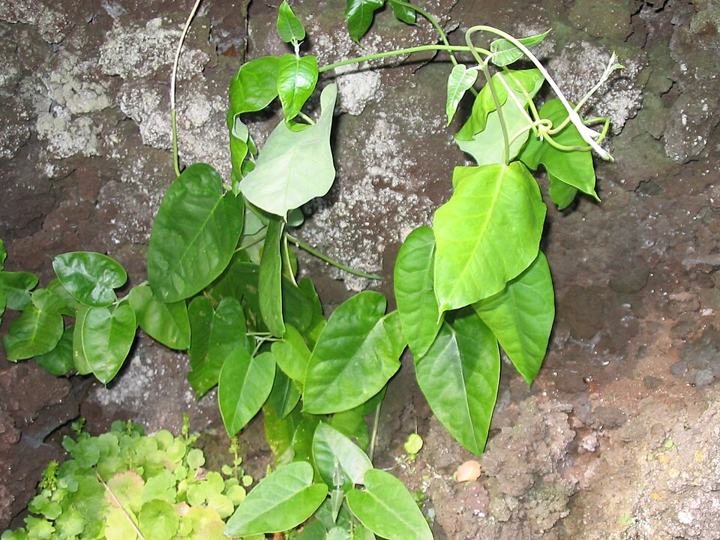
From Wikipedia
Smilax canariensis is a species of flowering plants of the Smilacaceae family. It occurs in Madeira and the Canary Islands. The species was first described by Carl Ludwig Willdenow in 1806. Its Spanish name is zarzaparrilla canaria.
Text from Wikipedia, CC BY-SA 4.0: Smilax canariensis
Description
This is a woody, liana-like plant with spiny stems and alternate, ovate leaves, cuneate or truncate at the base, with non-spiny margins and with tendrils arising from the stipular sheaths. The flowers are unisexual and arranged in umbel-like clusters along an axis. The fruits are berries that turn reddish.
Propagation and growing
Sarsaparilla is grown at a planting spacing of between 25 and 50 cm. It has a small root system. It flowers between July and September. It is also important that the soil is rich in organic matter and retains moisture.
Garden use
It is used as an ornamental, decorative plant. As in the wild, it needs places with moderate sun exposure and average temperatures between 17 and 23 ºC. Watering should be sufficient, especially in dry periods.
Notes
Smilax canariensis is a Macaronesian endemic, found in the Canaries and Madeira.
Protection status
Annex II of the Order of 20 February 1991 on the protection of wild flora of the Canary Islands.
Potential vegetation
Laurisilva…
Source: Cabildo de Tenerife, “Guía de especies vegetales”, CC BY. Translated from Spanish by us.
Districts
Anaga · Teno