
Stemless sow-thistle
Sonchus acaulis Dum.Cours. · Family: Asteraceae
Occurs in every vegetation belt, in cliff and scrub communities, especially in laurel and thermophilous forest. Common at mid elevations, on crags and even on house roofs.
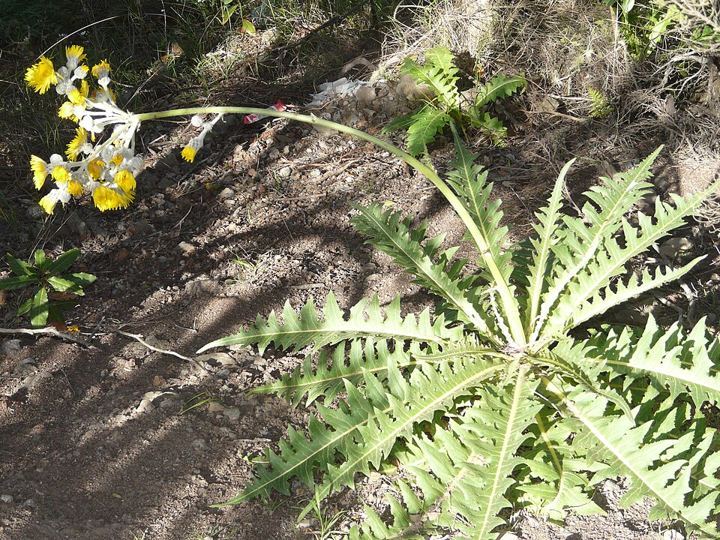
Photos
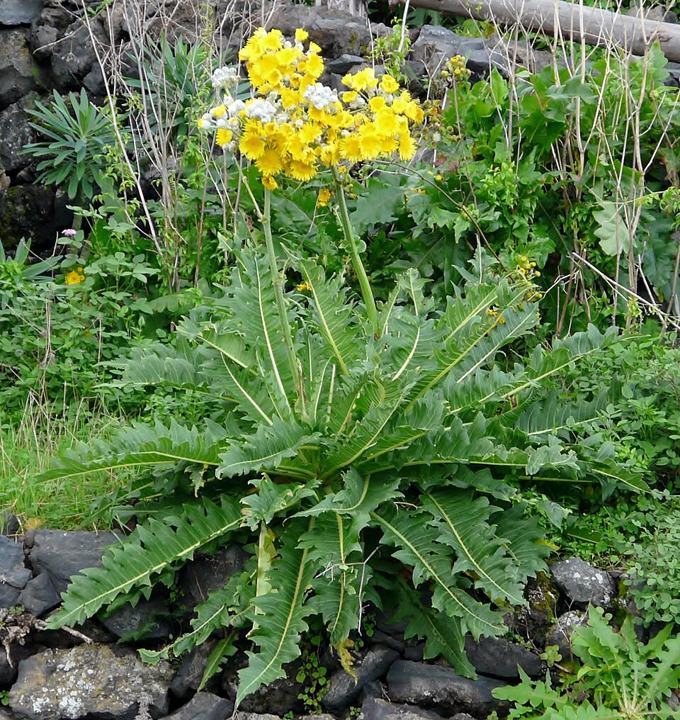
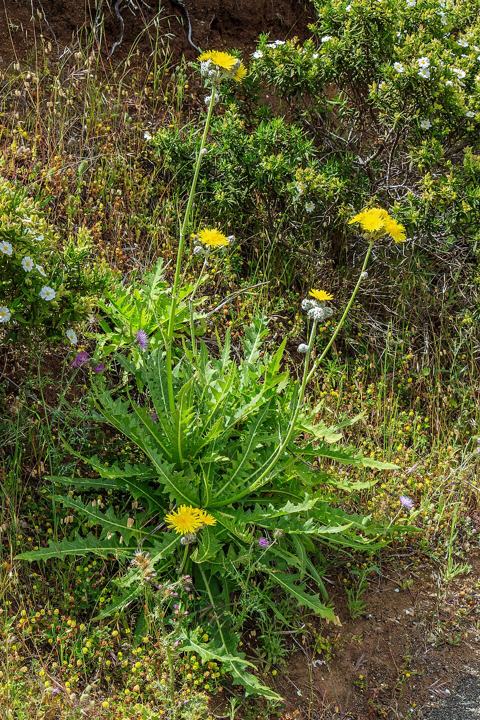
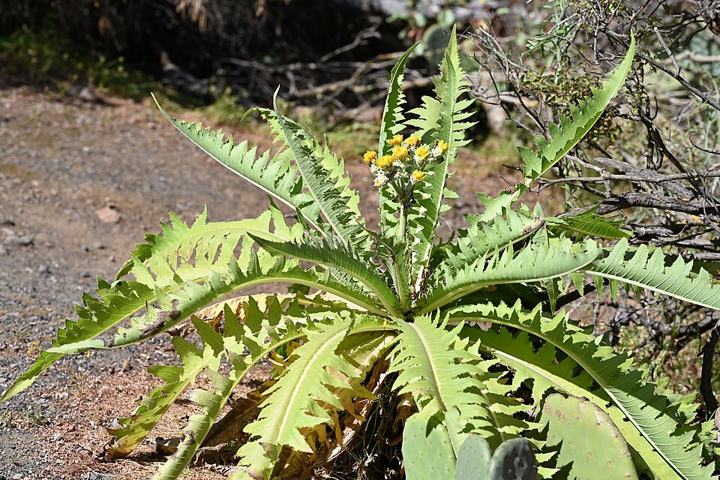
From Wikipedia
Sonchus acaulis is a plant species in the tribe Cichorieae within the family Asteraceae. It is found only on the Canary Islands of Gran Canaria and Tenerife.
Text from Wikipedia, CC BY-SA 4.0: Sonchus acaulis
Description
A shrubby species with very short woody stems and leaves with sharp lobes, arranged in large rosettes up to 1 m across. The flower heads are about 25 mm in diameter. It is also known as "cerrajón". It is a perennial plant usually three to four hand-spans tall. The leaves are divided into segments and have toothed margins; the base is formed by two triangular lobes that clasp the stem; the flowers are yellow and grouped in clusters of four or five.
Propagation and growing
Propagation by seed. No data on the germination of this species were found in the literature consulted. Germinate in standard substrate with added humus-rich soil. Germination of this species should not be very difficult. Sowing is recommended in autumn. Seeds should be sown on the surface. The plants are vigorous and undemanding as to soil, and need a sunny position. They generally tolerate transplanting, but with specific measures to avoid damaging the root ball, and it is drought-resistant. It flowers in late winter and spring and is propagated by seed.
Garden use
It is a species of great ornamental value, as shown by its presence in island gardens, whether as a single specimen or in groups and rows; suitable for rock gardens. The leaves and stems of the "cerraja" contain latex, which contains phytospherin; little is known about the rest of their components. They can be applied as a poultice on the stomach and on wounds infected with pus. The juice of this plant is a good remedy for stomach aches. It needs no special maintenance, but it is advisable to remove dry leaves from time to time. It is not demanding as regards watering. It only needs some supplementary watering at planting. It is dormant in summer, so it should not be watered in that season.
Notes
Endemic to the central islands, Tenerife and Gran Canaria.
Protection status
Not listed.
Potential vegetation
Matorrales rupícolas y de laderas abruptas.
Source: Cabildo de Tenerife, “Guía de especies vegetales”, CC BY. Translated from Spanish by us.
Districts
Anaga · Metropolitan area (Santa Cruz and La Laguna) · Acentejo · La Orotava Valley · Daute · Teno · South-west · Abona · South-east · Güímar Valley