
Canary broom (retamón)
Teline canariensis (L.) Webb & Berthel. · Family: Fabaceae
Edges of humid laurel forest: ledges and steep slopes, scrub where the forest has been degraded, 500–1,500 m.
Where it grows on Tenerife
Grows in: North, 300–1000 m · Above 1000 m
Zones are derived approximately from the Cabildo belts.
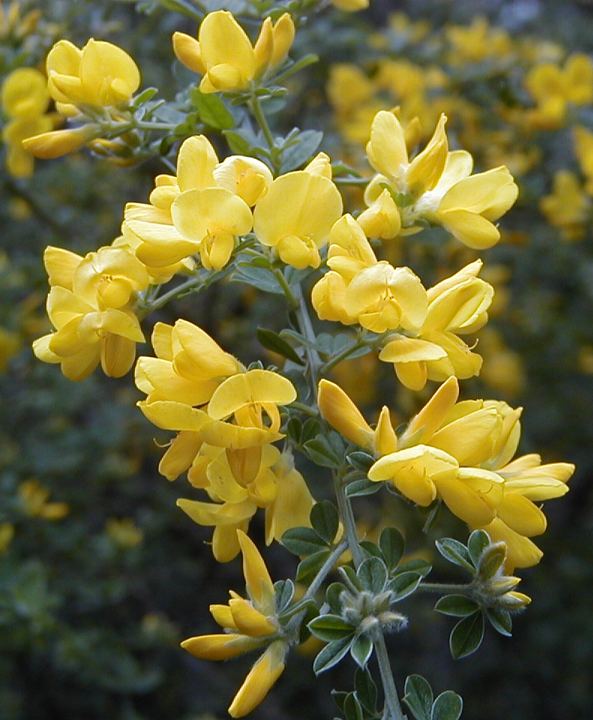
Photos
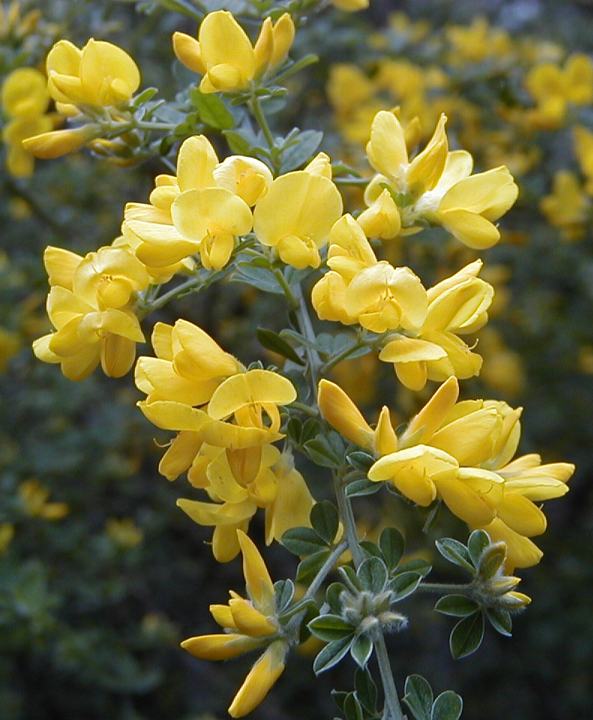
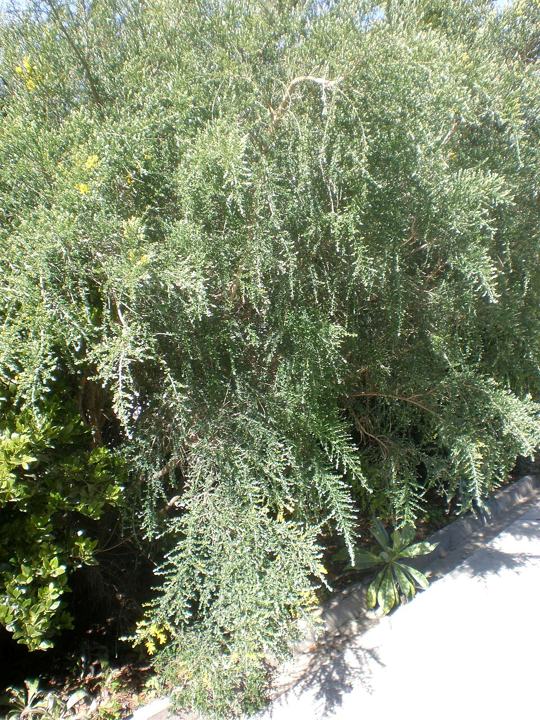
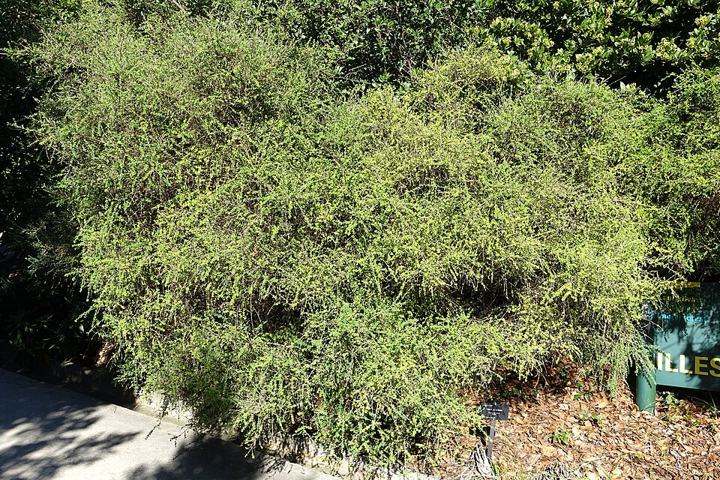
From Wikipedia
Genista canariensis is a species of flowering plant in the legume family Fabaceae, known by the common names Canary broom, Canary Islands broom or florist's genista. It is native to the Canary Islands, but it grows as an introduced species in mainland Europe, especially Spain, and on other continents. It has been introduced to California and Washington State in the US. This is a vigorous upright evergreen shrub growing to 3 m (9.8 ft) tall by 1.5 m (4.9 ft) broad, with hairy green stems. The leaves are made up of oval-shaped blue-green leaflets each up to a centimeter long and densely hairy on the undersides. The raceme inflorescence holds up to 20 bright yellow pea-like flowers. The fruit is a legume pod one to two centimeters long containing several dark brown seeds.
It is hardy down to −5 °C (23 °F), preferring mild coastal areas. In cultivation in the UK this plant has gained the Royal Horticultural Society's Award of Garden Merit.
Text from Wikipedia, CC BY-SA 4.0: Genista canariensis
Description
Tall, much-branched shrub, 2–4 m high, with dark grey bark. Leaves trifoliate, with stipules and small obovate leaflets, densely hairy on the underside. Terminal racemose inflorescences with yellow flowers. Pods up to 3 cm long, brownish, with short hairs. Flowers in spring and summer.
Propagation and growing
From May to August the retamón produces a pod containing 3 to 6 seeds, which must be placed in boiling water for one minute, or the seed coat sanded or scraped (a laborious procedure), if they are to germinate reasonably well. The plants are somewhat delicate, attractive to slugs, snails and insects, and sensitive to lack of moisture in the substrate. They should be grown in a deep container that lets the root grow without circling. It is undemanding as to soil but needs plenty of sun. Watering should be moderate but regular, and its fast growth will let it reach half a metre in height after one year in a container. It is a fairly long-lived shrub that can reach 20 or 30 years of age. It is not usually available in nurseries, and growing it to order must be arranged at least a year and a half in advance.
Garden use
This shrub flowers from February to July, peaking in spring. Its attractive foliage and showy flowers, together with its hardiness in the wild and wide altitudinal range (500–1500 m above sea level), give it some value as an ornamental plant for roadside landscaping and for gardens recreating monteverde (laurel forest) habitats; it may also have forestry uses in restoring this type of vegetation. It needs no special maintenance apart from any necessary pruning, which it tolerates perfectly well.
Notes
It is endemic to the islands of Tenerife and Gran Canaria and is not cultivated, so the existing populations are wild. There are other species in the genus with good ornamental qualities.
Protection status
Not listed.
Potential vegetation
Lauro-Perseetum indicae.
Source: Cabildo de Tenerife, “Guía de especies vegetales”, CC BY. Translated from Spanish by us.
Bioclimatic belts
Warm mid-slope belt
- Thermomediterranean, subhumid, with trade-wind fog
- Thermomediterranean, humid, with trade-wind fog
Temperate belt of laurel and pine forest
- Mesomediterranean, lower, dry, with trade-wind fog
- Mesomediterranean, lower, subhumid, with trade-wind fog
- Mesomediterranean, lower, humid, with trade-wind fog
Districts
Anaga · Metropolitan area (Santa Cruz and La Laguna) · Acentejo · La Orotava Valley · Daute · Güímar Valley