
Canary viburnum (follao)
Viburnum rigidum Vent. · Family: Caprifoliaceae
A typical shrub of the laurel forest, 400–1,200 m.
Where it grows on Tenerife
Grows in: North coast · North, 300–1000 m · Above 1000 m
Zones are derived approximately from the Cabildo belts.
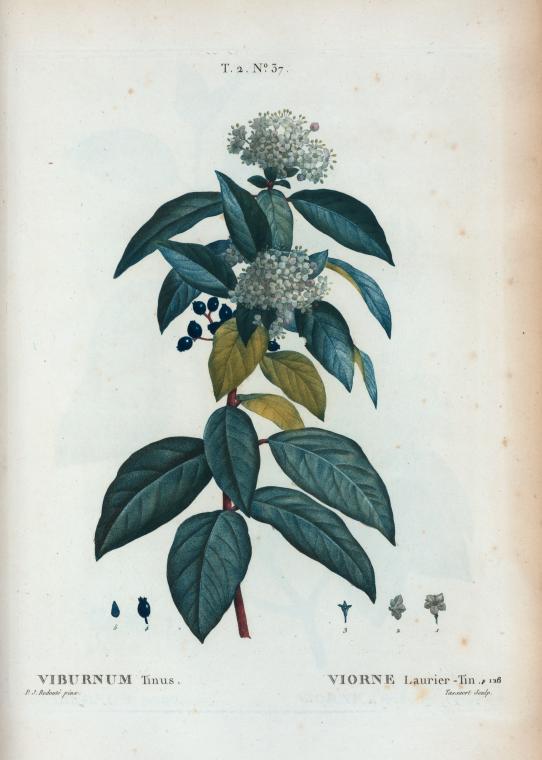
Photos
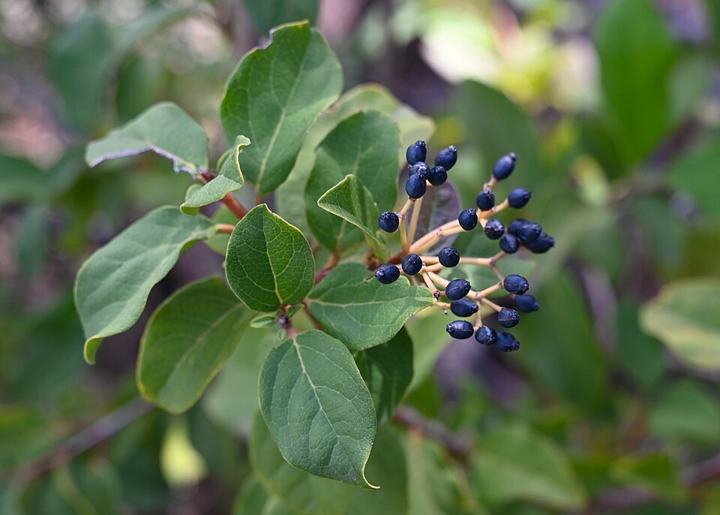
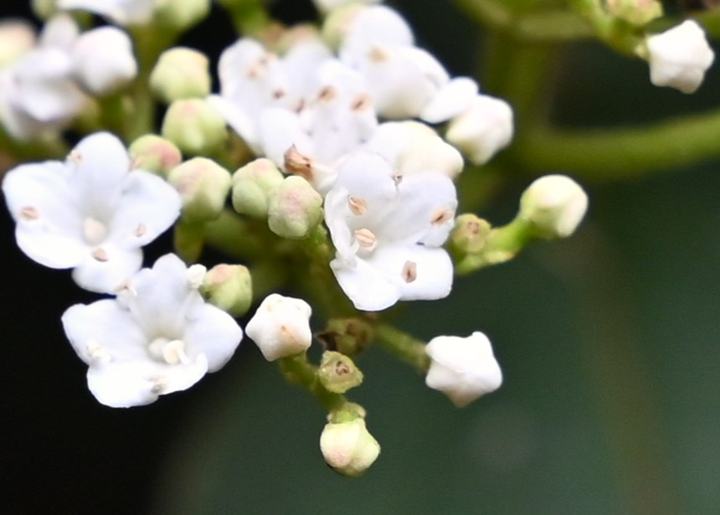
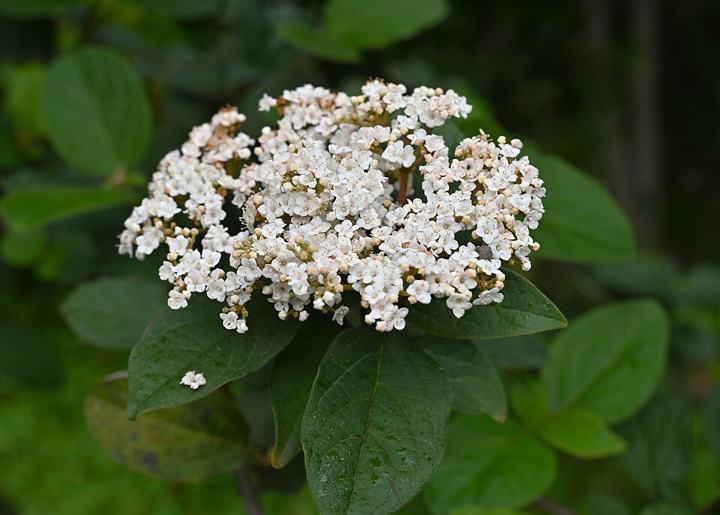
Description
Small tree 4–7 m tall, with a short trunk that branches early and greyish-brown bark. Leaves opposite, 10–20 cm long, ovate to almost round, hairy and rough on both sides. Flowers white, small and numerous, in showy terminal umbel-like inflorescences 10–15 cm across. Fruits globose, dark blue, glossy. Flowers in spring.
Propagation and growing
It is propagated from seed and from cuttings. This shrub produces curious, abundant small fruits that turn a metallic violet colour when ripe. Each fruit contains one seed, which some recommend sowing before the fruit is fully ripe (?). In any case germination, although irregular, is not particularly difficult, producing delicate seedlings that are often attacked by pests in the seed tray itself. Cultivation is somewhat difficult because during the dry months the plants are especially sensitive to lack of moisture and to thrips. It is not usually available in nurseries in any quantity, and after one year in a container the plants can be over half a metre tall.
Garden use
Its showy flowers and fruits, together with the distinctive form of its large velvety leaves, give it high ornamental value. It prefers moist, acid soils in shady settings, although its broad ecological tolerance lets it cope perfectly well with sunny positions. It should be watered frequently during the dry season for the first two years.
Notes
Specimens with non-tomentose (glabrous) leaves are often found, even among nursery-grown plants. Its wood is highly prized for making the sticks used in the Canarian stick-fighting game (juego del palo canario).
Protection status
Not listed.
Potential vegetation
Visneo-Arbutetum canariensis; Lauro-Perseetum indicae; Diplazio-Ocoteetum foetentis; Ilici-Ericetum platycodonis.
Source: Cabildo de Tenerife, “Guía de especies vegetales”, CC BY. Translated from Spanish by us.
Bioclimatic belts
Warm coastal belt
- Inframediterranean, dry, with trade-wind fog
Warm mid-slope belt
- Thermomediterranean, semi-arid (upper level), with trade-wind fog
- Thermomediterranean, dry, with trade-wind fog
- Thermomediterranean, subhumid, with trade-wind fog
- Thermomediterranean, humid, with trade-wind fog
Temperate belt of laurel and pine forest
- Mesomediterranean, lower, dry, with trade-wind fog
- Mesomediterranean, lower, subhumid, with trade-wind fog
- Mesomediterranean, lower, humid, with trade-wind fog
Districts
Anaga · Metropolitan area (Santa Cruz and La Laguna) · Acentejo · La Orotava Valley · Daute · South-east · Güímar Valley