
Grapevine
Vitis vinifera · Family: Vitaceae
- Light
- sun
- Watering
- low
- Hardy to
- -15 °C
- Soil
- poor, volcanic
Where it grows on Tenerife
Grows in: North, 300–1000 m · South, 300–1000 m
Indicative conditions, reviewed by Marianna.
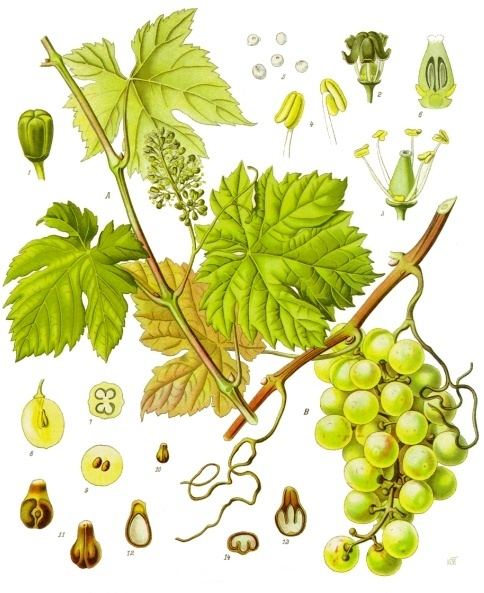
Photos
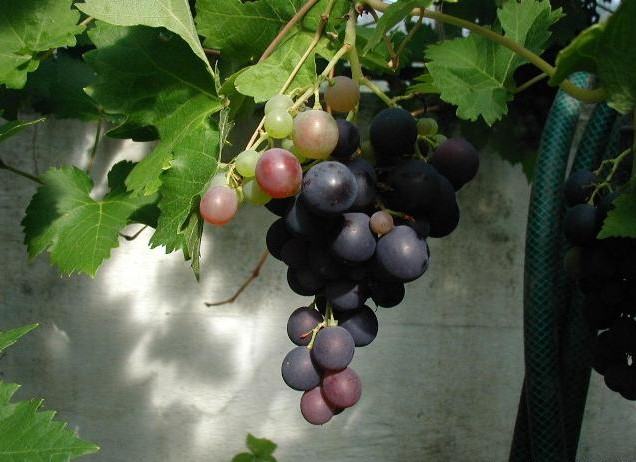
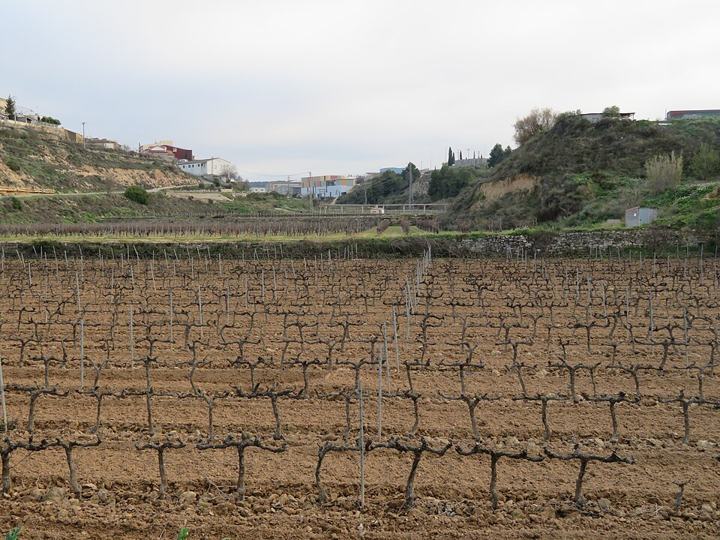
Origin and history
Vines came to Tenerife after the conquest in the late 15th century. In the 16th–17th centuries Canary malmsey was famous across Europe.
Written for this site, pending Marianna's review.
From Wikipedia
Vitis vinifera, the common grape vine, is a species of flowering plant, native to the Mediterranean region, Central Europe, and southwestern Asia, from Morocco and Portugal north to southern Germany and east to northern Iran. As of 2012, there were between 5,000 and 10,000 varieties of Vitis vinifera grapes though only a few are of commercial significance for wine and table grape production.
The wild grape is sometimes classified as Vitis vinifera var. sylvestris (in some classifications considered Vitis sylvestris), with Vitis vinifera var. vinifera restricted to cultivated forms. Domesticated vines have hermaphrodite flowers, but V. vinifera var. sylvestris is dioecious (male and female flowers on separate plants) and pollination is required for fruit to develop.
Grapes can be eaten fresh or dried to produce raisins, sultanas, and currants. Grape leaves are used in the cuisine of many cultures. The fresh grapes can also be processed into juice that is fermented to make wine and vinegar. Cultivars of Vitis vinifera form the basis of the majority of wines produced around the world. All of the familiar wine varieties belong to Vitis vinifera, which is cultivated on every continent except for Antarctica, and in all the major wine regions of the world.
Text from Wikipedia, CC BY-SA 4.0: Vitis vinifera