
Canary withania (orobal)
Withania aristata Pauquy · Family: Solanaceae
Ranges from the coast to thermophilous woodland, 0–600 m, in ravines, scree and foothills with moist, nitrogen-rich soil.
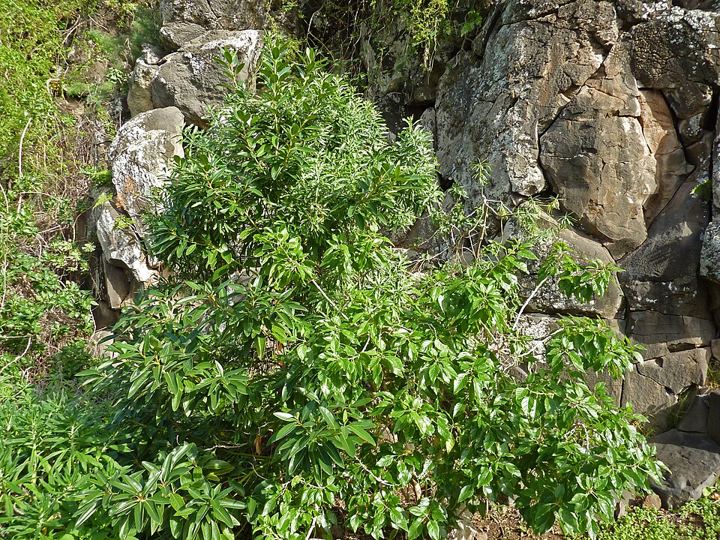
Photos
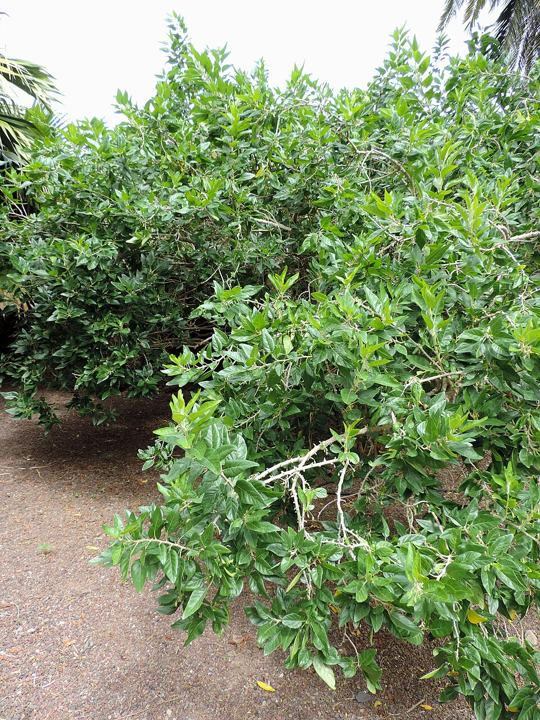
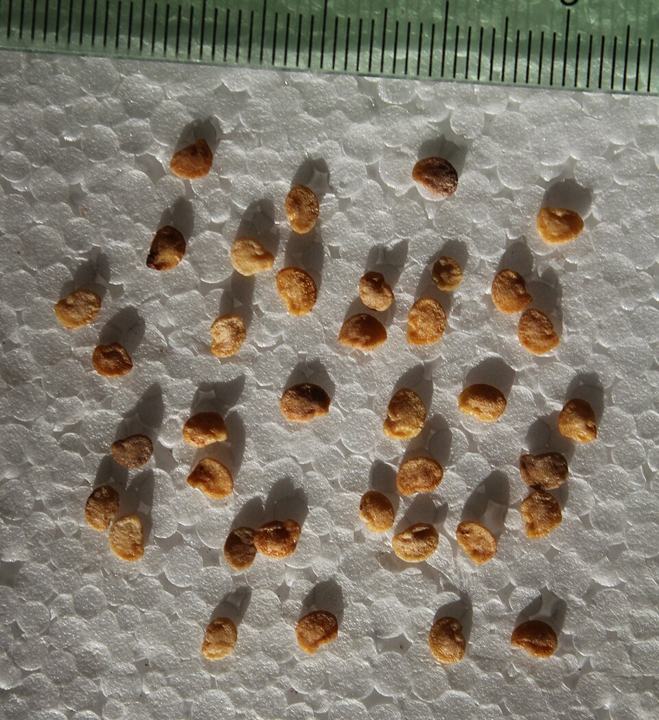
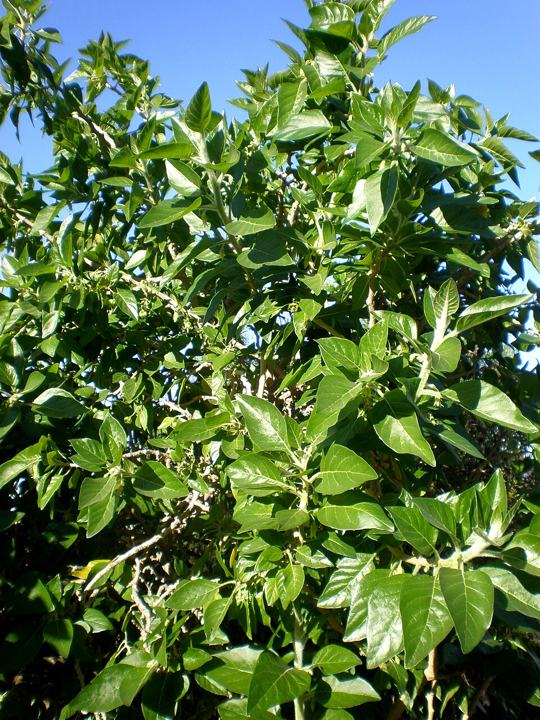
Description
A medium-sized shrub (3-5 metres tall), much branched, with a rounded habit, abundant foliage and large oval leaves of around 14 cm long. It branches profusely, and its bark is pale greyish-brown. Leaves entire, lanceolate, up to 10 cm long, with prominent veins on the underside, alternate. At the end of winter it produces small, bell-shaped, greenish-yellow flowers in axillary clusters, whose persistent calyx ends up enclosing the fruit, a fleshy berry that turns orange when ripe and contains 10-15 seeds.
Propagation and growing
Collection takes place from May to August. The fruits are harvested when they turn orange and soft to the touch, by stripping them individually directly from the tree. There are approximately 178,000 seeds per kilo, and processing involves four stages: drying, until ripe; soaking, to soften the fleshy part of the fruit; depulping, separating the seed from the rest with a blender or by hand; and sieving and washing, to leave the seed clean of impurities. Stored at room temperature, the seed keeps its viability for at least 2-3 years. Pre-germination treatment consists of disinfection with fungicides or hydrogen peroxide. Withania aristata is grown in a seedbed or in polyethylene trays under controlled conditions from October to December. Ideal conditions are 70-80 % humidity, a temperature of 20-25 ºC and soft light. Watering needs are low: keep the soil moist while avoiding waterlogging. Damping-off is prevented and controlled by alternating fungicides. Germination occurs 15 days after sowing, at a rate of about 60%. The growing-on stage takes place under shade netting or outdoors, under the same conditions as above.
Garden use
In cultivation it needs moderate watering and temperatures above 16 ºC. It should be placed in areas with moderate sun exposure and in soils that drain well while still retaining moisture. Used to cover degraded soils and in environmental restoration work. It is said to be the panacea of Canarian medicinal flora because the whole plant except the root is used. The leaves have medicinal uses.
Notes
It is one of the most popular plants in the Canaries because of the properties attributed to almost all its parts. A decoction of its leaves has been used against rheumatism, and an infusion to treat insomnia or as a diuretic. In oil…
Protection status
Not listed.
Potential vegetation
Matorrales de las zonas bajas hasta las medianías.
Source: Cabildo de Tenerife, “Guía de especies vegetales”, CC BY. Translated from Spanish by us.
Districts
Metropolitan area (Santa Cruz and La Laguna) · Acentejo · La Orotava Valley · Daute · Güímar Valley