
Spanish bayonet (yucca)
Yucca aloifolia L. · Family: Agavaceae
A species of warm coastal areas. Prefers sun and adapts to almost any soil.
Where it grows on Tenerife
Grows in: South coast · North coast · South, 300–1000 m · North, 300–1000 m
Zones are derived approximately from the Cabildo belts.
Photos
From Wikipedia
Yucca aloifolia is the type species for the genus Yucca. Common names include aloe yucca, dagger plant, and Spanish bayonet. It grows in sandy soils, especially on sand dunes along the coast.
Text from Wikipedia, CC BY-SA 4.0: Yucca aloifolia
Description
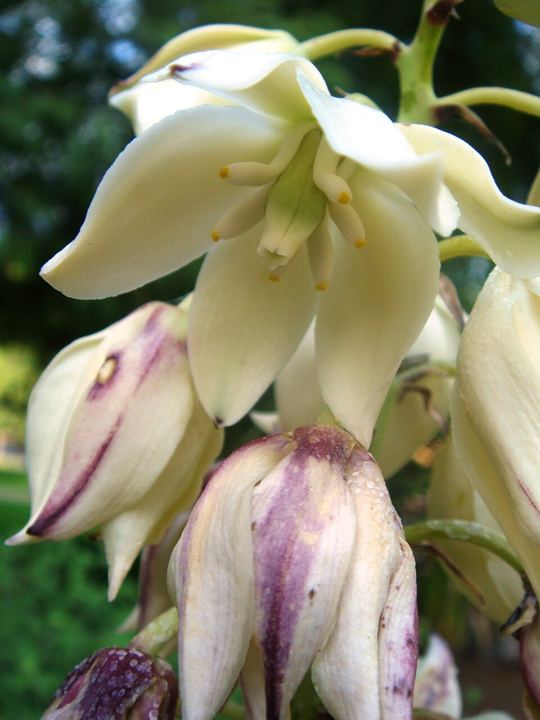
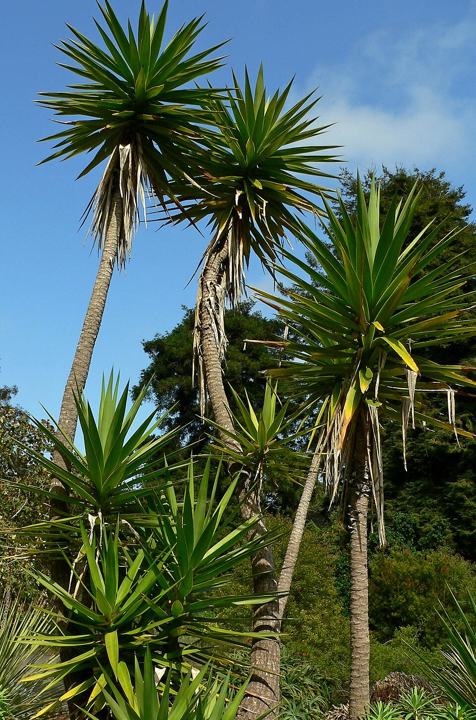
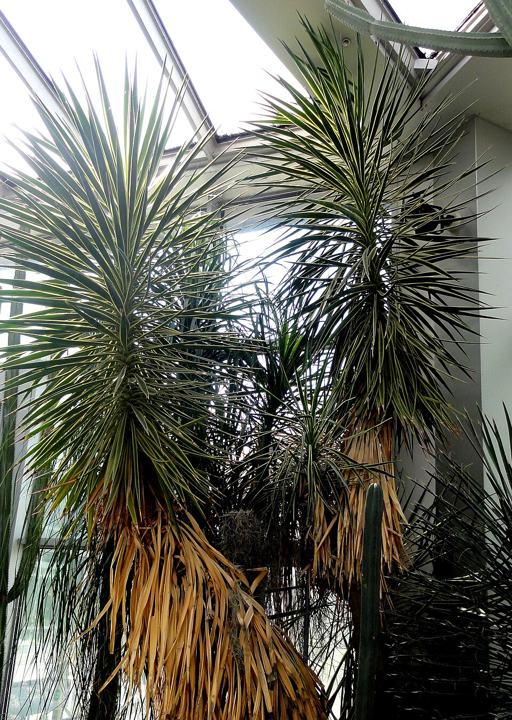
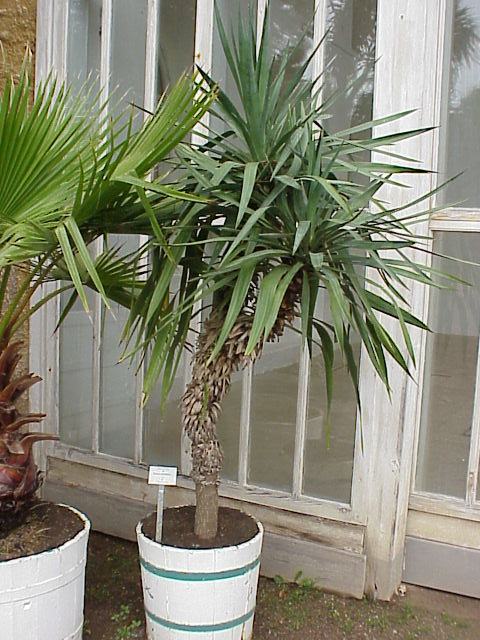
A succulent shrub or small tree, native to the southern USA and Mexico, which can reach 7 m in height, with simple or branched stems. Leaves arranged in rosettes at the tips of the stems and branches, 25–80 cm long, rigid, flat, narrowly lanceolate, with a toothed margin and a very sharp, spiny tip. Flowers white, bell-shaped, pendulous, about 5 cm long, arranged in dense terminal panicles. Flowers from spring to early autumn.
Propagation and growing
Very widespread; it is grown from seed. It reaches a considerable size. Undemanding as to water and humidity. Prefers a sunny position. A hardy, undemanding plant. Propagated by seed and cuttings.
Garden use
Recommended for coastal areas, as it is unaffected by salt spray (“maresía”) and is resistant to wind and excessive sun. It tolerates high temperatures and lack of water well. Its fruit is edible owing to its high sugar content. Its use has grown for hedges serving as fences. It does not require much maintenance work. Widely used in gardens, on lawns, in rockeries, etc. It needs very little water.
Notes
Several species of this genus are cultivated.
Source: Cabildo de Tenerife, “Guía de especies vegetales”, CC BY. Translated from Spanish by us.
Bioclimatic belts
Warm coastal belt
- Inframediterranean, hyperarid
- Inframediterranean, arid
- Inframediterranean, semi-arid (lower level)
- Inframediterranean, semi-arid (upper level)
- Inframediterranean, dry, without trade-wind fog
- Inframediterranean, dry, with trade-wind fog
Warm mid-slope belt
- Thermomediterranean, semi-arid (lower level)
- Thermomediterranean, semi-arid (upper level), without trade-wind fog
- Thermomediterranean, semi-arid (upper level), with trade-wind fog
- Thermomediterranean, dry, with trade-wind fog
- Thermomediterranean, dry (lower level), without trade-wind fog
- Thermomediterranean, subhumid, with trade-wind fog