
Tree asparagus
Asparagus arborescens Willd. ex Schult. & Schult.f. · Family: Asparagaceae
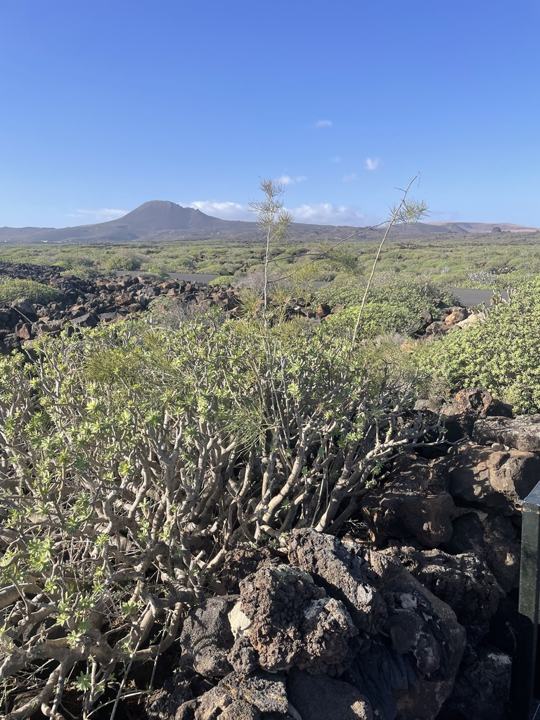
Grows in spurge scrub and thermophilous woodland from sea level to 800–1,000 m, best below 400 m. Often shelters among Canary Island spurge.
Photos
Description
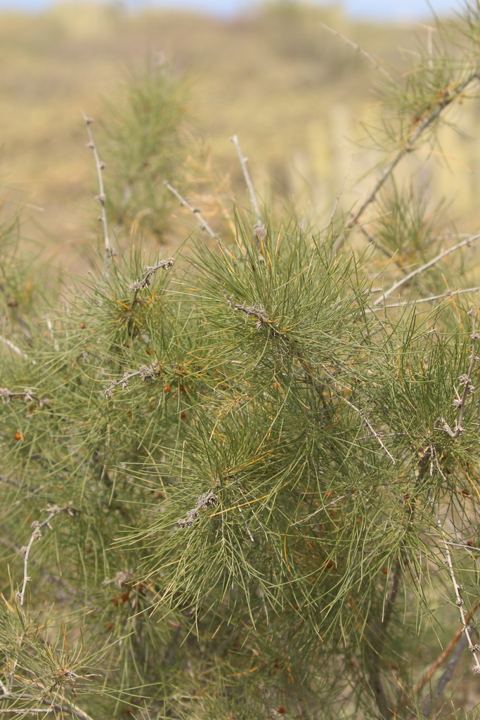
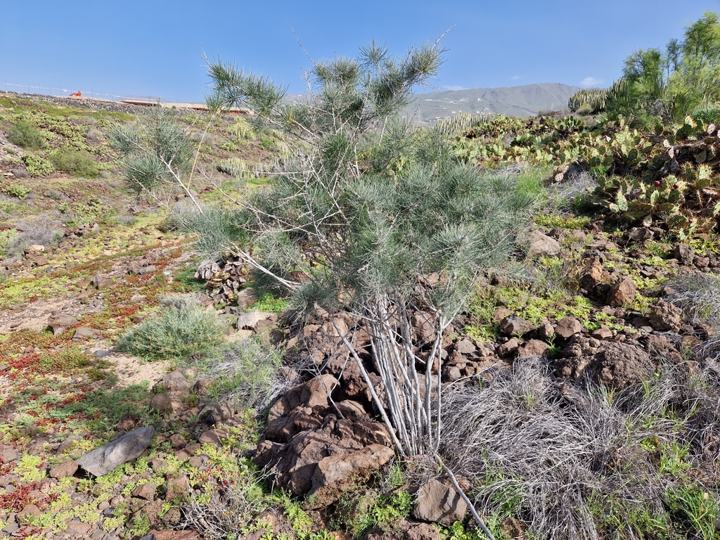
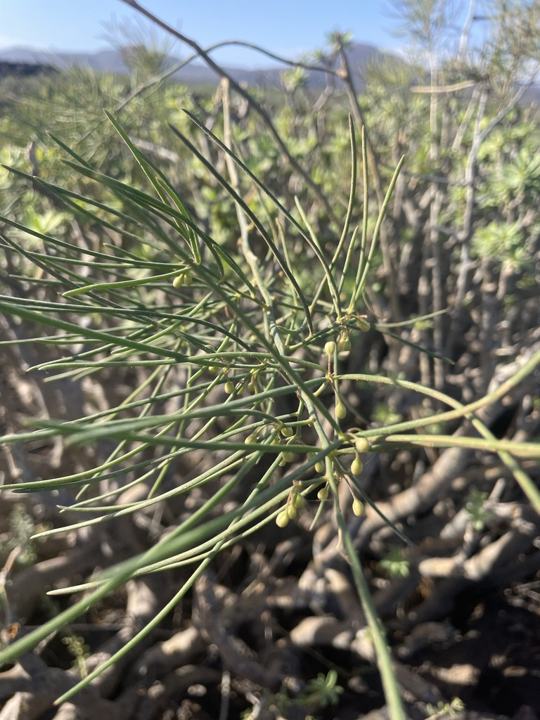
A very woody, fairly branched shrub of upright habit, reaching 2 m in height. It has long, fleshy, thread-like cladodes (false leaves) up to 12 cm long. The flowers are small and whitish, borne singly or in clusters, and the fruits are fleshy and rounded, green at first and then orange.
Propagation and growing
A. arborescens is a wild relative and potential gene donor of asparagus, A. officinalis. It is an easy plant to grow and should be kept in a bright spot, but out of direct sun. The ideal growing temperature is around 15°C, taking care that it does not fall below 7°C. One peculiarity is that it does not tolerate stale air, so the place where it stands must be aired often. It can be propagated by seed or by division of its rhizomes.
Garden use
It has a medium-high water requirement and needs many hours of light. It grows best at a temperature of 23 ºC and in well-drained soils. Its root growth is small, so there is no need to fear underground damage from its roots. It flowers in July and August. A liquid fertiliser, suitably diluted in the irrigation water, is applied every two weeks during the spring–summer period. For the rest of the year feeding should be stopped. The plant is not usually pruned. Leaves that gradually dry out are removed to prevent them from becoming a vehicle for parasitic diseases. This species is used for ornamental purposes, planted in pots or in the garden.
Notes
It occurs throughout the Canary archipelago, although it is more frequent on the central islands, especially Tenerife.
Protection status
Annex II of the Order of 20 February 1991 on the protection of wild flora of the Canary Islands.
Potential vegetation
Matorrales xerófilos de las zonas bajas.
Source: Cabildo de Tenerife, “Guía de especies vegetales”, CC BY. Translated from Spanish by us.
Districts
Anaga · Teno · South-west