
Stiff bottlebrush
Callistemon rigidus R.Br. · Family: Myrtaceae
A species of moist places and moderately fertile soil. Can be grown in the low and middle zones of the islands.
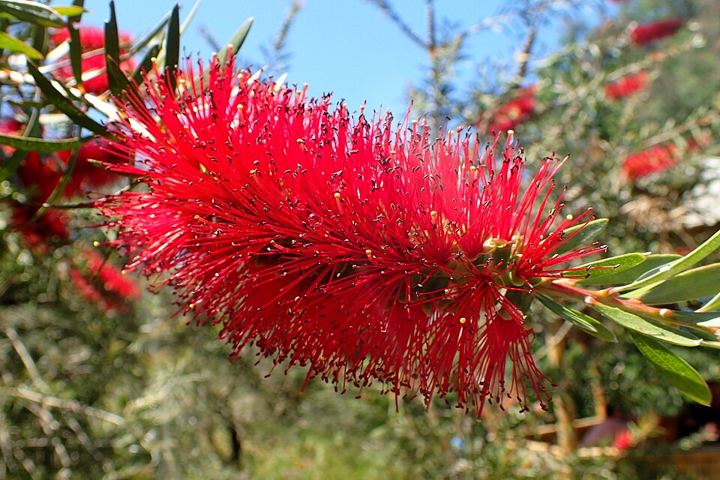
Photos
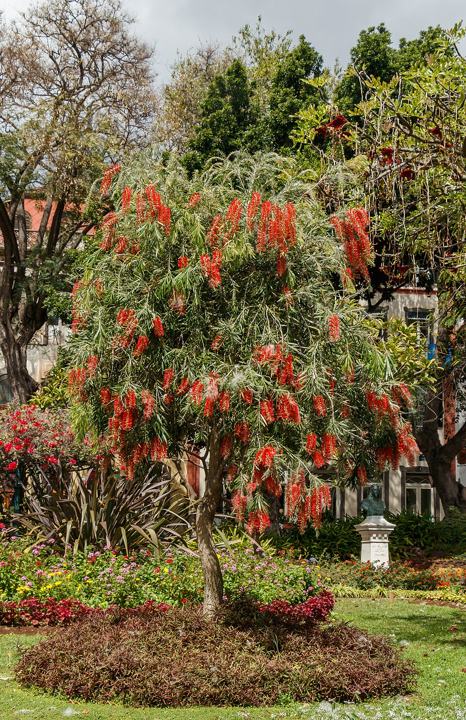
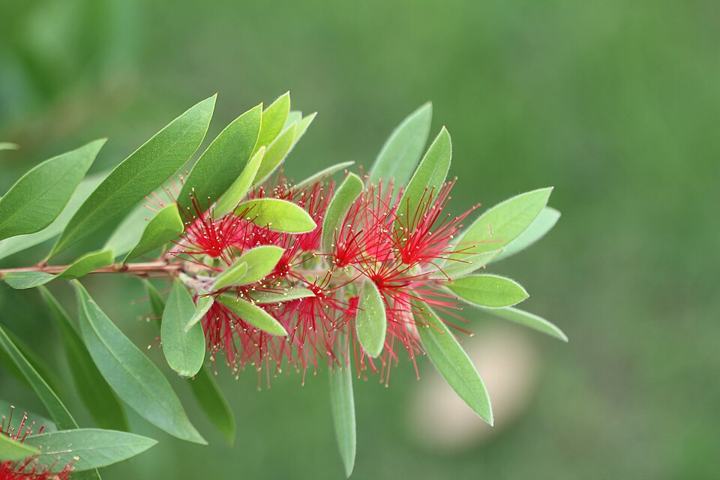
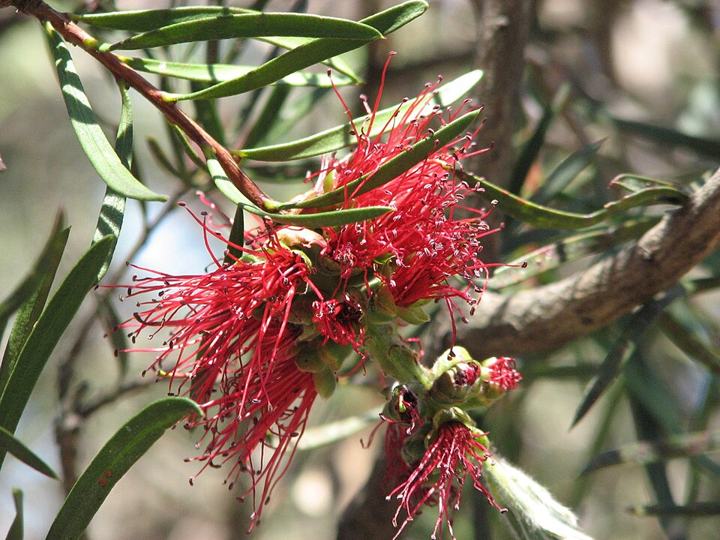
From Wikipedia
Melaleuca linearis, commonly known as narrow-leaved bottlebrush, is a plant in the myrtle family, Myrtaceae and is endemic to New South Wales and Queensland in Australia. It is a medium-sized shrub with narrow leaves with a rigid point, and red flower spikes in late spring or early summer.
Text from Wikipedia, CC BY-SA 4.0: Melaleuca linearis
Description
An evergreen shrub from Australia with pointed, dark green leaves. It usually grows to about 3 m tall and 1.5 m wide, and can reach 5 m in its natural habitat.
Propagation and growing
This shrub can withstand full sun and also temperatures of between -5 and -10ºC for short periods, though never frosts. It copes very well with drought, and high summer temperatures are not a problem for it. Indeed, it flowers more abundantly in summer. The fruits are spherical, at the tips of the stems, and remain on the plant for several years. The best way to propagate the “bottlebrush”, if you want to keep the characteristics of the parent plant, is by semi-hardwood cuttings in spring. Cuttings about 7-10 cm long are used; the leaves are removed from the lower two thirds, a little bark is scraped from the base and they are dipped in rooting hormone. It can also be propagated from seed. Seeds should be germinated in autumn or spring and usually germinate without much difficulty. Because they are tiny, they should be sown on the surface of a light substrate kept constantly moist, at a minimum temperature of 15 to 18 ºC. Germination will begin after 15 or 20 days. During this period avoid watering the seedbed from above so as not to wash the seeds away. The previous year’s fruits, not the most recent ones, are collected while still closed and stored in paper bags in a warm place until they open and release the seeds, which happens after several days. For species whose seeds ripen in the same year, keep watch so as to collect the fruits as soon as they start to open. If you find the woody capsules that remain along the stems unsightly and do not want to keep them, you can prune after flowering, cutting the stems just below the faded flowers. This also stimulates branching, giving more compact plants with more abundant flowering in following years. The species adapts well to different soil pH, from slightly acid to slightly alkaline (from 6.1 to 7.8). It tolerates chalky and even somewhat clayey soils well. Drainage must be the priority.
Garden use
Its showy flowers make this evergreen shrub a highly valued garden plant. The bright red cylindrical inflorescence resembles a brush, with its numerous stamens forming the conspicuous part of the flowers. Its leaves give off a lemon scent. Callistemon needs frequent watering in summer and very little in winter, as its water needs drop considerably in cold periods. It does not like waterlogging.
Source: Cabildo de Tenerife, “Guía de especies vegetales”, CC BY. Translated from Spanish by us.